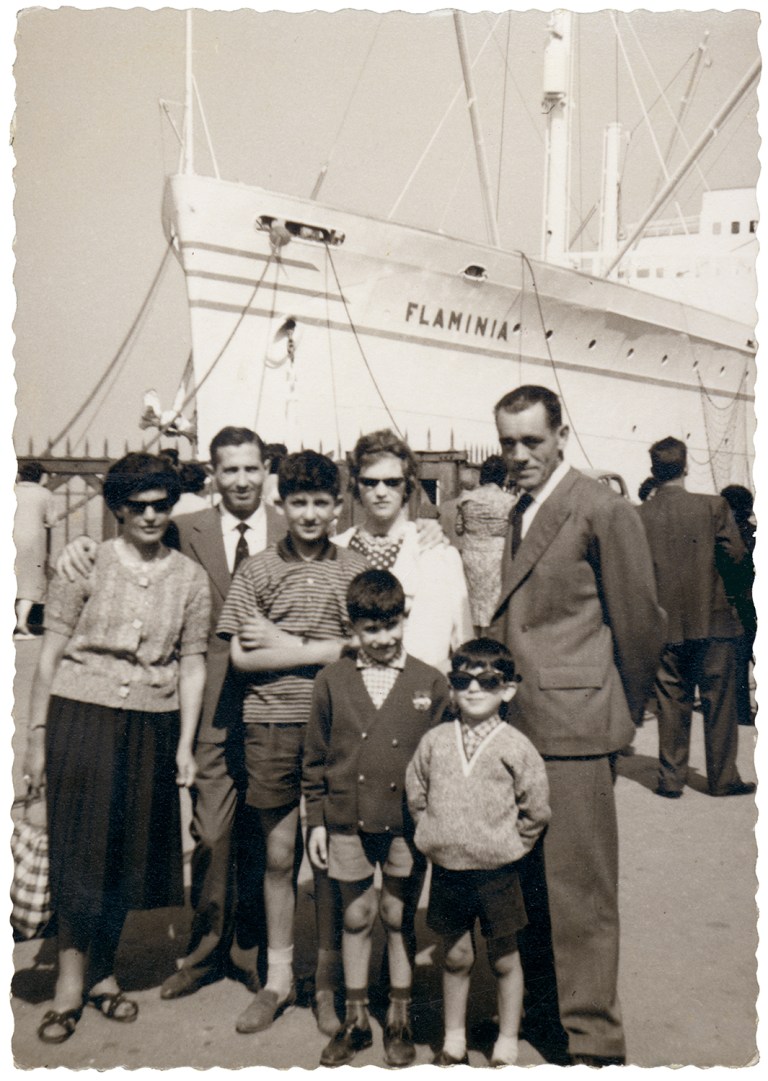
Mimmo (Domenico) Cozzolino, born in 1949 in Ercolano, Naples, Italy, is a renowned Australian graphic designer and photo media artist, celebrated for his gently satirical design and extensive research on Australian historic trademarks. In 1961, at the age of 12, he migrated to Australia on the Flaminia with his father Michele, a printer, and mother Chiara, who were seeking better work opportunities.
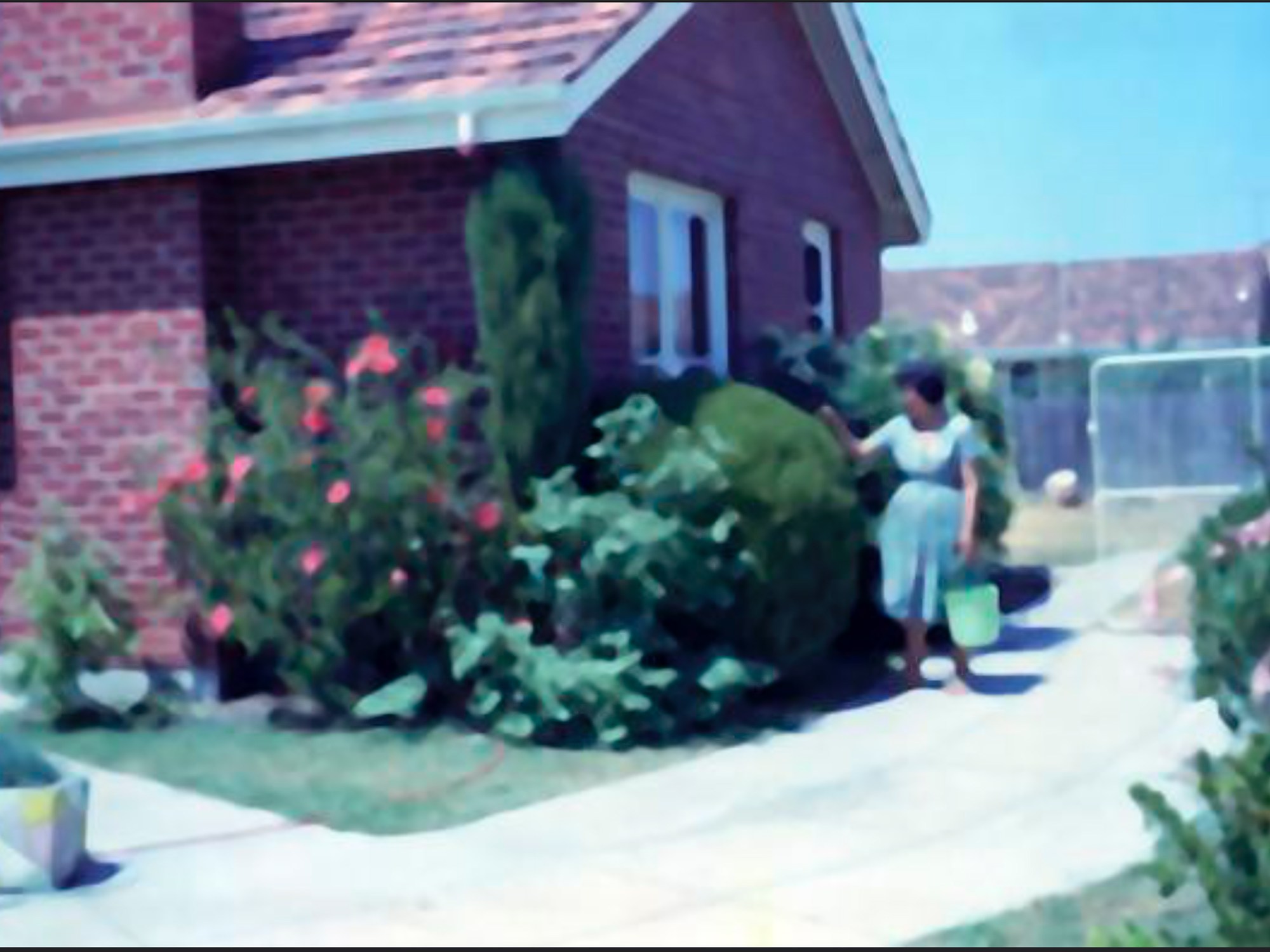
The Cozzolino family were initially taken to the Bonegilla Migrant Reception and Training Centre, and after his father found work in Melbourne as a letterpress machinist, quickly moved to rented rooms in Kensington and Fairfield then a house in Alphington. In 1965 they commenced purchase of a Housing Commission house in Heidelberg West where Cozzolino attended the Technical School from which he graduated as dux of the school. There he was taught by Winston Thomas who inspired his interest in film animation.
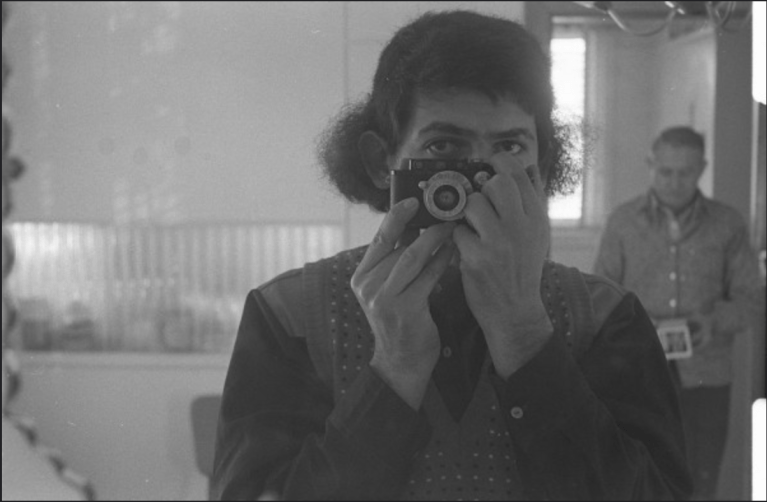
The roots of Mimmo’s interest in photography trace back to the mid-1960s when, as a teenager, he began taking snaps with his father’s Voigtländer 35 mm viewfinder camera. Cozzolino initially pursued a civil engineering diploma at Preston College but, to his family’s horror, switched to the design diploma at Prahran College in 1968, with photography as an elective.
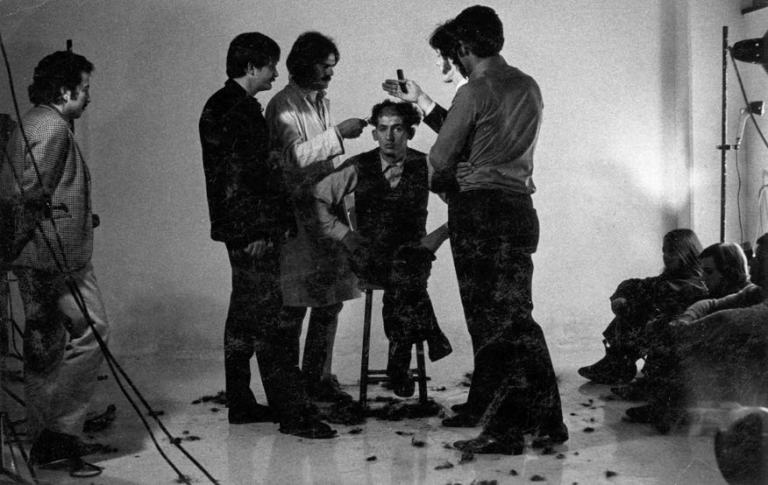
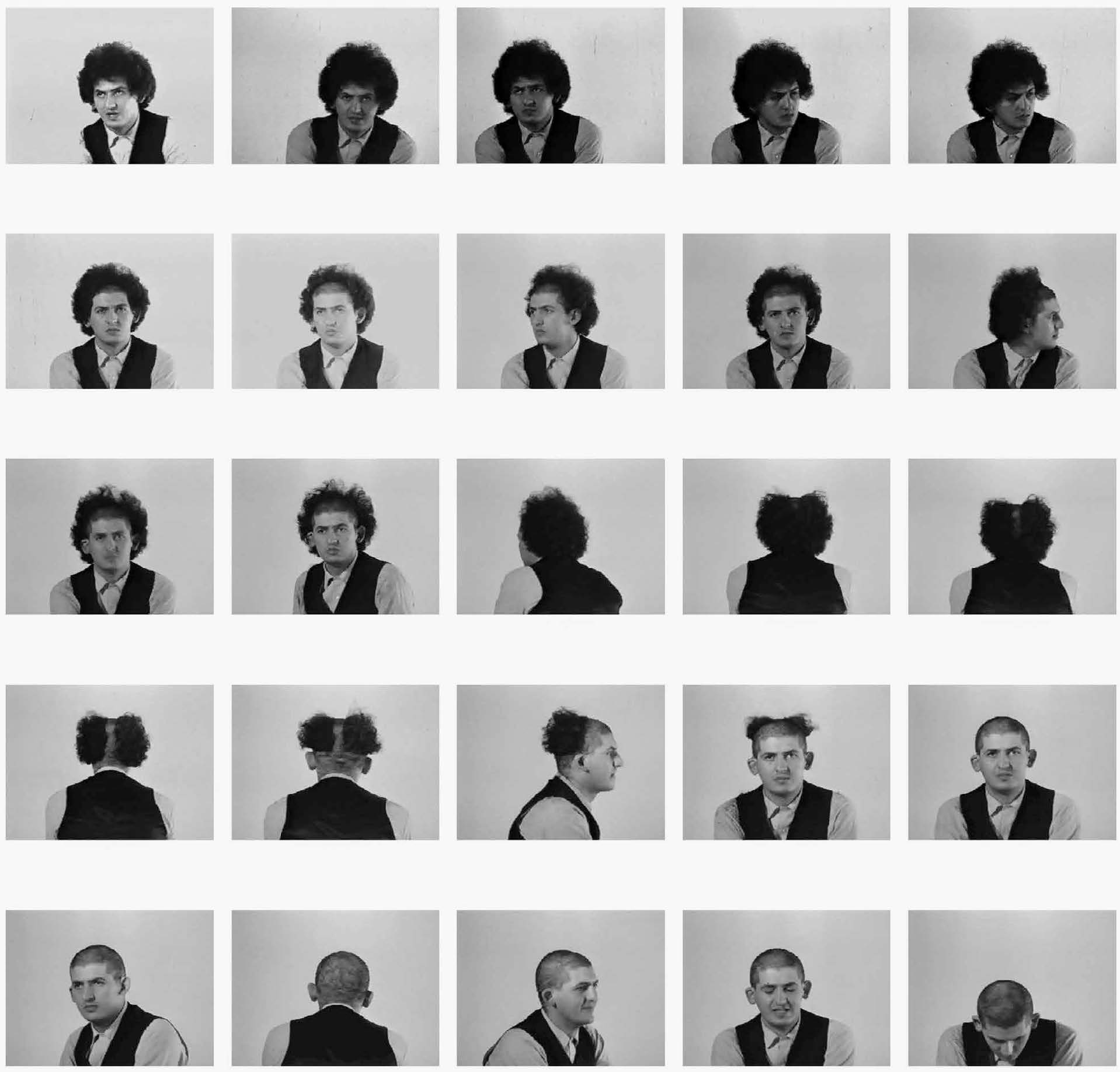
In July 1970 Mimmo booked the main photography studio at Prahran College and staged an event where he had his hair cut/shaved in stages and filmed as a stop motion animation. He had enlisted lecturer Paul Cox to direct proceedings. Students lined both sides of the studio to watch the event unfold. Some documented the proceedings for Mimmo. Bad Hair Day is a rare example of conceptual or performance art being practiced so early at the College.
In 1972 he returned to Prahran College and enrolled in the Photography Diploma full time.
He managed to complete first semester but abandoned the idea when he found it too stressful to juggle earning a living as a freelance designer with full time studies.
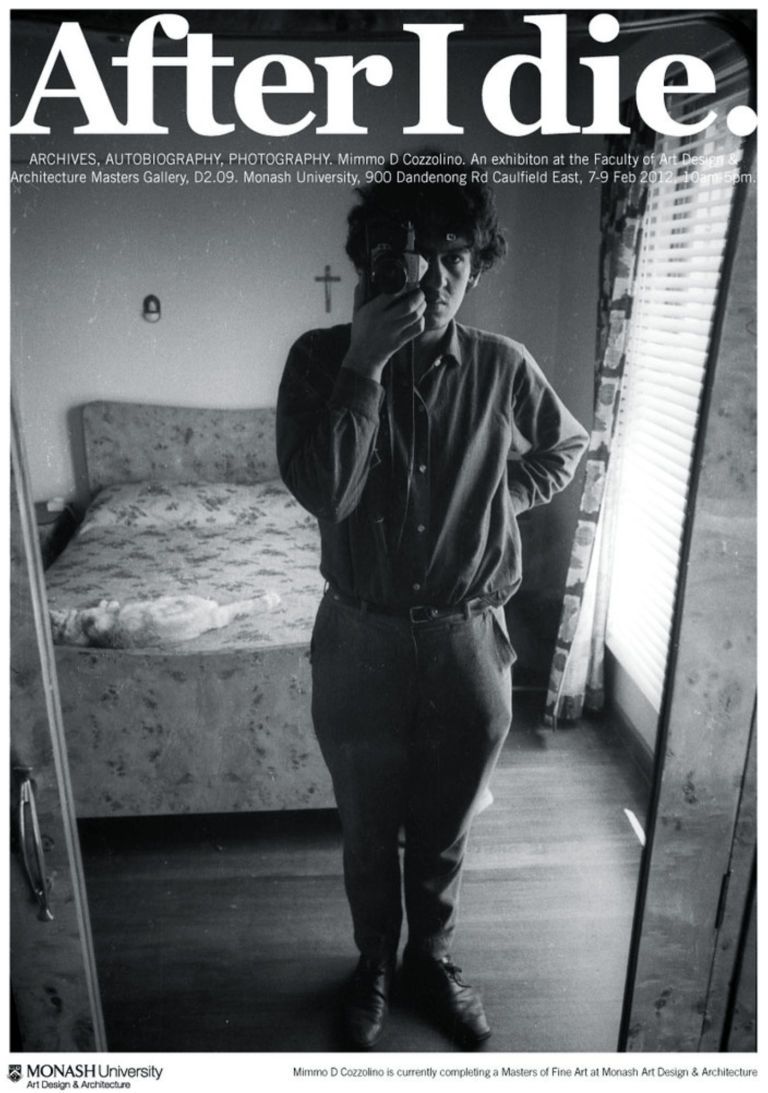
His archive of pictures, spanning from his teenage years onward, serves as a rich source for research and a key component of his Monash University MFA on “photography, autobiography, and archives.”
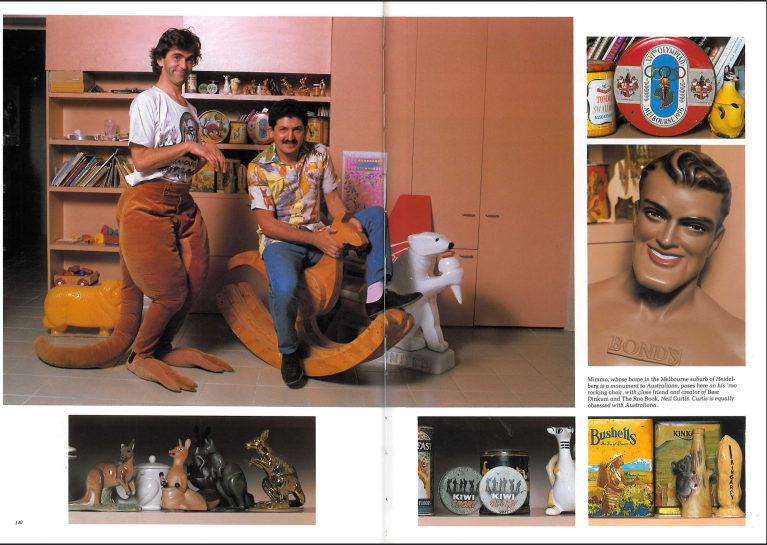
Cozzolino’s professional journey led him to Sydney in 1971, where he worked as a studio design assistant. But he yearned for Melbourne and returned to establish All Australian Graphics with close friend and Greek émigré Con Aslanis, who created their mascot and brand, the fictitious Greek man/Australian kangaroo hybrid ‘Kevin Pappas’. Eschewing the austere international Swiss style, they determined to create design that was distinctly Australian in flavour. Of the phenomenon they created, Phil Jarratt wrote in 1984;
“Of all the people who have made an artistic study of life in Australia, the least likely is Mimmo Cozzolino. I mean, Mimmo! A bloody wog who’s only been here five minutes! What would he known about Australia? And, furthermore, he’s not even an artist! Nevertheless, Cozzolino, thirty-five, is our foremost recorder of the symbols of Australia, a fervent nationalist and one hell of a designer. And, in his own quiet way, he has helped to tear down some of the prejudices against ethnic groups in our cities.”
Renaming the studio to “All Australian Graffiti” (AAG) in 1975, Mimmo and his partners, amidst creating thousands of illustrations for their clients, produced the irreverent Kevin Pappas Tear Out Postcard Book in 1977. The success of this book, fueled by Penguin’s publicity, marked a significant moment in their career. The studio had created its own cultural product, and with the imprimatur of Penguin Books, it was being distributed and sold nationally. Within a couple of months, demand for AAG’s freelance illustration and design services skyrocketed. While the financial benefits were welcome the relentless pressure of deadlines and the need to keep quality up eventually led to the studios disbandment in mid-1978. However, every member of AAG benefited from the success of the studio and almost seamlessly went on to build their individual freelance careers.
Following the disbandment of All Australian Graffiti, Mimmo took a sabbatical to complete the research on a book project, supported by his wife Sue, focusing on Australian historic trademarks, prompted by being unable to find such a book. It was a ten-year project, resulting in Symbols of Australia, published by Penguin in 1980, became a bestseller and won the Best Designed Book award in 1981.
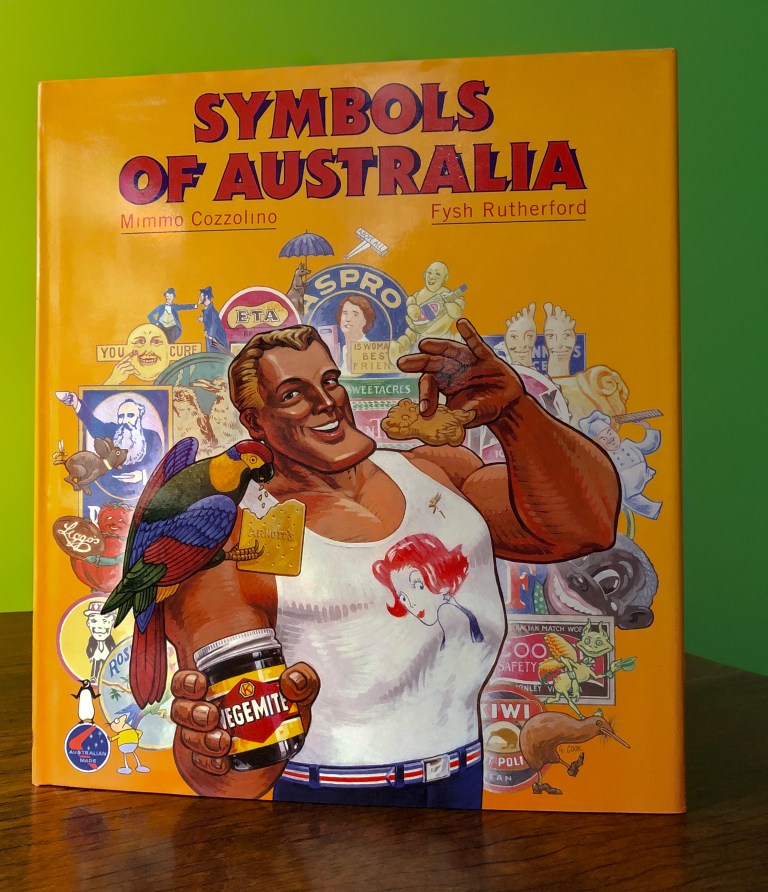
The book, which received acclaim for its graphic archaeology of Australian cultural heritage, explored over a century of trademarks, drawing attention to national identity. No review of it, even Phillip Adams’, compares to that ‘testimonial,’ to borrow from vintage ad-speak, by none other than Helen Garner, in The National Times of October 1980 which she evocatively titled ‘Mimmo’s Dinkum Memory Jogger’ and which concludes;
“Whoever reads this book will revel in it. Surely Australia must be the only country in the world where as late as 1954 a deodorant would be registered under the name of Go-poof. In 1947 a mouse trap company called its product Choke-a-mouse.
“I’m envious of Mimmo Cozzolino for the laughs he must have had during this great search of his. Not only the heavy-handed literalness of the Choke-a-mouse, Rat-menu, Moo-vellous variety, but the flights of fancy of the more unfettered imaginations make this a book of endless fascination, laughter and delight.”
After the success of Symbols of Australia, Cozzolino continued his career in design, founding Cozzolino Hughes Design (CHD) and later partnering with Phil Ellett to form Cozzolino Ellett Design D’Vision (CEDD). Throughout his career, Cozzolino contributed to the historical study of graphic design and its Australian manifestations, receiving recognition as he joined the committee of the Ephemera Society of Australia and played a pivotal role in launching the Australian Graphic Design Association (AGDA) in 1987.
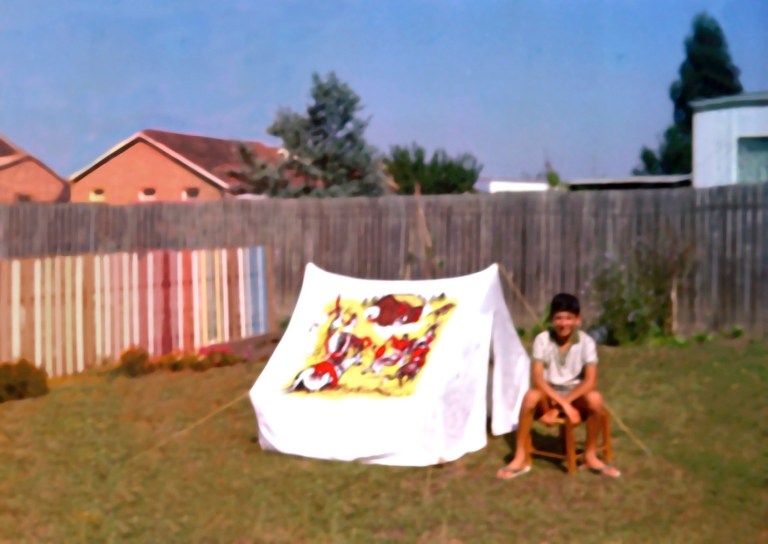
In 2002, Cozzolino literally ‘shifted his focus’ to art photography earning accolades including the Leica/CCP Documentary Photography Award for his series Arcadia del Sud in which Kodachrome slides from his archive of family photographs are presented out-of-focus. His artistic pursuits, including video and scanner-based imagery, continued with exhibitions, including a solo show Moments at Tacit Galleries in Melbourne in 2019.
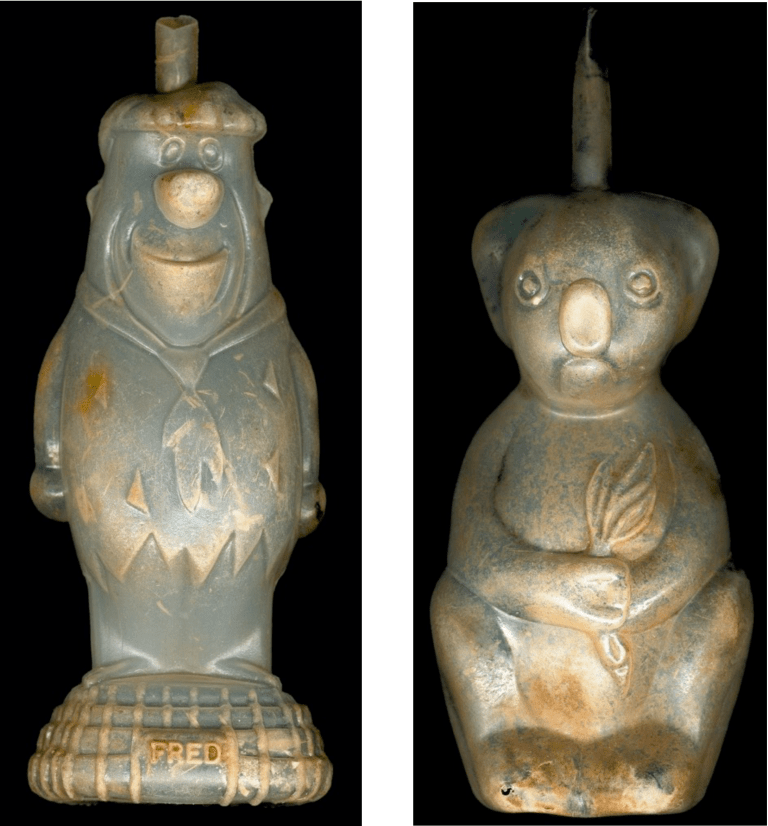
Today, Mimmo Cozzolino remains a significant figure in Australian design, providing insights and commentary on Australian symbols, design, language, and the migrant experience. His diverse contributions, spanning graphic design, photography, and art, have left a lasting impact on the Australian creative landscape.
Mimmo’s commitment to preserving and promoting Australia’s commercial art and design history is evident in his role as a sessional teacher of design at the tertiary level. His website‘s Design section serves as a resource for students researching All Australian Graffiti and/or Symbols of Australia, reflecting his dedication to encouraging research in this field. Mimmo, who has provided significant support for the development of the Prahran Legacy exhibition, remains open to engaging with those who have conducted original, unpublished research into Australian commercial art/design/biography, fostering a community of critical awareness and eloquence in design discourse.
 Prahran Photography
14 thoughts on “The Alumni: Mimmo Cozzolino”