
On 1 March, after much anticipation and to great satisfaction, the Museum of Australian Photography opened The Basement.
The scale of the show, in its organisation and presentation, is stunning—brilliantly curated by Angela Connor (who joined the museum early in 2023, after more than 15 years in a variety of arts organisations, ARIs, and commercial galleries) and Stella Loftus-Hills, who spoke at the event about the considerable research behind it, the approach they have taken and the selection and arrangement of the images.
The exhibitors are: Colin Abbott, Robert Ashton, Con Aslanis, Polly Borland, Peter Bowes, John Brash, Peter Burgess, Nanette Carter, John Cato, Andrew Chapman, Lyn Cheong, Jon Conte, Kim Corbel, Paul Cox, Mimmo Cozzolino, Christina de Water, Duncan Frost, Rob Gale, Sandra Graham, Bill Henson, Julie Higginbotham, Graham Howe, Carol Jerrems, Moira Joseph, Peter Kelly, Christopher Köller, Johann Krix, Paul Lambeth, Derrick Lee, Peter Leiss, Carolyn Lewens, Steven Lojewski, Ian Macrae, James McArdle, Jim McFarlane, Rod McNicol, Julie Millowick, Peter Milne, Jacqueline Mitelman, Richard Muggleton, Martin Munz, Nicholas Nedelkopoulos, Greg Neville, Glen O’Malley, Viki Petherbridge, Ross Powell, Philip Quirk, Leonie Reisberg, Susan Russell, Stella Sallman, Athol Shmith, Geoff Strong, Ian Tippett, George Volakos, Stephen Wickham, Andrew Wittner, Ken Wright, Lynette Zeeng

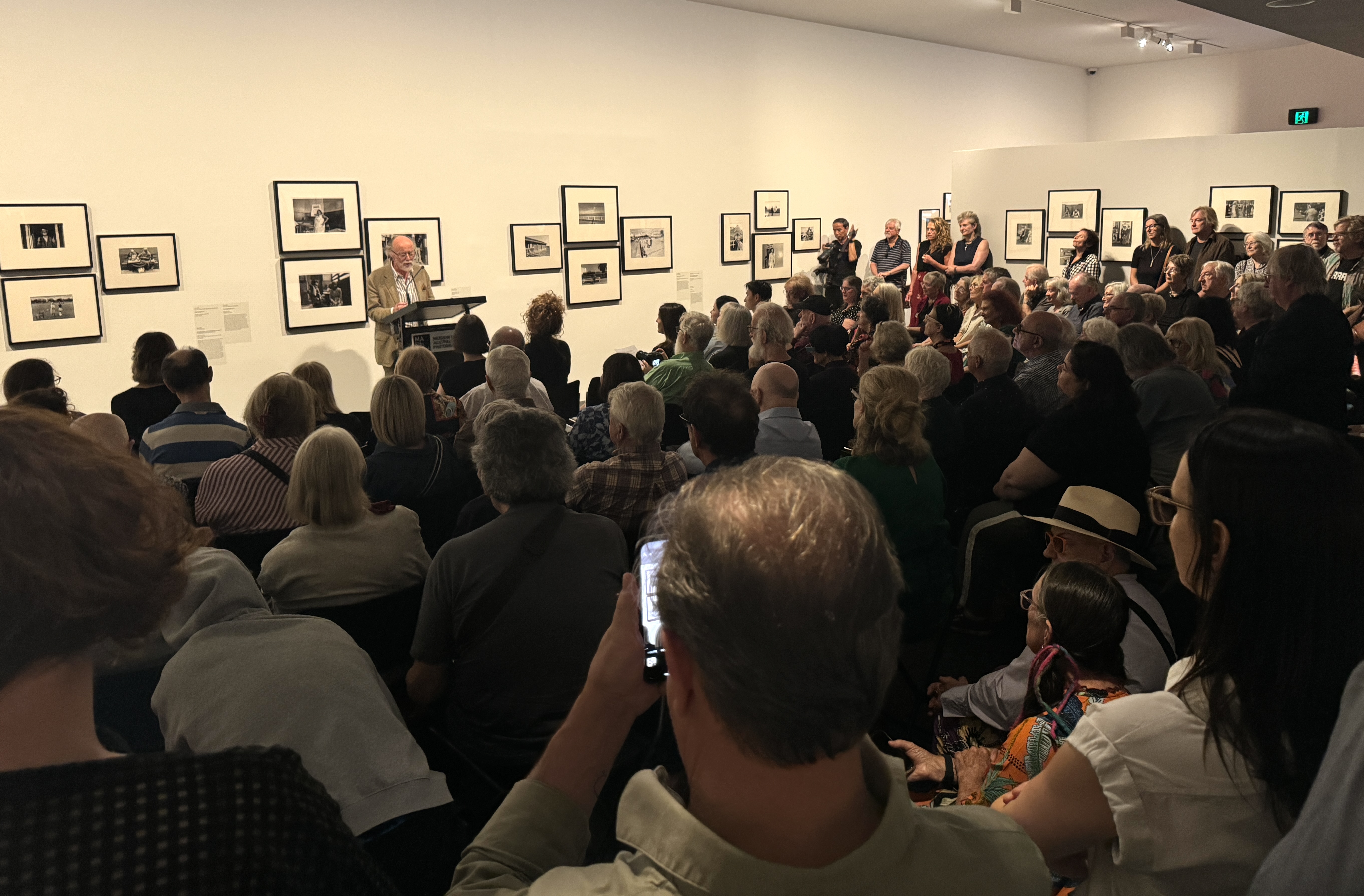
They spoke at the official launch which barely managed to squeeze in more than 300 enthusiasts of photography…
Angela: “A few years ago, a group of Prahran alumni approached the Museum with an exhibition proposal focusing on the photography department of Prahran College. The origins of this project can be traced back to 2013 when early discussions work began between Phil Quirk and Peter Leiss at John Cato’s book launch in Ballarat [Foto Festival]. Fast forward to 2022, when Merle Hathaway and James McArdle were nominated by a group of alumni to formally present the idea to the museum. And now nearly two-an-a- half years later, we proudly launch The Basement, an exhibition featuring 286 photographs and three moving images by 58 artists with works drawn from the collections of the National Gallery Victoria, the National Gallery of Australia, the National Film and Sound Archive of Australia, Deakin University Archives and the MAPh collection.
“As many of you know the 1970s marked a pivotal period in the evolution of photography, an era of experimentation, the emergence of new genres and a radical reexamination of the medium’s role in art and society. It’s hard to imagine now that there was a time when photography wasn’t even considered an art form.

“Over the last 18 months, I’ve had a privilege of speaking with many of you who attended Prahran College between 1968 and 1981, and while it is impossible to represent every student that went through the photography department, we have worked to include as many artists and stories as possible, capturing the lived experiences of this transformative period. It’s been a joy to uncover lost archives and undertake research in collaboration with the wider community. Additionally, the museum is thrilled to have acquired significant new works as part of this landmark exhibition.
“As co-curators, Stella and I are deeply honoured to have been entrusted with this project and the sincerely hope it sparks further research into the history of the college. This exhibition could not have been made possible without dedication generously and research of Prahran alumni, including James McArdle, Merle Hathway, Phil Quirk, and Peter Leiss, who rallied the community, provided invaluable contacts and helped shape his exhibition.
“I now have the pleasure of handing over to my co-curator Stella.”
[applause]

Stella: “Hi, everyone. Thanks so much for coming today. It is a real joy to see you all. So the photography department at Prahran College was located in the basement. And while neither Angela nor I ever had the opportunity to set foot inside the basement, we have spent the last 18 months, uncovering its history, listening to stories from the people who studied inside its walls and looking at some of the photographic friendships that were made inside its darkrooms. We traveled to the homes of basement alumni around Melbourne and regional Victoria. We’ve spoken over the phone and on Zoom to the people who were there, and we’ve encouraged artists to pull out photographs that in some cases have been locked away in drawers, cupboards and garages for over 50 years. We’ve mined archives and we’ve uncovered an array of treasures from the time.
“We’ve also had the opportunity to explore the influential role of the teachers who taught in the basement between 1968 and 1981, including most famously, Paul Cox, Athol Shmith and John Cato, as well as others, such as Derrick Lee and Bryan Gracey, who are here with us today, Bryan is in the room and I’m really hoping Derrick is watching us live in his home.
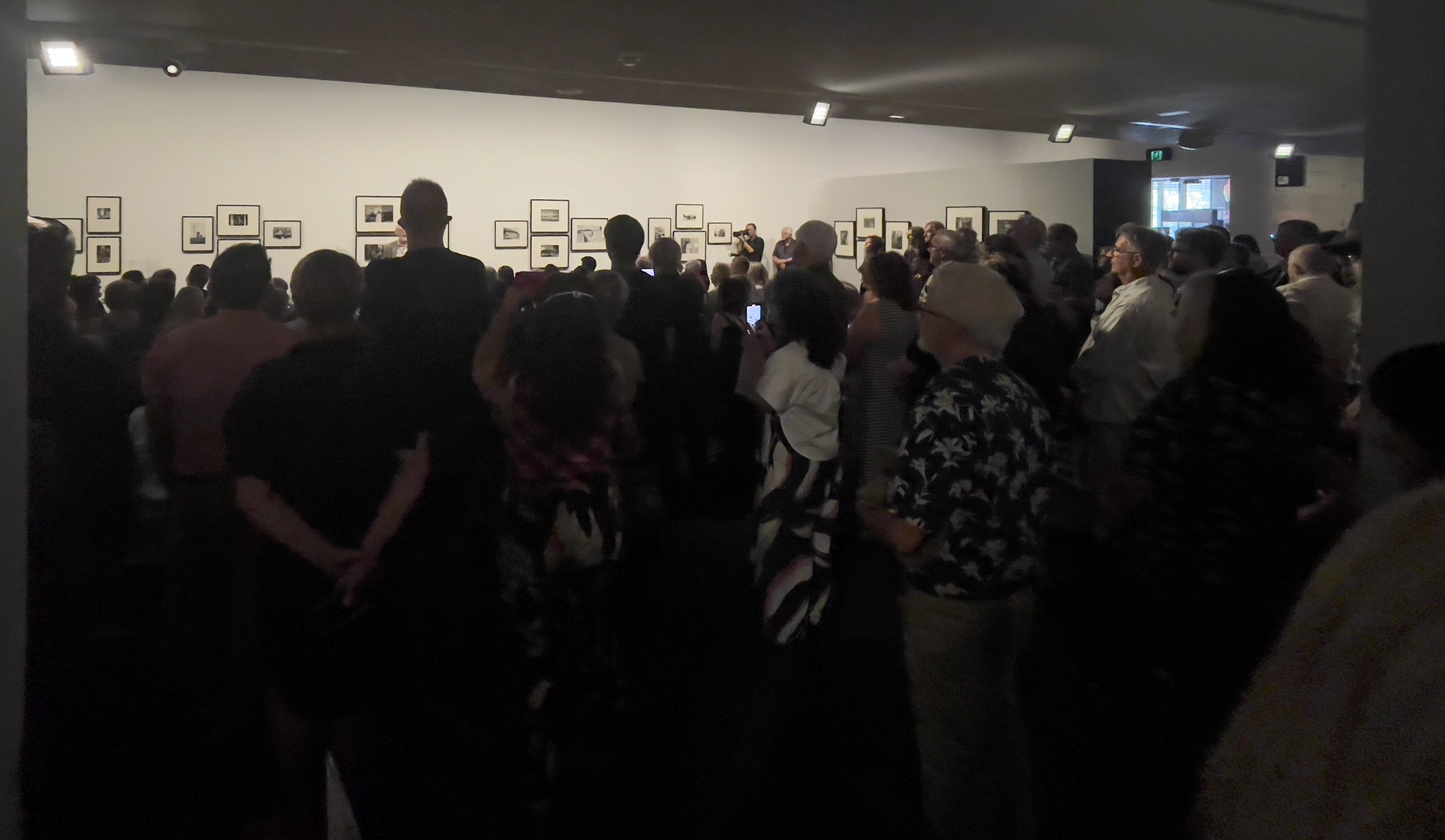
“Here today at MAPh is the culmination of our research journey as we bring snippets of the basement back to life in this exhibition, which showcases still and moving images via a selection of the students and teachers. As you walk through this exhibition, you’ll notice we divided it into seven sections. We start here in gallery one where we have ‘A time of Hope’ and ‘Down on the Street’, which shows some of the many different approaches to street photography that came out of the photography department of Prahran in the 1970s.
“We then move into gallery two, to look at the section relating to the teachers as well as one devoted to filmmaking, which was integrated into the photography department through Paul Cox who increasingly worked across both disciplines. Also in gallery two, New Photography and Friends of Friends highlight new approaches to photography and photographic portraiture that were emerging in the times. These sections include a selection of colour and experimental work..
“We then finish off in gallery three, the end room, leaving you with a look at student life. This space features portraits taken of, and by, the students and teachers, in offers glimpses of them in class, on excursion and in the studio. A feature of this section is also a series of video interviews with basement alumni. These videos were created by Peter Leiss between about 2017 and 2025. They provide a really wonderful opportunity to hear first hand from many of the artists who are in this exhibition. So please do spend some time with these…you might need to come back a few times to make sure you catch each of those.
“It has been a long and rewarding journey to get to this moment here today and before I pass back over to Angela for a formal acknowledgement and thank you, I do personally want to say a big thank you to all of the people we’ve worked with to make this exhibition happen, especially the artists and I’m really enjoyed speaking to so many of you today. I hope I can have some more conversations with more of you before the day concludes. We’re delighted that so many of you could be with us to help celebrate. Finally, just a thank you to you Ange—it has been really fun co-curating this exhibition with you and thank you and thanks everyone for coming.”
[applause]

Internationally acclaimed photographer Bill Henson delivered a characteristically personal, challenging and reflective speech to mark the opening of The Basement.
He began his address by reminiscing about his time at Prahran in the mid-1970s—a period he remembered as unconventional and formative, despite his own intermittent attendance. “The only catch in my experience there is that I never went,” he quipped to rising laughter from the audience. Henson recalled how his interactions with lecturers such as John Cato and Athol Shmith shaped his artistic philosophy more than technical instruction ever could. “They were setting a moral example, an ethical example, an example of empathy,” he said, emphasising the profound impact their mentorship had on him.
Henson fondly and colourfully described Shmith, a glamorous portraitist who photographed Hollywood stars, and Cato, a figure of quiet wisdom, conjuring their style as an “imperious insouciance”—a blend of grandeur and carefree independence. He emphasised that, unlike today’s art educators who have to navigate academic formalities, these lecturers were practicing artists who brought hard-won experience into the classroom.
“They hadn’t gone through a professional teaching career,” Henson explained. “They weren’t like the kind of lecturer that I seem to see in art schools now, who have to go and get a ‘doctorate of painting’ to keep their job,” but were decidedly “outlandish” and unorthodox.
Their focus was not on rigid curricula but on fostering creativity and curiosity. “They were very generous with their comments,” Henson noted, recalling how they encouraged him to pursue his own path. He would disappear for months at a time, working on his own projects before returning with a bundle of photographs to share with his lecturers; “John would turn around and say, ‘Fuck, we thought you’d left!’” Despite his absences, they were formative in shaping his artistic independence, Shmith advised him to “just piss off and do your own work.”
Henson also shared anecdotes that highlighted the camaraderie and spontaneity of those years. One memorable moment was when Shmith surprised Henson by arranging for his work to be shown at the National Gallery of Victoria—a gesture that underscored his pride in his students’ potential. “That was as big a shock for me as anyone else,” Henson admitted.
Henson advised aspiring young artists to “try to be true to yourself, and don’t…stop…working!” Also important was intergenerational dialogue in art; he urged young people to seek wisdom from older artists before their insights are lost. Drawing on his own friendships with figures like Barry Humphries, Leo Schofield and Marc Newson, he highlighted how such exchanges enrich both parties through shared experiences and perspectives.
Beyond personal anecdotes, Henson used his speech to reflect on broader themes in art education and practice. He lamented what he sees as the increasing politicisation of contemporary art, which he believes has shifted focus away from aesthetics toward “box-ticking exercises” driven by ideology. While acknowledging that political movements such as feminism were present among Prahran’s students in the 1970s—“there were the feminists; there were little groups doing their social diligence”—he noted that these stances did not overshadow the college’s overarching emphasis on beauty and creative exploration. “There wasn’t this righteousness, this indignation, this kind of territorial thing about issues,” he said. In contrast was an openness and enthusiasm that defined Prahran during his time there—a place where beauty and creativity were paramount. Quoting Plato, he remarked, “Beauty is the splendour of truth,” positioning this ideal as central to artistic endeavour.
In opening The Basement exhibition Henson’s speech served not only as a tribute to Prahran College’s legacy—the enduring influence of its educators and alumni on Australia’s photographic landscape—but also as a call to preserve the values of curiosity, independence, and beauty in art.
Angela extended “heartfelt thanks … to the Prahran donor circle, Andrew Penn AO and Kallie Blauhorn and Colin Abbott, and I am also deeply grateful to our Publication design partners the Gordon Darling Foundation and Paul Mylecharane of Common Room.
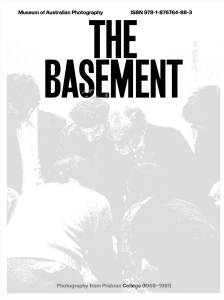 “To coincide with this exhibition, we have also produced a major publication that contributes new research into the canon of Australian photographic history. The publication is being printed in The Netherlands where it currently sits, at one of Europe’s leading art book printers, and it features an extraordinary lineup or writers and artists.
“We will officially launch the publication alongside the first basement lecture series featuring the brilliant Helen Ennis and Daniel Palmer in a discussion, titled Curating the 70s. You’ll see these [flyers] at the front desk on our basement lectures. I also highly recommend pre-purchasing a copy of the book, check out our public programs and get a copy the schedule. All our programs are free, and we are also offering curator-led tours every Wednesday at one o’clock. Finally, I encourage you—and I’m sure this won’t be hard to spread the word about this exhibition, tell your friends, share the exhibition, exhibition via your social media, and most importantly celebrate this extraordinary school, these artists and teachers who have shaped Australian art over the past five decades.
[applause]
 Prahran Photography
Thank you for your valuable thoughts and for linking here. Yes, we Prahran students inhaled vast quantities of chemistry, dabbled in the darkroom trays with our hands, and yet most of us are still alive in our 60s, 70s, and 80s, and are still photographing…the greatest danger now is from AI stealing your images. Tireless MAPh curators Angela Connor and Stella Loftus-Hills did us proud with such a huge, and lengthy, exhibition, publication and promotion.
LikeLike