
Gordon De’Lisle (1923-2002) was briefly senior lecturer in photography at Prahran College over the years 1970-71. A notable Australian photographer, his career from newspaper cadet to gallery owner and publisher spanned six decades of the 20th century during which he was recognised with various professional honours including Fellowship of the Royal Photographic Society (FRPS), Fellowship of the Royal Society of Arts (FRSA), and Excellence de la Federation de l’Art Photographique (EFIAP).
De’Lisle was born in Melbourne in 1923, and like his contemporaries the parents of many Prahran ’70s alumni, grew up during the desperate years of the Great Depression.
To expand on the Wikipedia profile authored by James McArdle with a personal perspective, Gordon’s son Christopher has provided us an extensive unpublished biography and photographic archives which provide insight into his father’s formative years:
“He attended Middle Park Junior/High School in Melbourne, where he was reputed to be an excellent student with a natural gift for English and public speaking. As a boy, he even participated in public debating competitions on Melbourne radio. Despite the challenges of the Depression years, living in a modest Middle Park flat with his mother and sister—when he had to earn his keep by cycling to Station Pier for a feed of ‘couta’ and delivering newspapers on his billy cart—he was consistently irrepressible and resilient.”
The family background that shaped Gordon’s early life included some intrigue, as Christopher notes:
“His mother, Ada, was a kind and gentle soul, determined under difficult circumstances to bring him up well, while Gordon’s father was a man of mystery, rarely at home as he pursued various artistic endeavours. My grandfather, Arthur Haversliegh Thoby Prinsep, led a life marked by artistic ambition and personal scandal. Adopting several aliases—including Frankland Esme Coligny D’Aguilar Chavasse De Lisle—his roving, bohemian lifestyle and legal troubles (bigamy and adultery) mean that details of his history are elusive, a curious footnote in our family history, but around July 1905, while he was a traveling troubadour in New Zealand under the alias of Fabian d’Agular Coligny de Lisle, a review ‘Mr DeLisle at the Choral Hall’ appeared in the Otago Witness that exposed his past:
‘Mr de’ Lisle performs as Writer, Poet, Singer and Musician and is a nephew of the late Val (Valentine) Prinsep RA, and it was Mr de’ Lisle’s visits to the Holland Park Rd studios of the Prinsep family that set the scene for the bohemian instincts Mr de’ Lisle was to follow in life’.

Valentine Princep’s home Little Holland House was shared with the painter George Frederick Watts. His aunts were the photographer Julia Margaret Cameron and Maria Jackson (née Pattle), grandmother of Virginia Woolf and Vanessa Bell.

Val studied in Paris with James Abbott McNeill Whistler, and he was the model for Taffy in Du Maurier’s novel Trilby. A friend of Edward Burne-Jones, Robert Browning, and John Everett Millais he, with Dante Gabriel Rossetti and others decorated the hall of the Oxford Union. He was elected Associate of the Royal Academy in 1879 and R.A. in 1894.
“It is evidently this creative spirit he inadvertently passed on through his nephew and to my father. Did my father know of these family connections to art and early photography? Unfortunately, no; he passed away well before the genealogical work was done, and his own father kept this side of his life hidden. “
By his own account in Army records, Gordon left Melbourne High school during his ‘Intermediate’ (year 10), giving his father’s death as the reason, and later had to discontinue his training as a radio technician at Melbourne Technical College due to financial difficulties, though was employed at Radio 3DB for 15 months to 1939 as an announcer and technician.
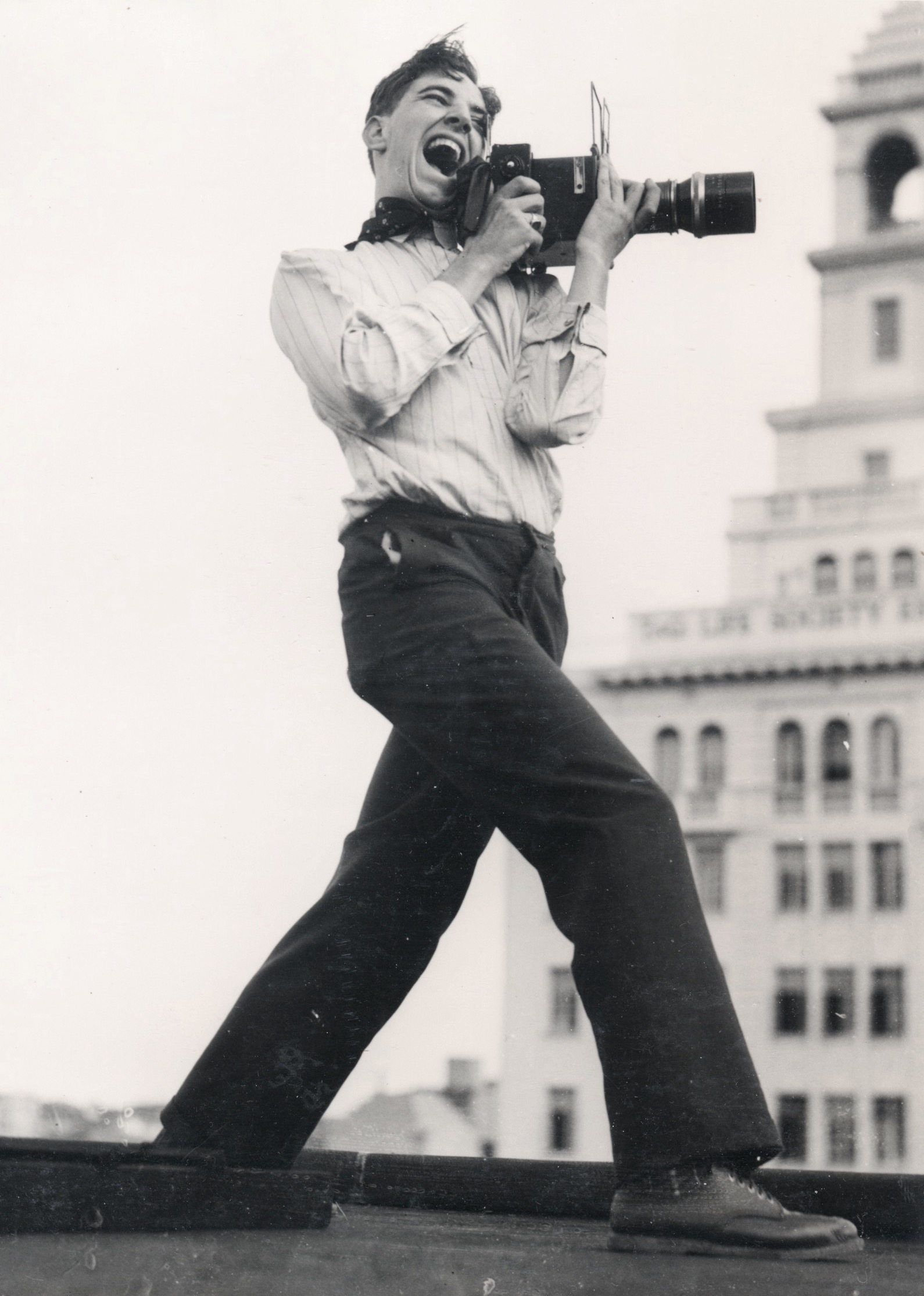
Gordon’s formal training in photography began in 1939 when, at 16 years old, he secured a position as a cadet on the pictorial staff of the Sydney Daily Telegraph. This early immersion in photojournalism accelerated De’Lisle technical training and accustomed him to the heady pace of news photography.
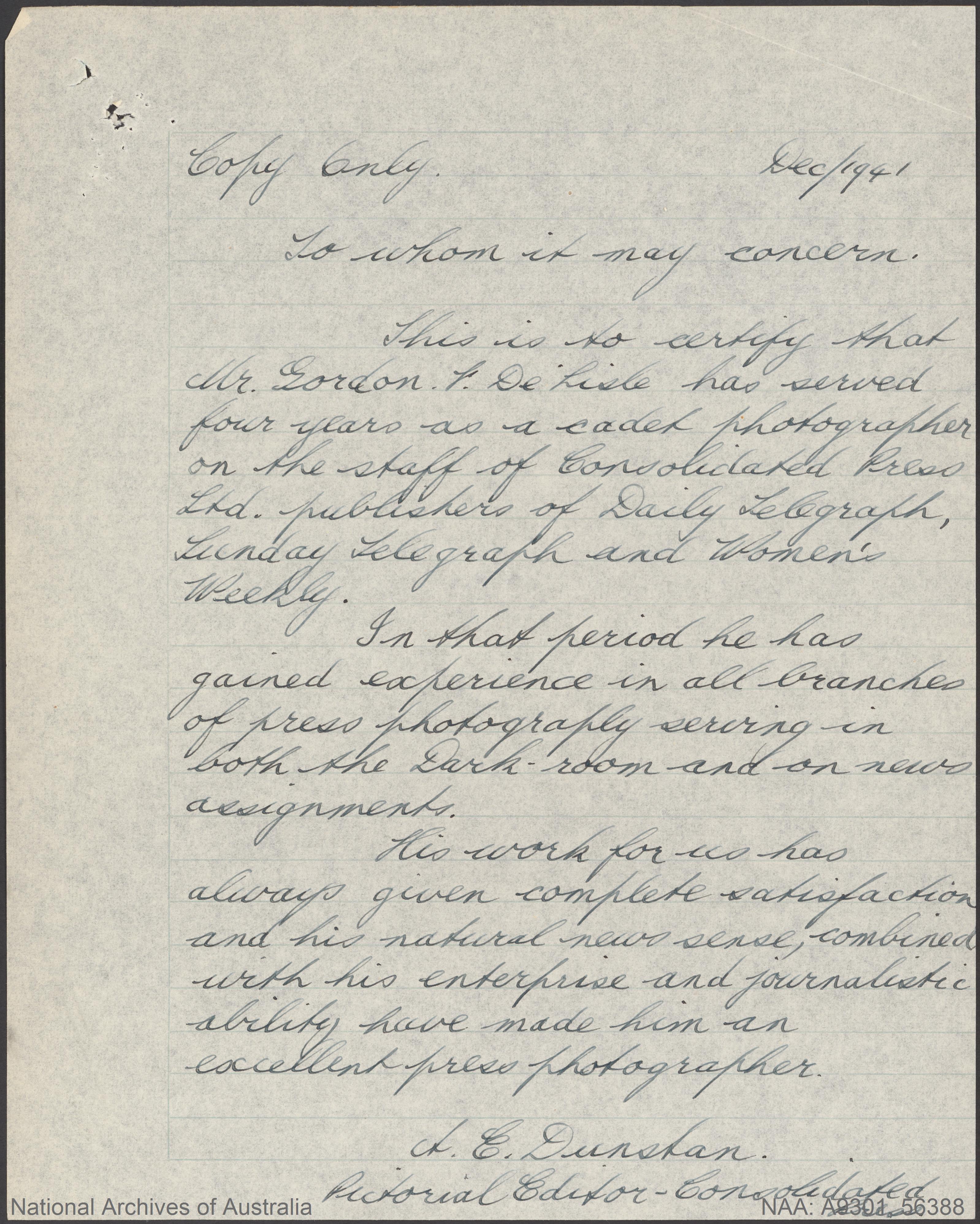
The outbreak of World War II disrupted De’Lisle’s newspaper career. After approximately eight months in the Merchant Navy, he joined the Royal Australian Air Force (RAAF). Initially assigned as a radar operator, his photographic skills were soon recognised, and he was reassigned to serve as a photographer. Christopher describes his father’s military service:
“Serving as a reconnaissance photographer with the Catalina flying boat squadron in northern Queensland, he captured images of military operations in North Queensland and New Guinea rather than engaging directly in combat. Despite the hardships of service, he emerged as the same cheerful, passionate soul who cherished life.”
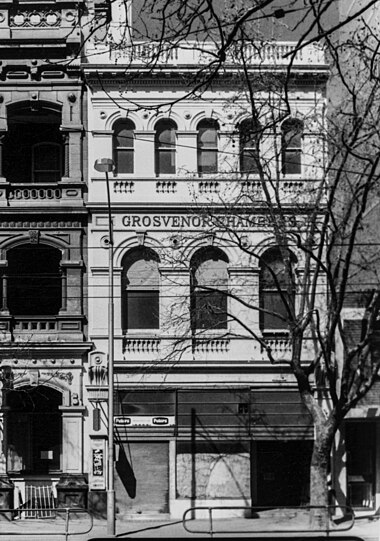
Following his discharge from military service after World War II and some extensive travel, in 1948 De’Lisle established himself in the commercial photography market in Melbourne. His son provides details about these early professional years:
“Following his military discharge, my father embarked on a successful independent career in professional photography. He began by renting studio space at 9 Collins Street in the ‘Paris End’—in Grosvenor Chambers, the first purpose-built artist studio in Melbourne—the address of painters Tom Roberts and Arthur Streeton, and during my father’s tenancy, of Wolfgang Sievers, Albert Tucker, Georges and Mirka Mora. It was only doors away from Athol Shmith, and like him, Gordon started to concentrate on commercial and fashion photography.”

“My father’s creative and professional life was mirrored by his personal one; he met my mother while she worked as a runway model at Georges Fashion Emporium nearby in Collins Street.”

From 1949 until the Melbourne Olympic Games in 1956, De’Lisle maintained a dual career, operating his commercial studio while also a stringer in Melbourne for his old Sydney employer Consolidated Press magazine and newspaper group.
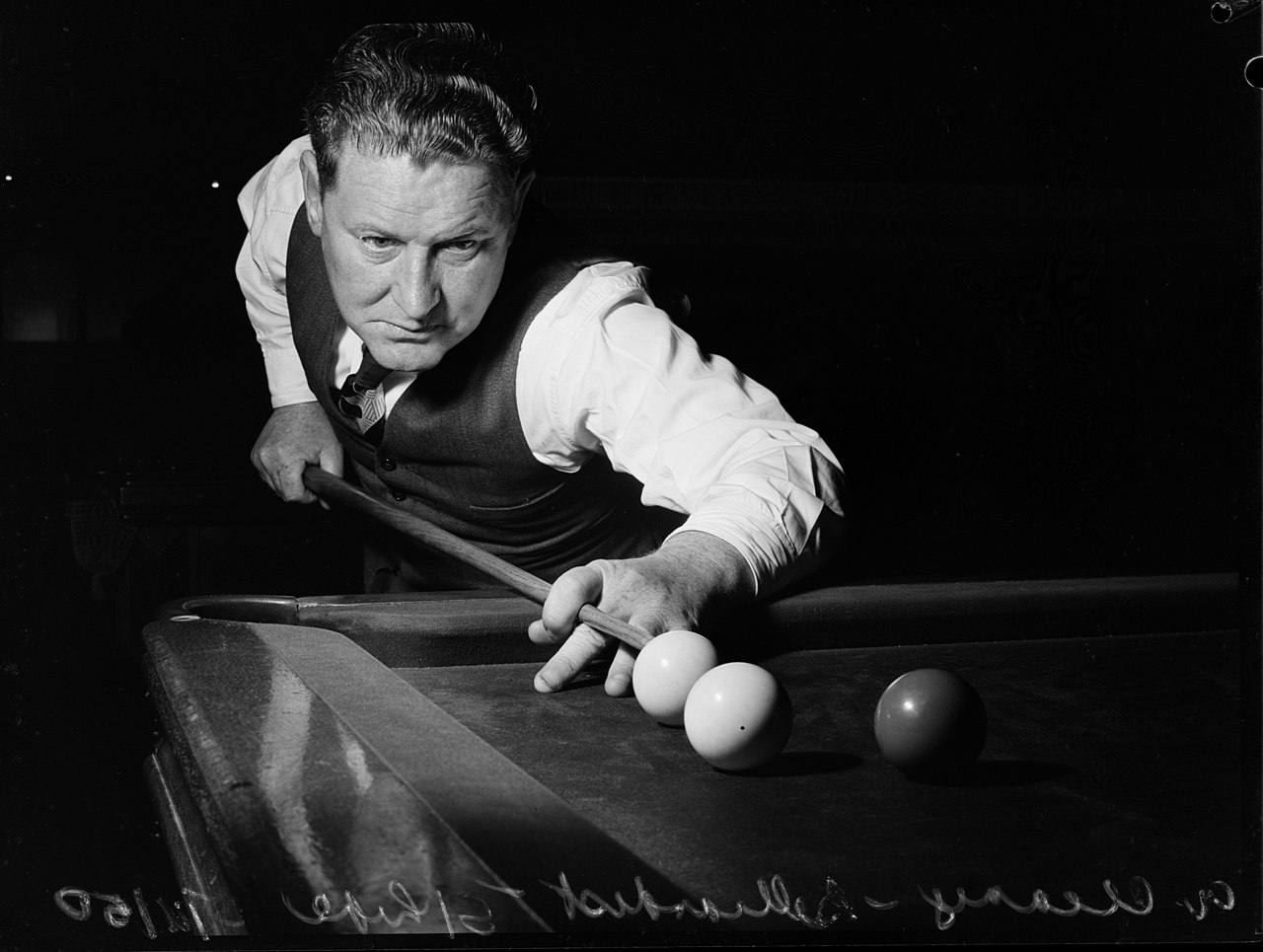
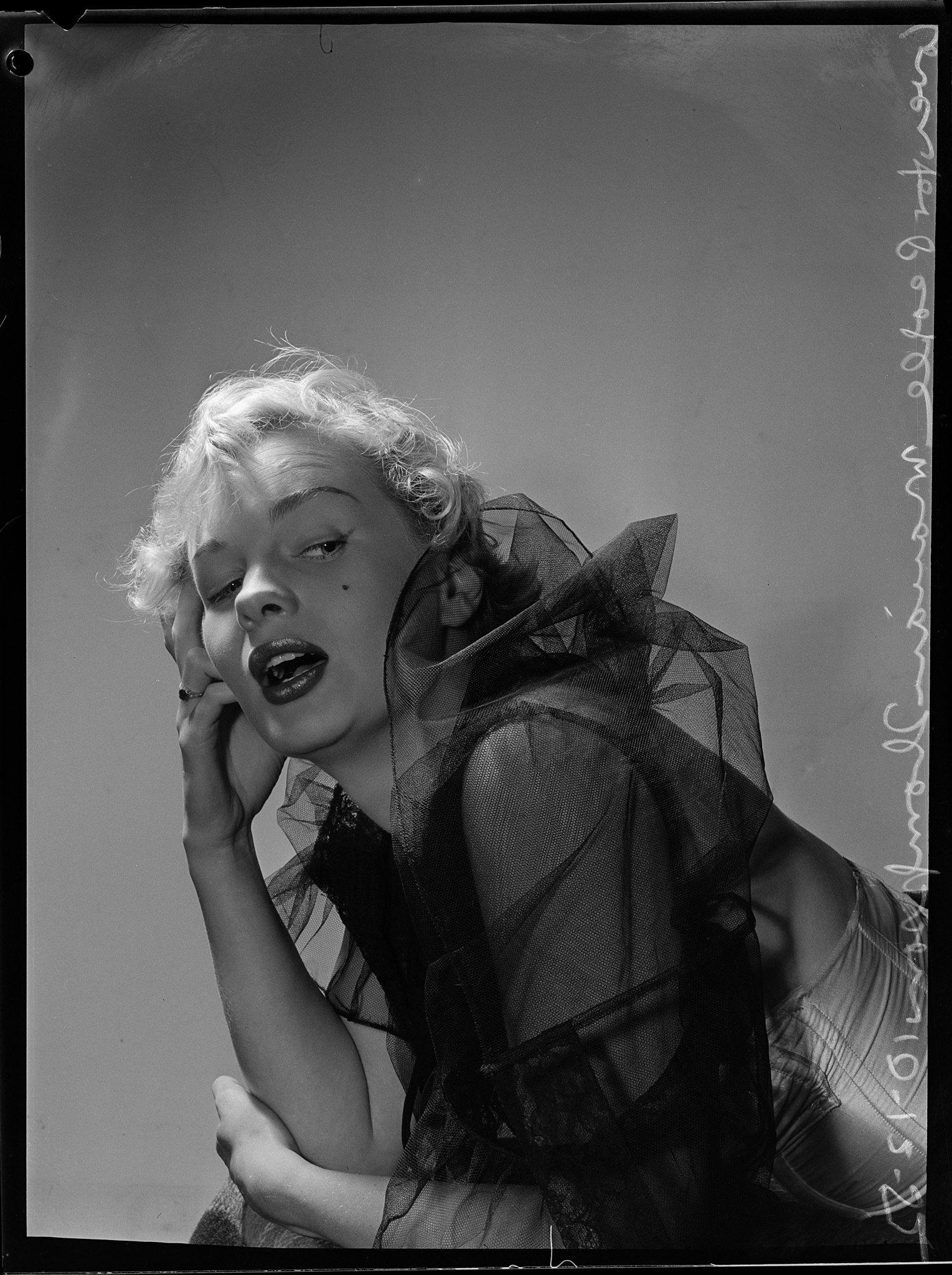
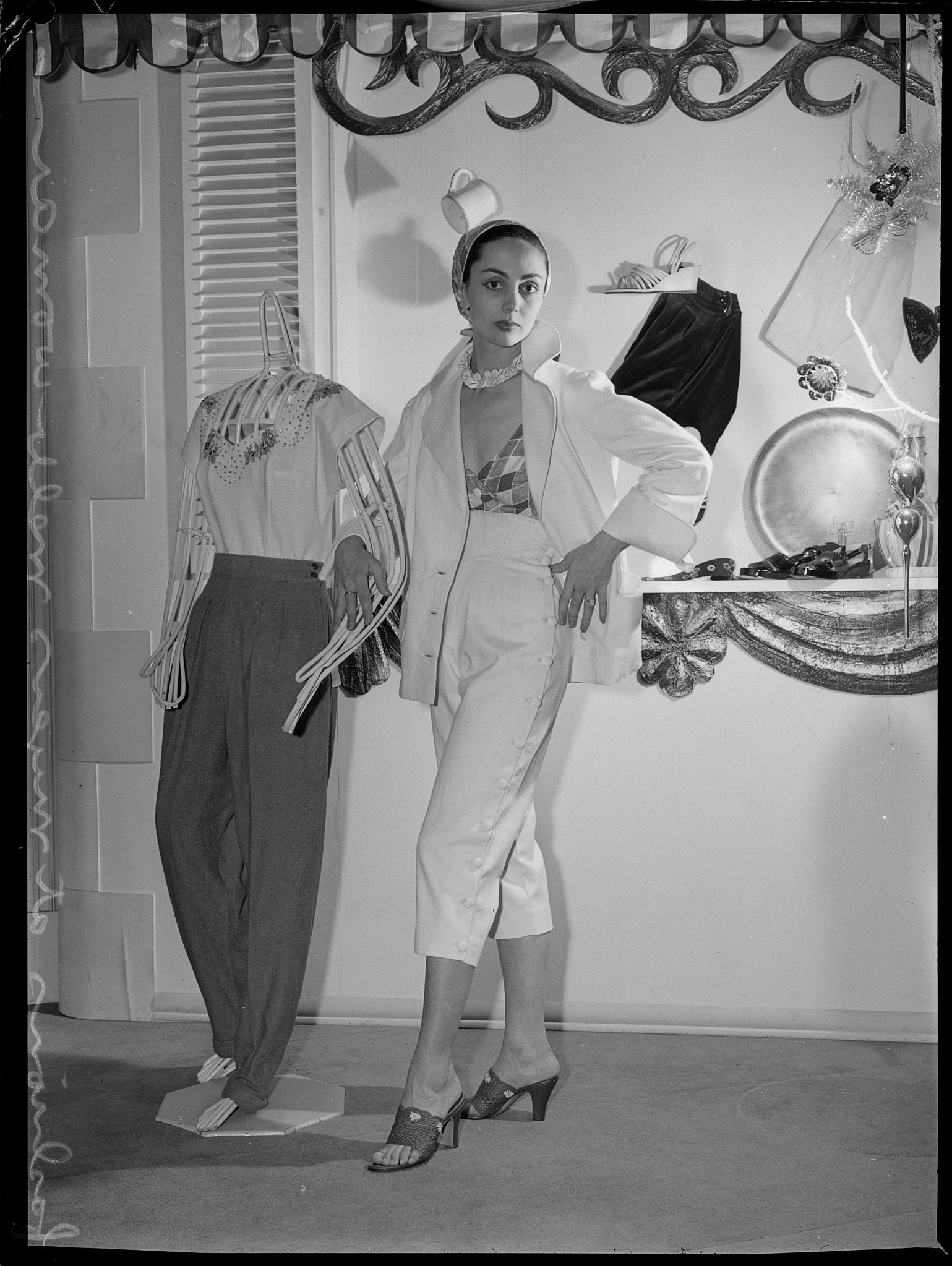
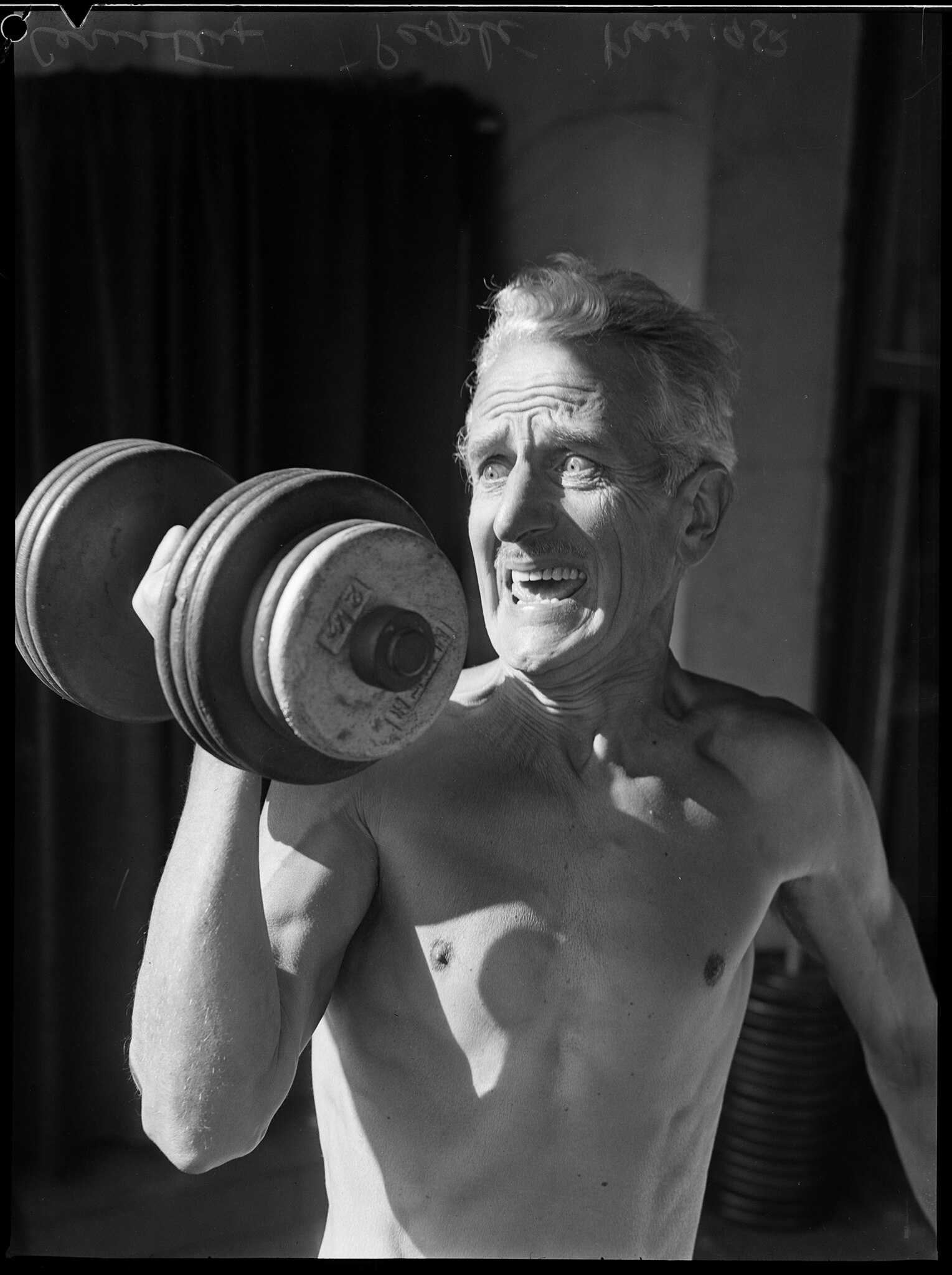
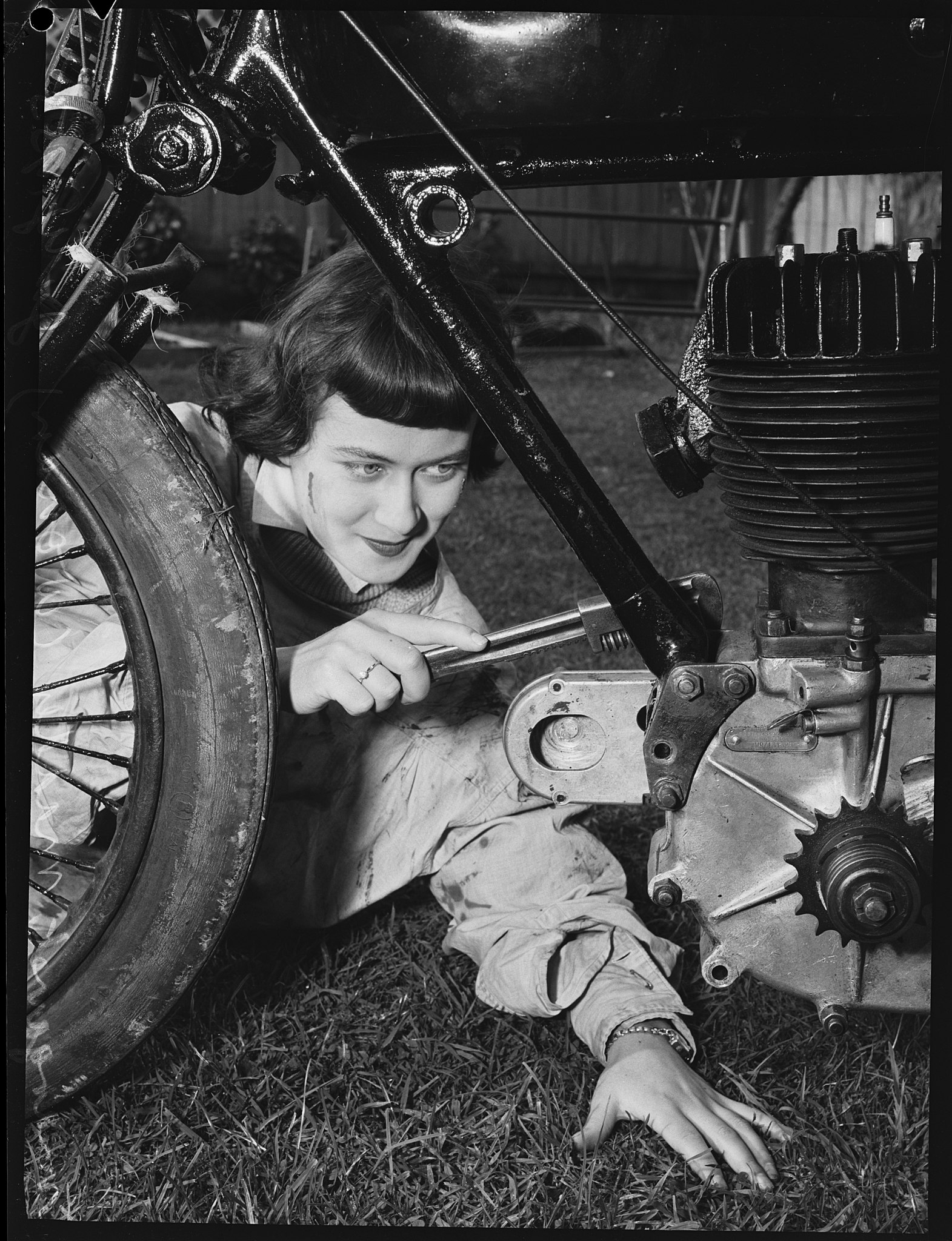
The 1956 Olympics marked a transitional moment in his career, as he relinquished his media representation role to pursue an opportunity in the film industry; in 1959, De’Lisle’s career took a turn when he was engaged as the stills photographer for director Stanley Kramer’s apocalyptic drama On the Beach, starring Gregory Peck and Ava Gardner filmed on location in Melbourne. De’Lisle’s role extended beyond capturing on-set photography; his studio was responsible for producing hundreds of thousands of production prints for the film, a task dependent on both his technical capabilities and his ability to manage large-scale photographic projects.

Following his work on On the Beach, De’Lisle returned to advertising photography with renewed vigour. The 1960s marked a period of creative achievement and professional recognition for De’Lisle, during which he accumulated an array of national and international accolades.
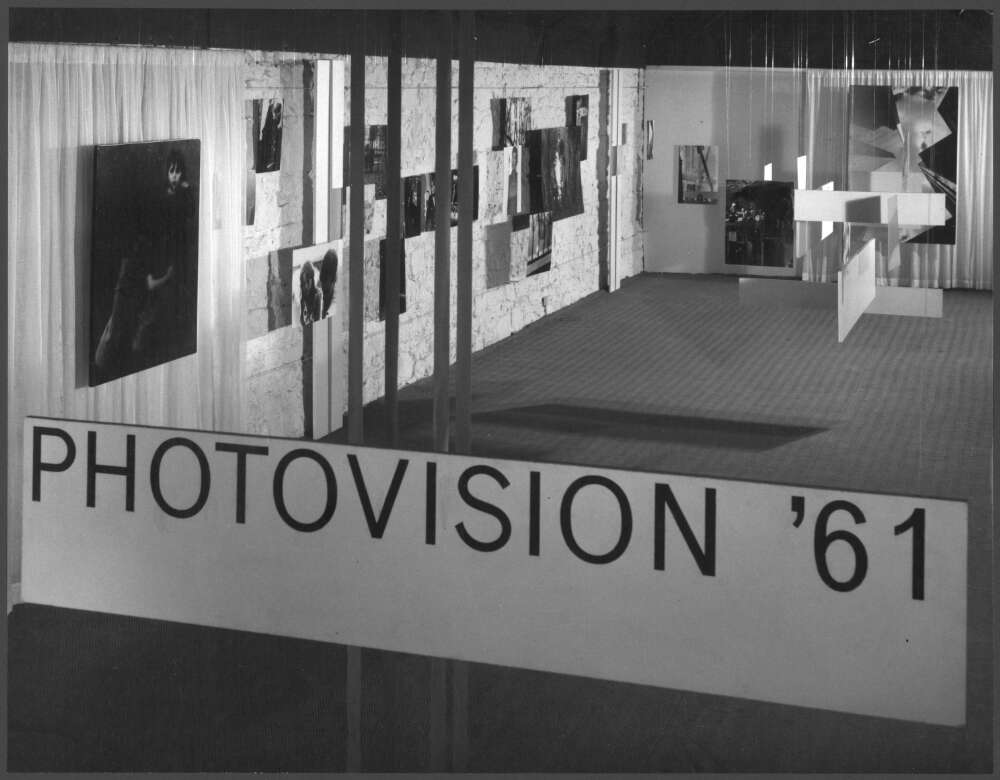
Gordon also exhibited once in 1961 in Group M’s Photovision series of shows at Melbourne’s Museum of Modern Art . Though Group M was short-lived and its exhibitions sparsely attended and rarely reviewed, tolerated by but not embraced into the art world of the Museum’s director John Reed, its reach into the Australian photographic community was indicative of rising, but still nascent, interest in the medium as an art form.

De’Lisle specialised in industrial and automotive photography, as well as photographic aerial mapping. These specialisations aligned well with Australia’s post-war economic boom and infrastructure development. His business grew steadily, as Christopher recounts:

“His client list eventually grew to include major institutions; the Department of Trade and Industry, Ford Motor Company, and the Australian Wool Board, consequently more space was needed and he moved to the opulent classical 1890 Boom-style villa 462 St Kilda Road, then to 81/83 City Road, a vast premises with large photography room, with office and dressing rooms, multi station dark room, separate film processing rooms (colour and black and white) and large fully equipped mural printing room. I had left school and joined my father’s team of six staff.”
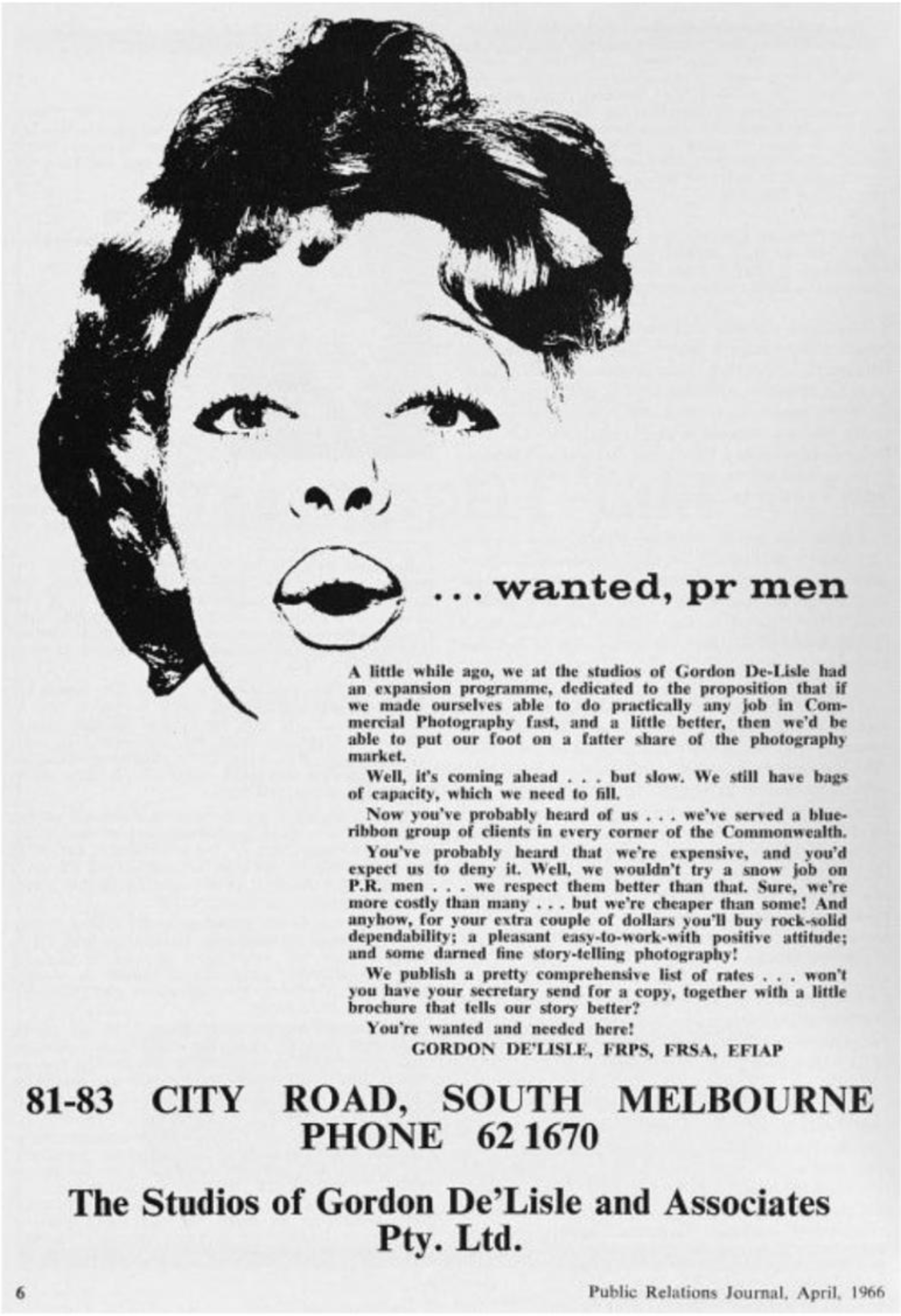
He achieved recognition in international photography competitions, including placing third in the U.S. Camera magazine international contest. Travel and Camera in 1960 noted that “of 5 prizes being shipped to Australia , 4 are going to one photographer , Gordon De Lisle a past U.S. Camera winner.”
His series of AUSTRALIA posters further enhanced his reputation, winning multiple awards in American Art Directors’ exhibitions.
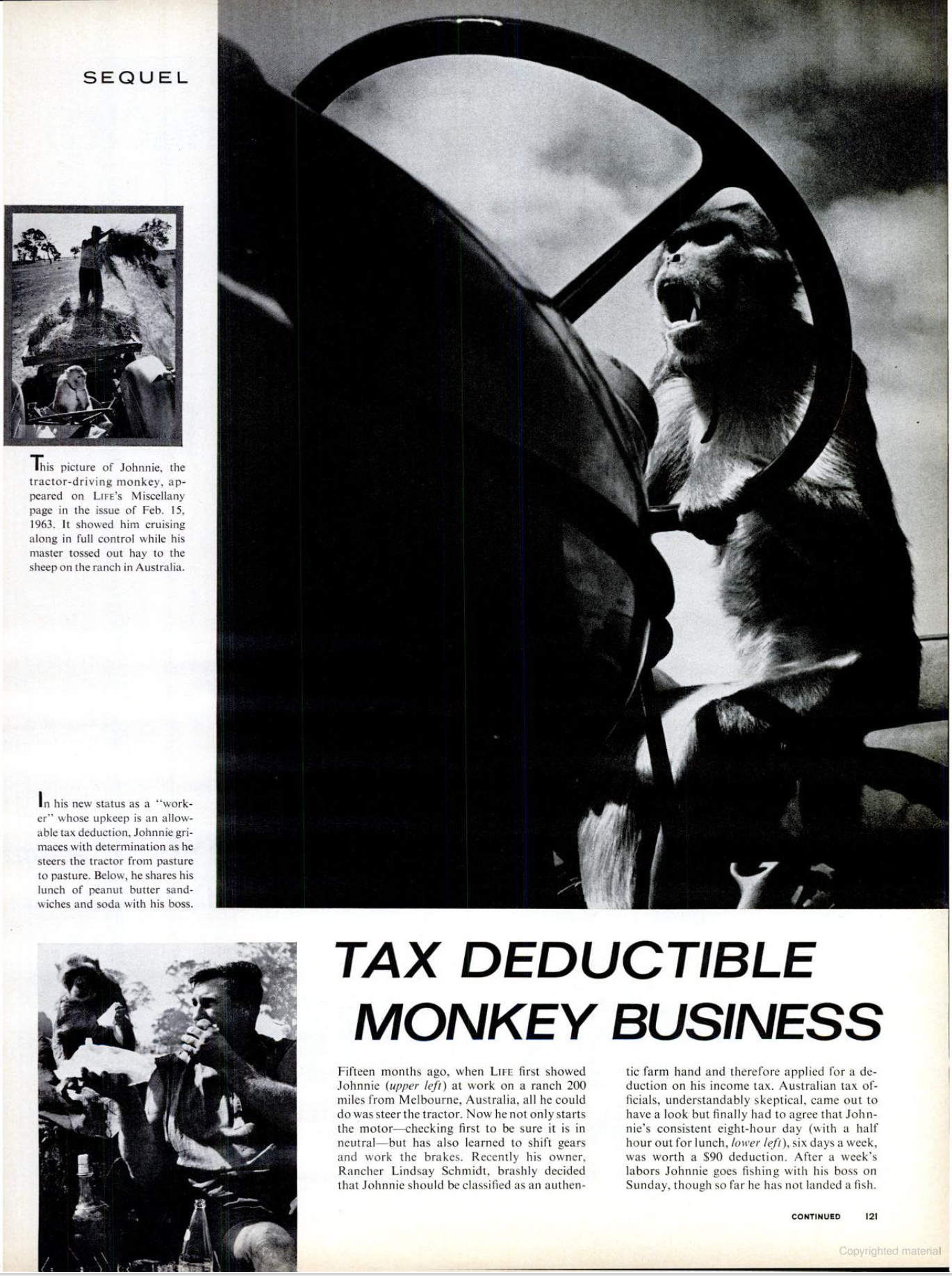
By the late 1960s, De’Lisle had established a substantial commercial operation. His status as a member of the Melbourne Camera Club, on which he served as a judge with Allen Gray, Athol Shmith, Bill Baillot, Bill Owen and Dacre Stubbs, engaged him with Australia’s photographic community and institutions and piqued his interest in ‘artistic’ photography, particularly the nude.

The late 1960s and early 1970s saw the De’Lisles—Cynthia was also a FRSA—diversify their professional activities to include publishing and education. Christopher describes his father’s publishing venture:
“Dad wanted to try his hand at more personal projects in book publishing, establishing Joey Books Pty. Ltd. in 1963 producing photographic illustration for Joyce Nicholson’s children’s books Andy’s Kangaroo, Kerrie and Honey and Ringtail the Possum. Cranky the Camel, photographed by Gordon and Cynthia at Ross River, Arltunga and Atnarpa, in Central Australia, was published by Landsdowne.”

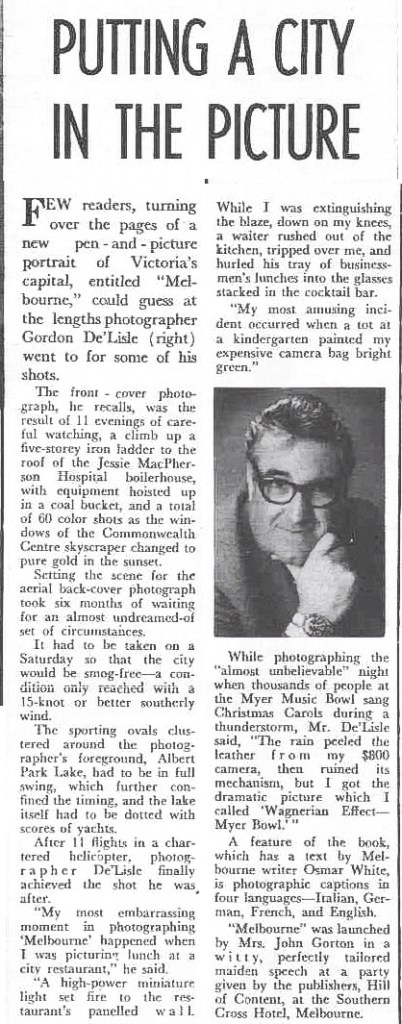
In 1968 De’Lisle teamed with war correspondent and Herald journalist Osmar White to produce a copiously-illustrated coffee-table volume on Melbourne, published by the prestigious Hill of Content.


Their book was launched by the Prime Minister John Gorton’s wife Bettina.


In addition to tourist, travel and children’s books, De’Lisle also produced more artistic work:
“In contrast was his authorship of a collection of figure studies titled Of Woman, Love and Beauty, which combined his artistic vision with reflective aphorisms.”


Throughout this period, De’Lisle continued to expand his artistic approach through various influences, as Christopher notes:
“My father himself, drew inspiration from the best. I still have his wonderful collection of photographic art books. These included early influences and favourites. Sam Haskins, who greatly influenced his nude work, Richard Avedon and Irving Penn, just to name a few. One of my own favourites which my father passed on to me, is a little handbook called The Command to Look: A Formula for Picture Success, by William Mortensen; an illustrated pocket book loaded with invaluable tips and information on achieving picture impact and drama. You can see this booklet’s influence on my father’s work, particularly the figure studies.”
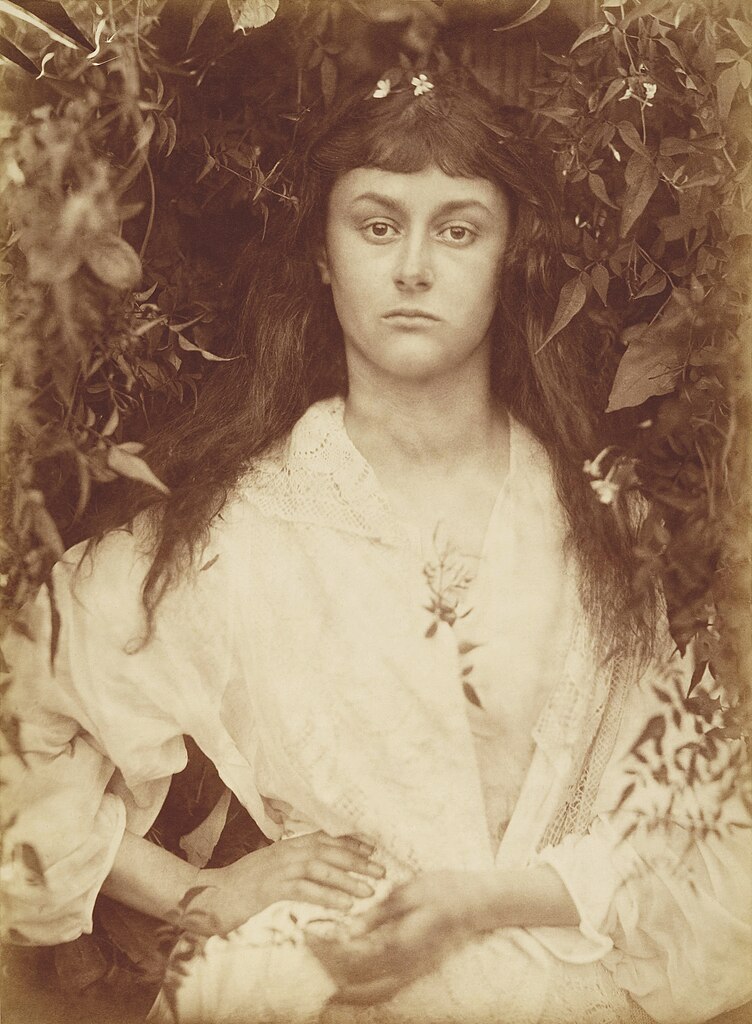
Christopher De’Lisle considers that Julia Margaret Cameron’s portrait of Alice Liddell (who was earlier Lewis Carroll’s muse) was the inspiration for his father’s photograph of Lin Whitehead, though Gordon never knew that Cameron was part of his ancestry.

In October 1969, De’Lisle delivered a scathing address at the Hypo’69 convention in Canberra, in which he offered a critique of the state of professional/commercial photography in Australia. His speech decried what he perceived as the degradation of photography as a profession, criticizing price-cutting practices, the exploitation of photographers by advertising agencies, delayed payments, and the general lack of respect for photography as a specialised artistic and technical discipline.

By 1970, De’Lisle was ready for a career transition that would allow him to share his extensive knowledge and experience with a new generation of photographers.

Christopher provides context for this change of direction:
“The De Lisles were ready for change and my father was to scale back the studio operations at this time and was offered a position as ‘Senior Lecturer In Charge’ of photography at Prahran College of Technology. He enjoyed teaching. Many young cadet photographers learnt their craft working in his studios and learning the trade with his guidance. This he did willingly and with great artistic passion, so his role at the Prahran Institute would come naturally to him. He understood that the art side of the genre was a deeply personal thing, but to have a clear path to express this, he felt that the way could be paved with academic nurturing. Then in his late forties, he was hired by the vocationally-oriented graphic designer Principal Alan Warren to follow Ian McKenzie as Senior Lecturer in Charge Photography, joining Paul Cox and Derrick Lee in the Diploma stream. There he researched videotape and electronic education.”
However his period there was not without controversy. Sculpture lecturer Caroline May, who taught at
Prahran between 1969 and 1990, provides this account in Judith Buckrich’s 2007 Design for Living: A History of ‘Prahran Tech’:
“[In 1969] I got an interview with Lenton Parr … The Principal of the whole college & junior schools, trade depts was Alan Warren (also critic for The Sun & a painter). He was a man with mental problems and saw any success as a threat to himself, hence the amazing amount of staff losses. In Oct of ’69 the system changed … and we had to reapply for our jobs, Libby Austin & I amongst, them even though Len Parr had appointed us. We were budding subversives!!! Warren took this opportunity to get rid of any talented staff who had not been forced to walk out, like Wally Sebold & Chris Palmer Industrial Design dept. or like Lenton who found his job advertised without telling him!!! He then took on a collection of old ex ad. men attracted by the superannuation and an easier life in their remaining working years! Nice but not v. effective and they had never taught … Gordon De’Lisle who … by his own admission accepted students “[only] with big tits and couldn’t run fast” along with quite a few others till sexual harassment came in were quite incorrigible! Often having to be fought off physically even by female staff!!
In De’Lisle’s letter to the then notoriously ‘larrikin’ (read misogynist and sexist) Nation Review about Carol Jerrems’ breasts and girls students skinny-dipping in his home swimming pool while he lectured at Prahran reveal, through his own words, that he was ill fit for the advancing wave of feminism;
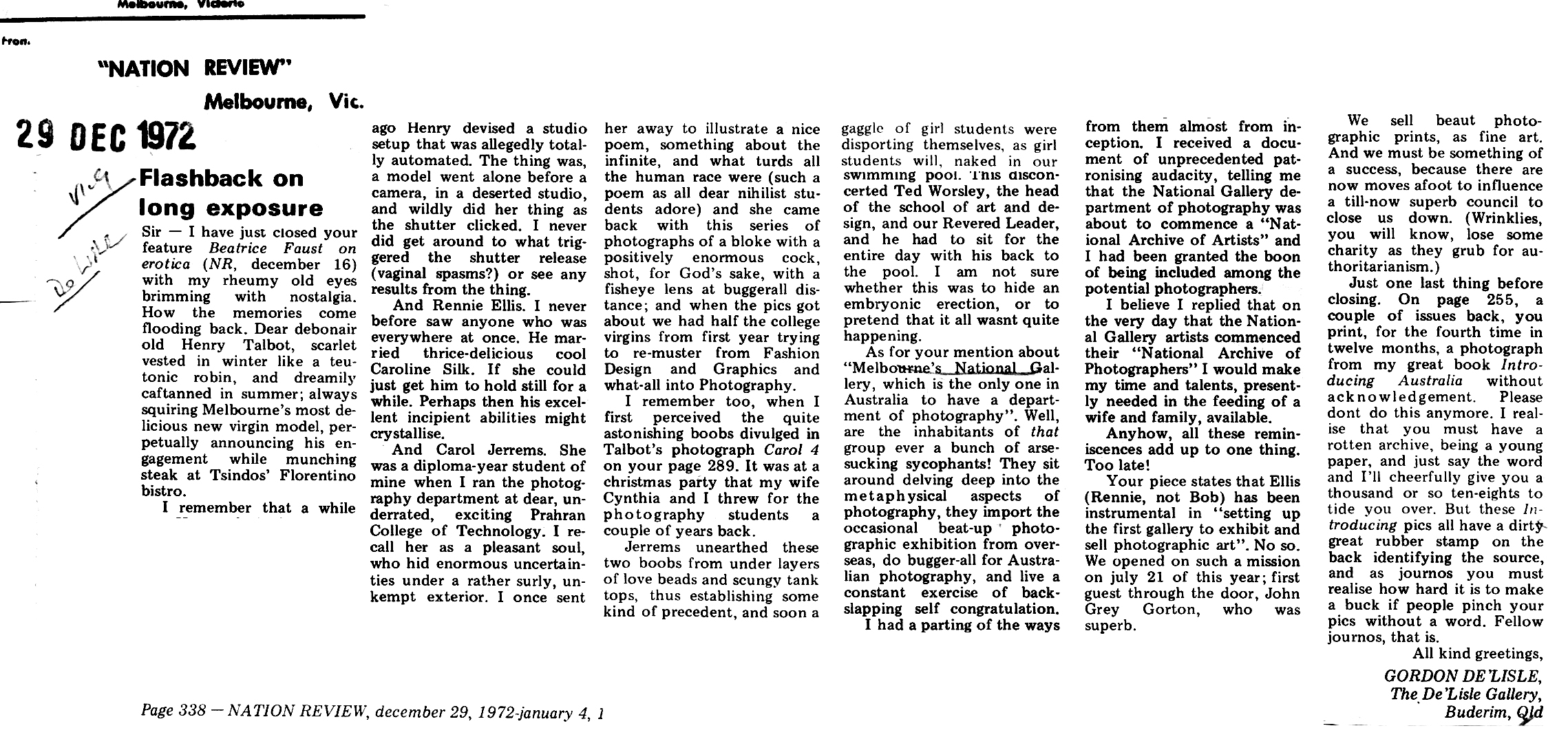
Christopher writes in response to such commentary that:
“I am aware that Dad was a controversial character, he did rub some people the wrong way. I accepted that because I knew the predominantly good, generous side of his character.”
And indeed, Gordon is remembered favourably by alumni; Stephen Wickham for example is grateful for De’Lisle’s intervention that saved him from conscription into the army during the Vietnam War. De’Lisle’s sympathies may have been aroused; he was thankful that his role as a photographer meant he had not to fire a shot in anger during WW2. His ‘predominantly good, generous side’ emerges in his (unsuccessful) application for early compassionate discharge from the RAAF pleading his concern over the plight of his elderly and ailing mother living alone in a third-floor flat at the corner of Drummond and Elgin streets in Carlton, on the 35 shillings a week (value $140 in 2025) that he provided her.
During his time at Prahran, De’Lisle continued his creative work while teaching, developing a high-contrast photomontage series.
Unfortunately, De’Lisle’s tenure at Prahran College was cut short by a heart attack, as Christopher explains:
“The Prahran Tech. job worked out well for Dad but his health became an issue, so he and my mother made the decision to finish down south and move to sunny Queensland. His vacated position at Prahran was filled by long time friend and colleague, Athol Shmith, and my parents moved north.”
Gordon was replaced with Athol Shmith by the incoming Principal Dr David Armstrong, in 1971 but did not stop working..

In 1974, Gordon and Cynthia De’Lisle established the De Lisle Gallery of Fine Art in Montville, Queensland, and in between was selected for the gritty 1972 catalogue Concern: The Ilford Photographic Exhibition from submissions to a competition, the overall winner of which, GTV 9 employee Barrie Bell, now a freelancer, won $1000 and a round the world plane ticket for two, for his posed street photographs of a couple of ‘down-and-outs’, as they were then known.
The title Ilford chose nodded perhaps to the Cornell Capa edited The Concerned Photographer books of 1968 and 1972 but the contents are effete by comparison.
De Lisle’s series, treated with darkroom magic, improbably showed “the raped land, Australia, as it would appear to a [nude, of course,] woman who returns from the dead to discover that her country, too, is dying,” and won the ‘Creative’ section, and $500.
He elaborated on its visual message:
“I’m not a nihilist, l’ve enough faith in human nature and human indignation to feel that Australians must inevitably recoil, appalled at the devastation, and we’ll do something about it; we’ll get it stopped. An ineffable sadness came upon me as I roamed the land putting together these images. The woman is a product of the darkroom. What I did was lock myself in the darkroom with a big batch of Ilford paper and produced this folio from images I had on hand. It sets down on paper a revulsion for what the prostitutors are doing to this beautiful country.”

The Queensland gallery, directed by Cynthia, specialised in mixed shows, according to Max Germaine (1979) “of selected works by Australian artists of significance and…Thai, British and European artists” and it operated for more than 40 years. It represented a significant shift in De’Lisle’s professional focus toward art promotion and curation. Son Christopher, born 1950, who took over its management, has thus has been immersed in the world of art for most of his life.

Gordon De’Lisle passed away in 2002 at the age of 79 after a career that tracked and was influenced by developments in the field of professional photography in Australia through the mid-to-late twentieth century, requiring versatility which he navigated in moving between news photography and photojournalism, military photography, commercial work, fine art, publishing, education, and art curation.
 Prahran Photography
4 thoughts on “The Lecturers: Gordon De’Lisle”