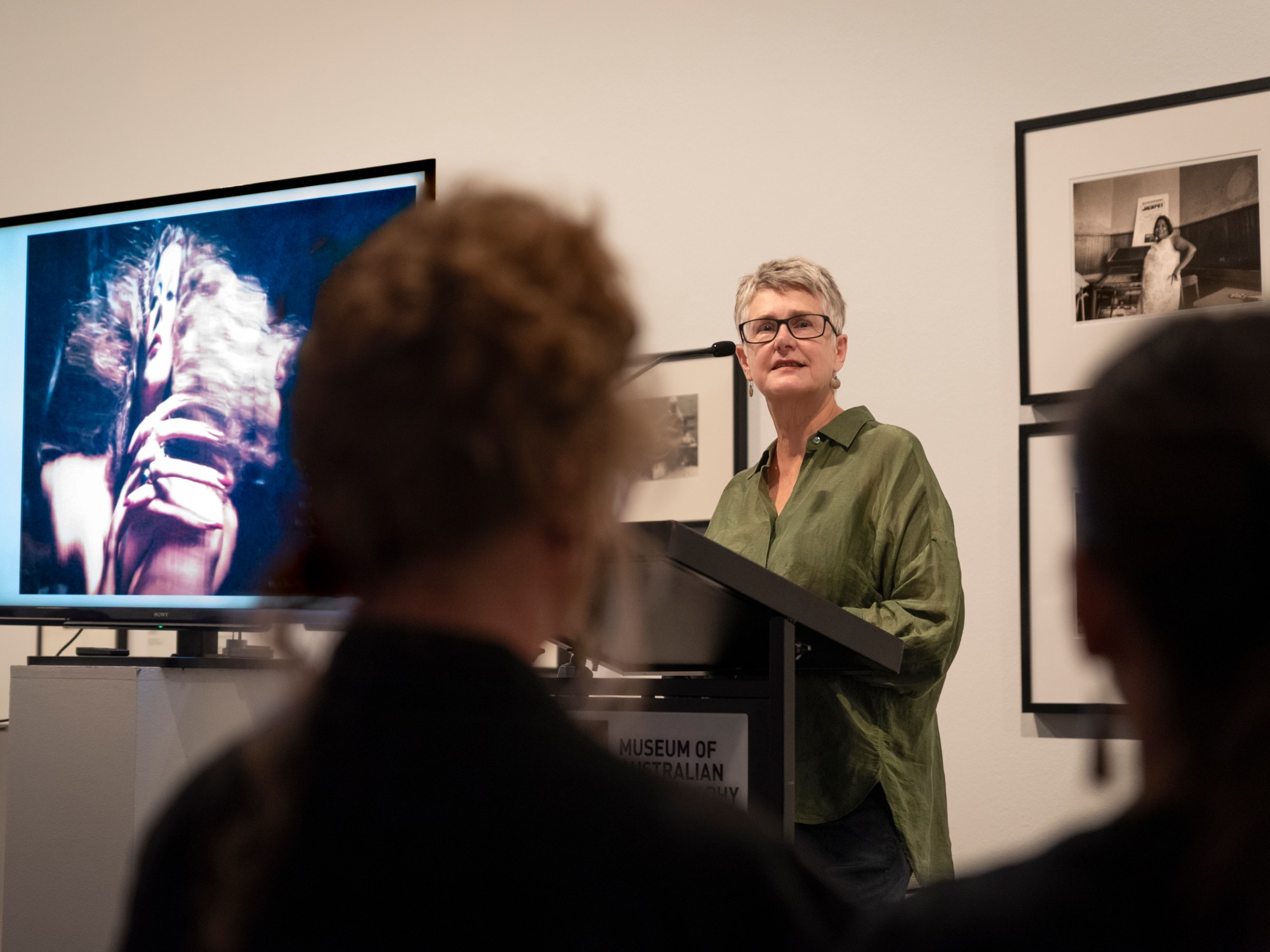
As our Prahran Legacy team savours the excitement and triumph of Prahran College alumni work from 1968-1981 being exhibited as The Basement at the prestigious Museum of Australian Photography, we need to take stock of what this really means.
One way is to read perspectives on the show in the book The Basement in their essays by outstanding commentators, Gael Newton, Helen Ennis, Daniel Palmer, Adrian Danks and the MAPh curators, themselves of high standing, Angela Connor and Stella Loftus-Hills. Better yet is to hear these people speak and to have them respond to questions from alumni and other interested parties at the series of special talks being held during the course of the exhibition.
On 15 March, during the launch of the book, Helen Ennis and Daniel Palmer addressed the topic ‘Curating the ’70s’. I will have to tackle their presentations in separate posts here, but it is important to understand, from knowing about their careers and reputations, how significant a moment in the history of Australian photography is this exhibition and its record in the publication.
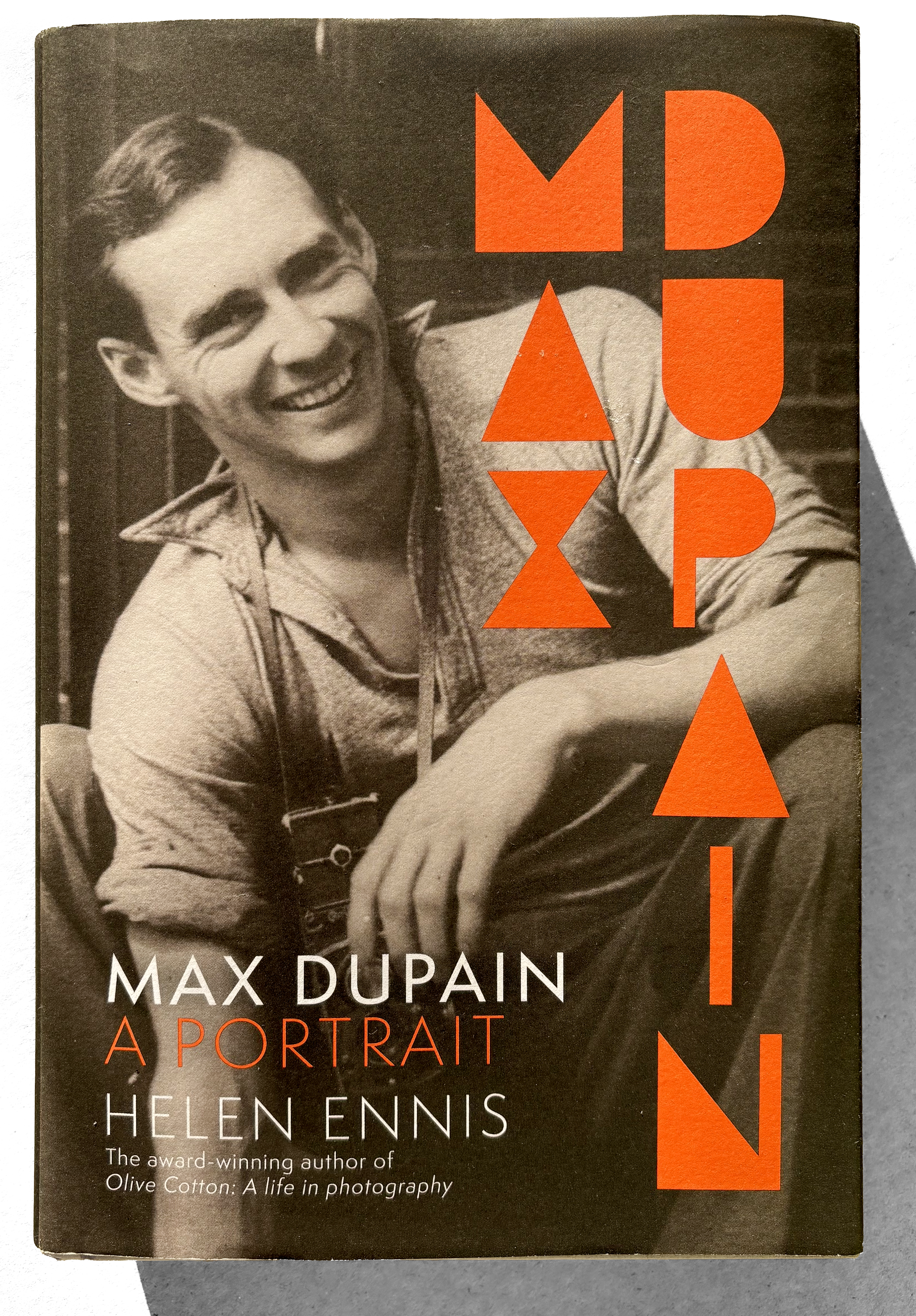 Helen Ennis is an Australian photography curator, historian, and writer, most recently of an intimate biography of Max Dupain, who has developed her expertise on Australian photographic history through a career in curatorial work, academic research and teaching, and writing, with contributions that contextualise photography in broader Australian visual cultures, society and history.
Ennis was appointed as an assistant curator under director James Mollison, a known ‘devotee of photography’, in the Department of Photography at the National Gallery of Australia in Canberra in 1981 where, as critic Sasha Grishin writes, she was among a generation of young curators trained there, including Andrew Sayers, Mary Eagle, and Isobel Crombie, “who spread the ‘ANG professionalism’ throughout the country.”
To read titles of some of the topics of lectures Ennis delivered through the 1980s for the National Gallery and its members is to glean something of her omnivorousness and conversance with current issues and interests: ‘Colour Photography’; New American Colour Photography; ‘Here Comes the New Photography’; ‘Selections from the Photography Collection’; ‘Diane Arbus and the Dark Side;’ American photography 1930s-1970s; a preview of the exhibition Australian Photography from the Kodak Fund; ‘Tongue In Cheek: Boyd Webb’; ‘Altered Images: William Wegeman’; ‘Just Another Sunrise: Jon Rhodes’; ‘Big Pictures: Australian Photography 1975 -1985; ‘The Glamour Show: star and celebrity portraits’; ‘Robyn Stacey’s fantastic visions’; ‘New Art for a New Time. Photography between the wars’ and so on. She presented on Wolfgang Sievers to the Art Museums Association of Australia and joined a panel of other NGA curators in 1986 to answer questions from the public about the Gallery.
Ennis was promoted to Curator of International and Australian Photography, a position she held from 1985 to 1992, pioneering a series of both scholarly and popular exhibitions and publications. Her curatorship of Australian Photography – The 1980s concentrated on ‘contemporary work’ but complimented ‘the overall picture which is presented in Gael Newton’s book and exhibition Shades of Light – Photography and Australia 1839-1988 (in which Ennis wrote the chapter ‘Contemporary Photographic Practices’), the outcome of Newton’s appointment from AGNSW as visiting curator in the National Gallery for the 1985–1988 Bicentennial Photography Project. MAPh’s current lecture series demonstrate how engaging would have been sessions Newton and Ennis delivered in 1988 at an all-day, well-attended seminar on Shades of Light for tertiary students.
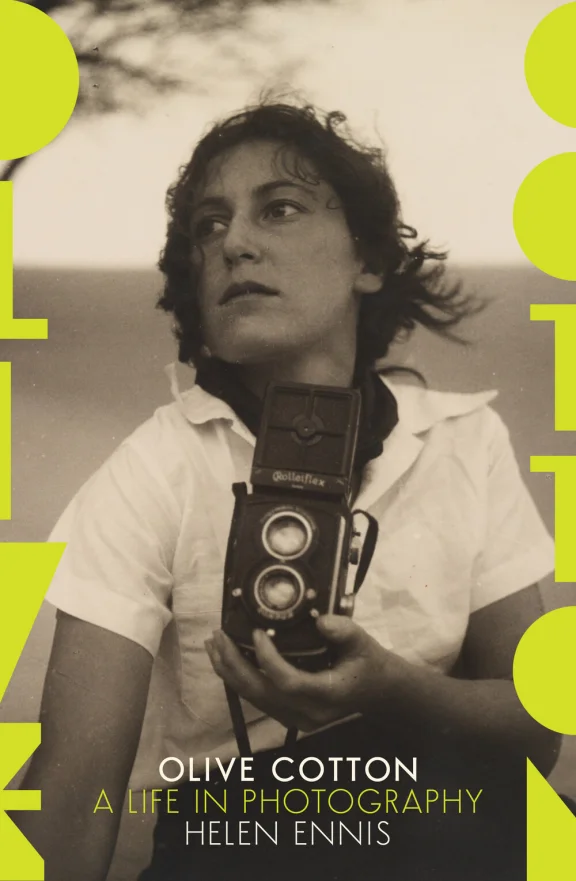 Following her curatorial role at the National Gallery, Ennis established herself as an independent curator and writer specialising in Australian photographic practice and biography. An outcome was her early investigation of the previously overlooked professional colleague and first wife of Max Dupain, Olive Cotton, welcomed by reviewer Stephanie Holt as offering persuasive ‘evidence of Cotton’s stylistic versatility and exploration of continuities throughout Cotton’s life and work’. Ennis returned to these themes in a more extensive biography of Cotton that she was to publish in 2019.
Ennis lectured in Art Theory at the Australian National University (ANU) School of Art & Design from 1996 to 2018, driven by a sense that ‘we still have a great deal to do: identifying and retrieving objects from the past that must be kept’, to undertake, according to Catriona Moore, an holistic, collective photographic project inspired by novelist David Malouf’s vision of a ‘dream history’, ‘a myth history, a history of experience in the imagination.’ Ennis’s expertise and contributions were recognised in her promotion to a Professorship in 2014. She further served as the Director of the Centre of Art History and Art Theory and held the prestigious Sir William Dobell Chair of Art History from 2014 to 2018. Throughout her academic tenure, she also convened the School’s Graduate Research program.
Reviewing Ennis’s 2006 Intersections: Photography, History, and the National Library of Australia, Catherine de Lorenzo characterises the author’s approach:
Ennis wears her historical knowledge lightly. She prefers to leave space for her own more subjective and reflexive voice, addressing elusive and ultimately unstable (‘associational’, ‘interconnected’ and ‘polymorphous’) interpretations [. . .] Ennis veers towards a critical model in that she attempts to question the role of the ‘expert’ narrator and to give space to some micro-cultures within multicultural Australia.
During this period Ennis wrote the history Photography and Australia for the UK Exposures series on national photographies (2007), and Reveries: photography & mortality for the National Portrait Gallery, Canberra, (also published 2007) supporting an exhibition of that name which toured the University of Queensland Art Museum and the Mornington Peninsula Regional Gallery.
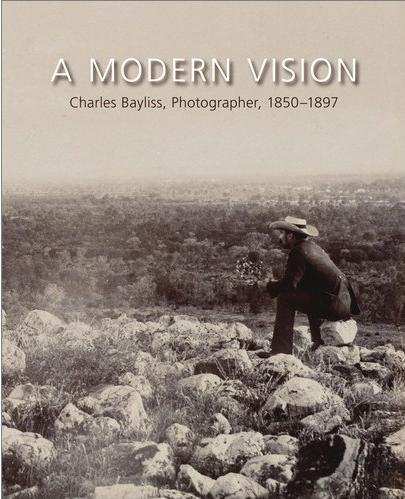 The National Library of Australia’s venturing into digitisation of its collection provided Ennis with the opportunity to provide international access to Charles Bayliss’s nineteenth-century photographs of early Sydney through an online catalogue of the exhibiton she curated at the Library 11 July–26 October 2008. In A Modern Vision: Charles Bayliss, Photographer, 1850-1897, as Alison Clark notes, Ennis represents Bayliss as a modernist, distinct from the naturalist representations of Charles Kerry, J. W. Lindt and Nicholas Caire, in being concerned with poeticising place ‘rather than depicting a nostalgia for the pioneering past. Through his photography Bayliss depicted an escape from the ‘toil of city life’, and it is this, Ennis argues, that sets Bayliss apart as a modernist visionary.’
In approaching the writing of Photography and Australia for its international audience she notes that the advent of photography coincides with the European colonisation of Australia and the dispossession of its indigenous peoples, but declares in her Introduction:
‘I have not wanted to construct a linear history – assuming such a project were even possible or desirable – which gives a seamless, triumphal account of social and technological process. Nor have I wanted to be reliant on a single methodology, utilising instead on a variety of approaches to elucidate the meanings of different clusters of photographic works. The chapters have been written as self-contained essays that discuss particular themes, issues, styles and ideas. Overlaps in chronology and history, and thematic interconnections, have been welcomed as a means of creating greater internal complexity.’
Joshua Bell notes Ennis’s summation of the influences of immigration and the multicultural experience on visual narratives in addressing the issue of localism and internationalism in Australian photography.
Professor Ennis draws on her deep knowledge of photography and its historical significance for major survey projects including Mirror with a Memory: Photographic Portraiture in Australia held at the National Portrait Gallery in 2000 not long after its opening, which demonstrated the continuum between the vernacular and fine art applications in the genre; a retrospective exhibition of Olive Cotton’s photographs (Art Gallery of NSW, 2000); and In a New Light: Australian Photography 1850s-2000 (National Library of Australia, 2003–2004). Her more focused exhibitions include a mid-career survey of Sue Ford’s work at Monash University Museum of Art in 1995; the assembly of European émigré photographer Margaret Michaelis’s work at the National Gallery of Australia in 2005, Reveries: Photography and Mortality (Australian National Portrait Gallery, 2007), and Things: Photographing the Constructed World (National Library of Australia, 2012).
Helen Ennis’s contributions to photography criticism and history have earned her accolades including the epithet ‘Australia’s pre-eminent writer about art photography’. In 2021, she received the J Dudley Johnston Award/Medal from the Royal Photographic Society, recognising “major achievement in the field of photographic criticism or the history of photography” and acknowledging her “sustained excellence over a period of time”. She is a Fellow of the Australian Academy of Humanities.
Ennis’s biographical works have been particularly rewarded; her Margaret Michaelis biography (2005) was awarded the Victorian Premier’s Non-fiction Prize in 2006 and the Best Book award by the Power Institute of Fine Arts and Art Association of Australia and New Zealand. Her more recent biography, Olive Cotton: A Life in Photography (2019), received the 2020 Magarey Medal for Biography, the 2022 Adelaide Festival Award for non-fiction, and the 2020 Queensland Literary Awards Non-fiction Prize.
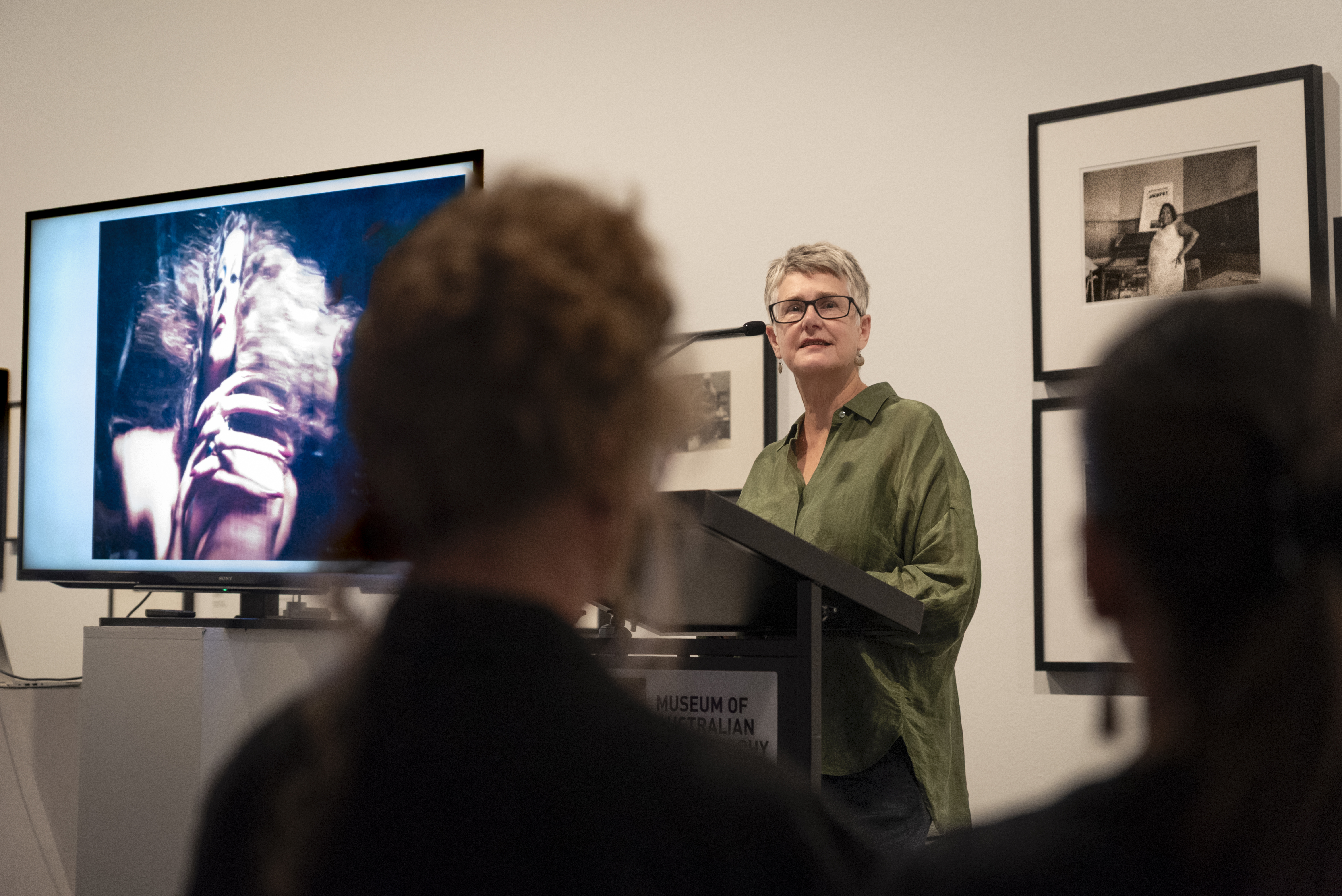
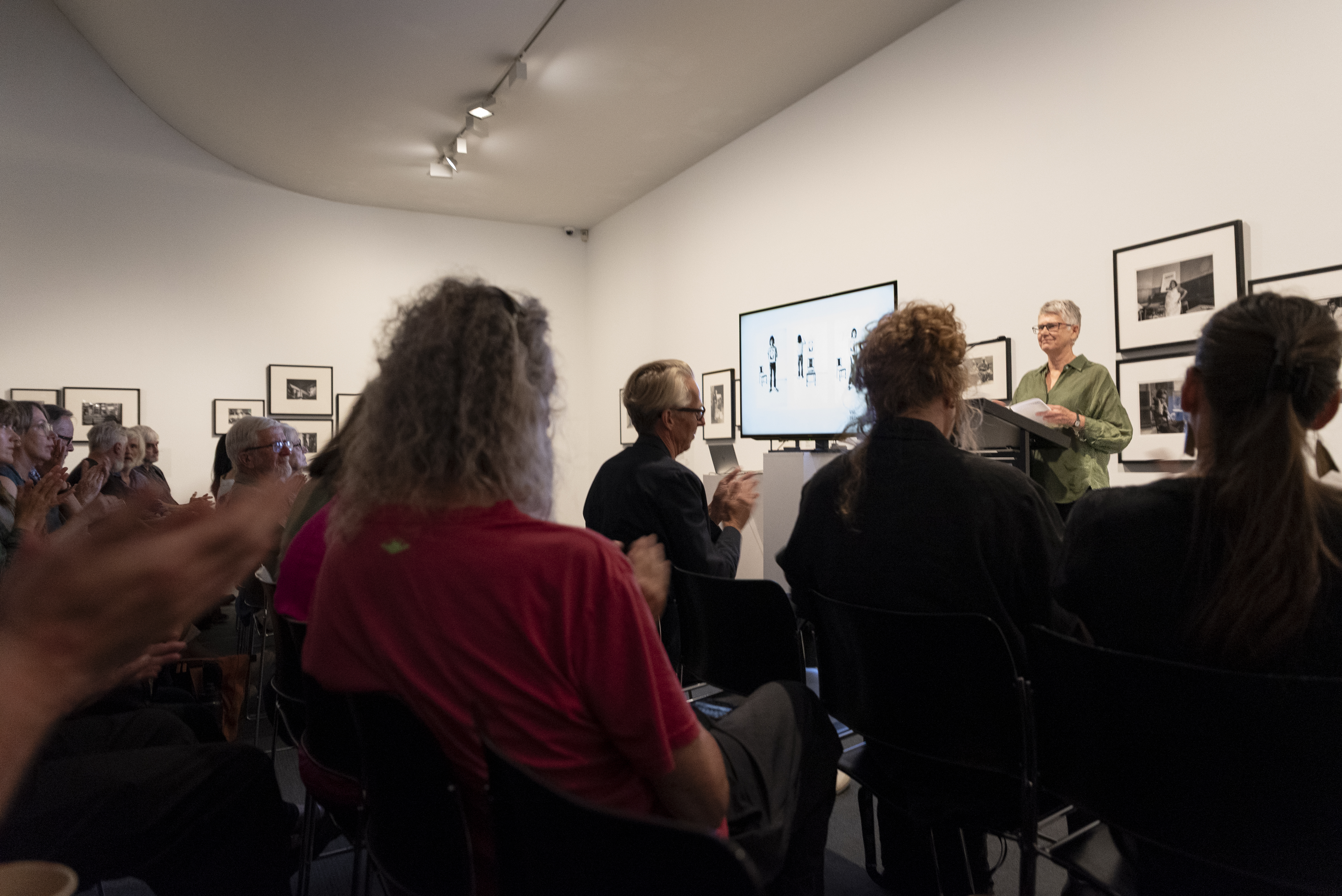
Helen Ennis’s address then, at the Museum of Australian Photography on March 15, 2025, offered thoughtful and novel curatorial considerations of the exhibition The Basement and approaches to historical photography and proposed new frameworks for understanding this pivotal period.
This is a summary:
Ennis began by reconceptualising the practice of curation, distinguishing between curating the 1970s during that decade and curating it retrospectively from our current vantage point. She described traditional curatorial work as pattern-making—gathering, sifting, sorting, and arranging materials to create cohesive narratives—while acknowledging how these decisions are influenced by institutional contexts and contemporary cultural issues.
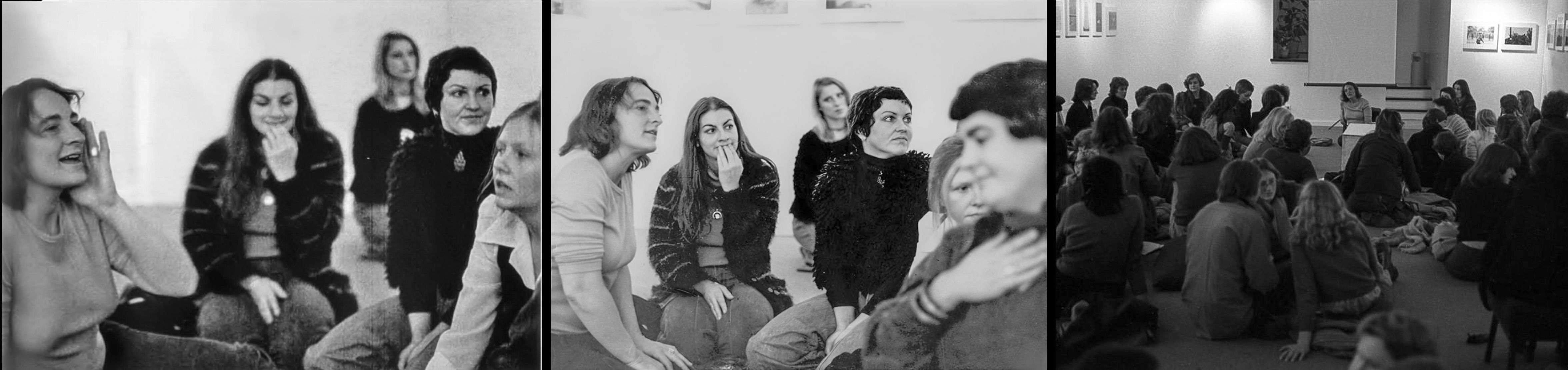
Reminding her audience that Lucy Lippard visited Australia in 1975—that was International Women’s Year—and that she gave lectures, including at the George Paton Gallery, Ennis introduced Lippard’s metaphor of “messy compost” as a productive alternative to overly neat historical narratives, an approach which embraces the chaotic, multifaceted nature of historical periods rather than imposing excessive order that might obscure important detail. Curating the 1970s from our 2025 perspective requires what Ennis terms “split vision”—simultaneously understanding that historical moment while illuminating it from contemporary perspectives.
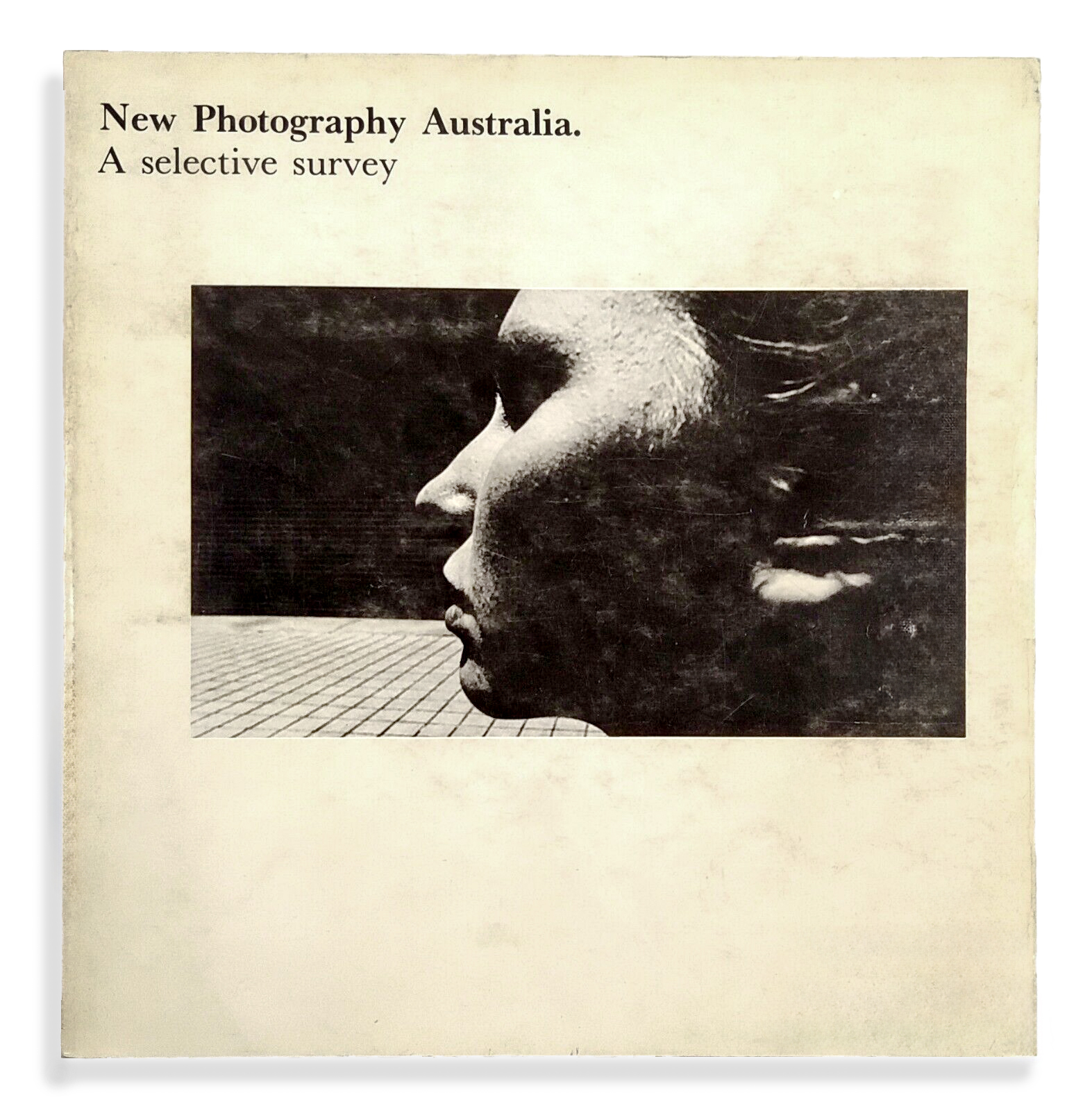
Ennis highlighted the importance of figures like Graham Howe, a Prahran graduate who became the inaugural director of the Australian Centre for Photography (ACP). Calling for a round of applause, she praised Howe’s 1974 initiative in writing about “another kind of photography” of this period that was “more personal and self motivated,” arising from “the photographer’s vision, feeling and experience” while also acknowledging photography’s “cumulative tradition”. Howe gives his own account, published to coincide with The Basement, of his early works and time at Prahran in Epoch (reviewed here by Gael Newton).
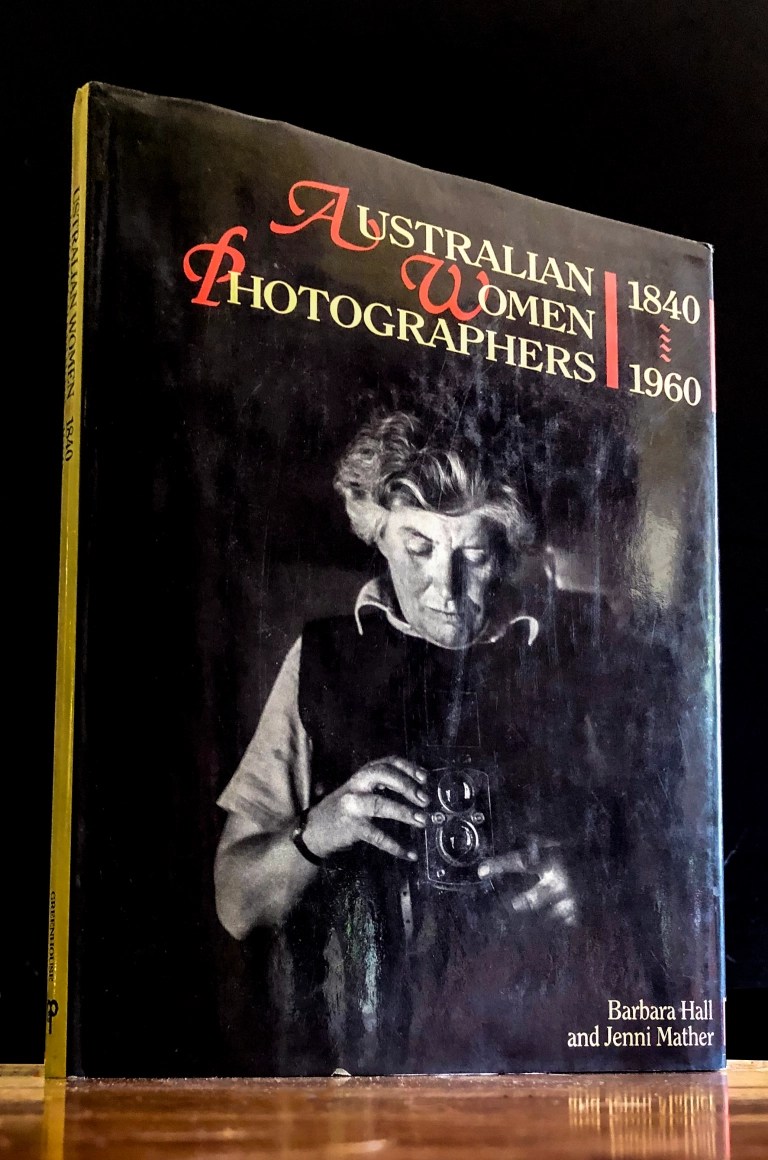
During this period, Ennis explained, documentary and straight photography predominated, with conceptual photography less common but significant. The era was marked by vigorous contestation about appropriate photographic approaches, heavily influenced by Feminism and Marxism. Feminism underpinned both contemporary practice and historical research, notably in Barbara Hall’s and Prahran alumna Jenni Mather’s groundbreaking work on Australian women photographers.
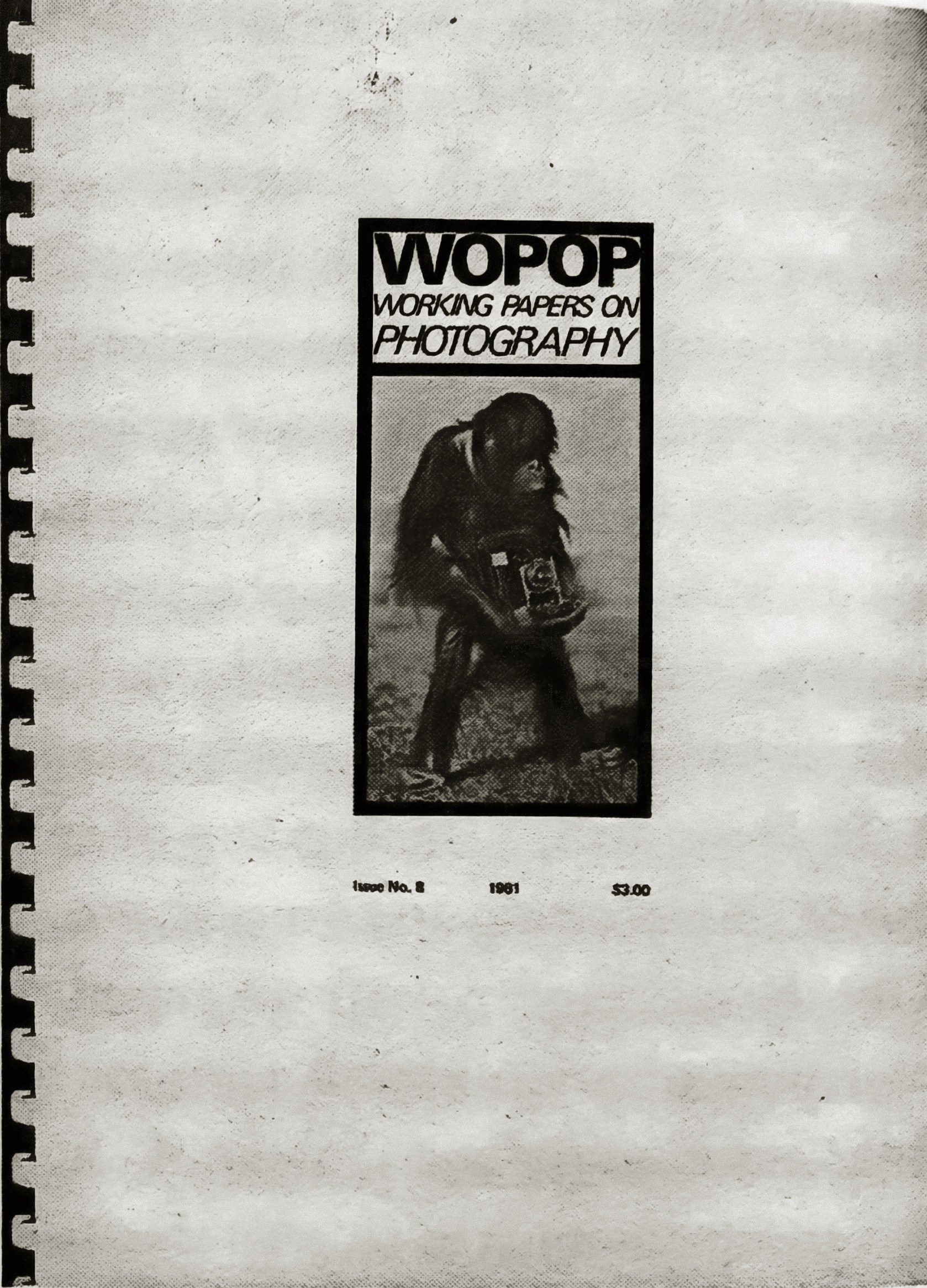
Marxist theory was exemplified in WOPOP (Working Papers On Photography), a series of conferences and a journal edited by Prahran alumni Euan McGillivary and Mathew Nickson that approached photography as both communication medium and art form
Ennis praised “The Basement” exhibition for embracing a productive form of messiness—”compost as enrichment”. The exhibition displays nearly 300 works and incorporates diverse objects including ephemera and moving imagery an approach that acknowledges a contemporary understanding of photographs as both images and objects, demonstrated through the inclusion of unmounted photographs and Carol Jerrems‘ works with handwritten inscriptions left visible.
Several themes emerge in the exhibition’s content: the predominance of urban subject matter; and abundance of human interest photography and portraits; a focus on working-class Australian subjects in unglamorous environments; and a feature Ennis only noticed on reflection, a sense of ennui and isolation expressed through dark tones and spaces.
Ennis noted this last element challenges her own earlier curatorial emphasis in on the “upbeat forward-looking momentum” of the seventies:
“When I was curator of photography at the National Gallery in 1987 I curated a show called Living in the 70s, Australian Photographs, and in the accompanying essay, I referred to the healthy heterogenity of the period, but what I chose to emphasise was the energetic vibrant, experiential aspects associated with youth culture and social and political activism. At the end of my essay, and it’s just an appendage, I say, ‘excluded for reasons of space, a photo-documentation of performance events and large scale installations.’ This indicates that my younger self was aware of some exclusions and that I hadn’t found a way to tackle them. Now it’s glaringly obvious to me; if I were to recast that show in 2025, it would be a very different thing. I’m all too aware of what else I had left out.”
She suggested a more nuanced understanding of the period is needed, particularly given the contrasting social and political milieux of 1970-75 and 1975-80, and then made propositions for future curatorial approaches, with The Basement as a springboard for further investigations of 1970s photography. She proposed curatorial approaches that embrace “splintering, fracturing, paralleling, and a state of being mercurial” to mirror the instability and openness of photographic practice during that era, including: moving beyond linear hangs and traditional salon displays; employing diverse mounting and framing approaches; making use of small, intimate spaces, not to sideline the ‘less important’ but to enhance experiences; developing more varied and poly-vocal approaches to exhibition text; expanding the range of ephemera; and including older generations of photographers just as John Cato and the other lecturers are here, and perhaps Laurie Wilson, and Jill Crossley.
Ennis’s address brings to light from The Basement a critical reassessment of how we understand and present 1970s Australian photography. She advocated for approaches that preserve the complexity, contradictions, and energy of this formative period rather than imposing retrospective order that might simplify or misrepresent it. Her reflections bridge historical understanding with contemporary curatorial practice, suggesting ways to engage more authentically with photography’s rich past.
In conclusion, she said:
“These are just a few of my propositions for curating as composting, but where I want to end is with a statement from the late, great, Sue Ford, who, as you know, was working in a period before this. When she came to photography wanting to use it as a a creative medium of expression, she couldn’t go to Prahran, there was no such thing. But she was someone who in my life I admired so much for her endless experimentation, her never wanting to stay in a fixed position artistically. So in 1995, she wrote about her collages, and she said how she enjoyed—and I’m quoting her—‘finding the pieces, putting them back together, blowing them up, fragmenting them again, making new juxtapositions and unfixing them. So thanks to Sue for a new metaphor which I’ve latched onto now—‘composting’ aside for a moment—and that is unfixing.”
Read more about Helen Ennis in the Wikipedia entry written by James McArdle
 Prahran Photography
3 thoughts on “The Basement Lectures 1”