Memo Review Inc. is an unaffiliated, not-for-profit that reviews art each Saturday morning for its email subscribers. Critics have largely disappeared from newspaper columns, apart from Christopher Allen on The Australian, and photography reviewers no longer write in the press, it seems. This independent collective of a new generation of Australian art scholars, writers and artists have filled that gap with their critiques since 2017, publishing long-form reviews of art exhibitions at public art museums, commercial galleries and smaller artist-run spaces.

On Saturday 3 May, Memo Review’s Chelsea Hopper wrote on The Basement: Photography from Prahran College (1968–1981), noting that it was “originally pitched by Prahran College alumni.” She offers a thoughtful assessment of Angela Connor’s and Stella Loftus-Hills’ curatorial project that reimagines the legacy of Prahran College’s innovative photography program. Hopper’s diligent analysis is informed by the exhibition’s companion book and associated lectures to place The Basement as both a historical corrective and a provocation for contemporary photographic practice.
By treating all works with equal seriousness, Hopper observes, the exhibition destabilises established hierarchies of historical significance. The momentous shifts in Australian photographic culture; its acceptance as an art form; the formation of photography departments in educational institutions—”In May 1968, Prahran Technical School initiated the first photography program in an Australian art school”— and the rise of dedicated galleries she says are gestured at rather than exhaustively narrated. Hopper credits the companion book, its essays and personal accounts, with doing the heavy lifting in providing valuable amplification and a context for the exhibition within broader debates about Australian photographic historiography, while the exhibition itself insists on the irreducible complexity and simultaneity of its subject.
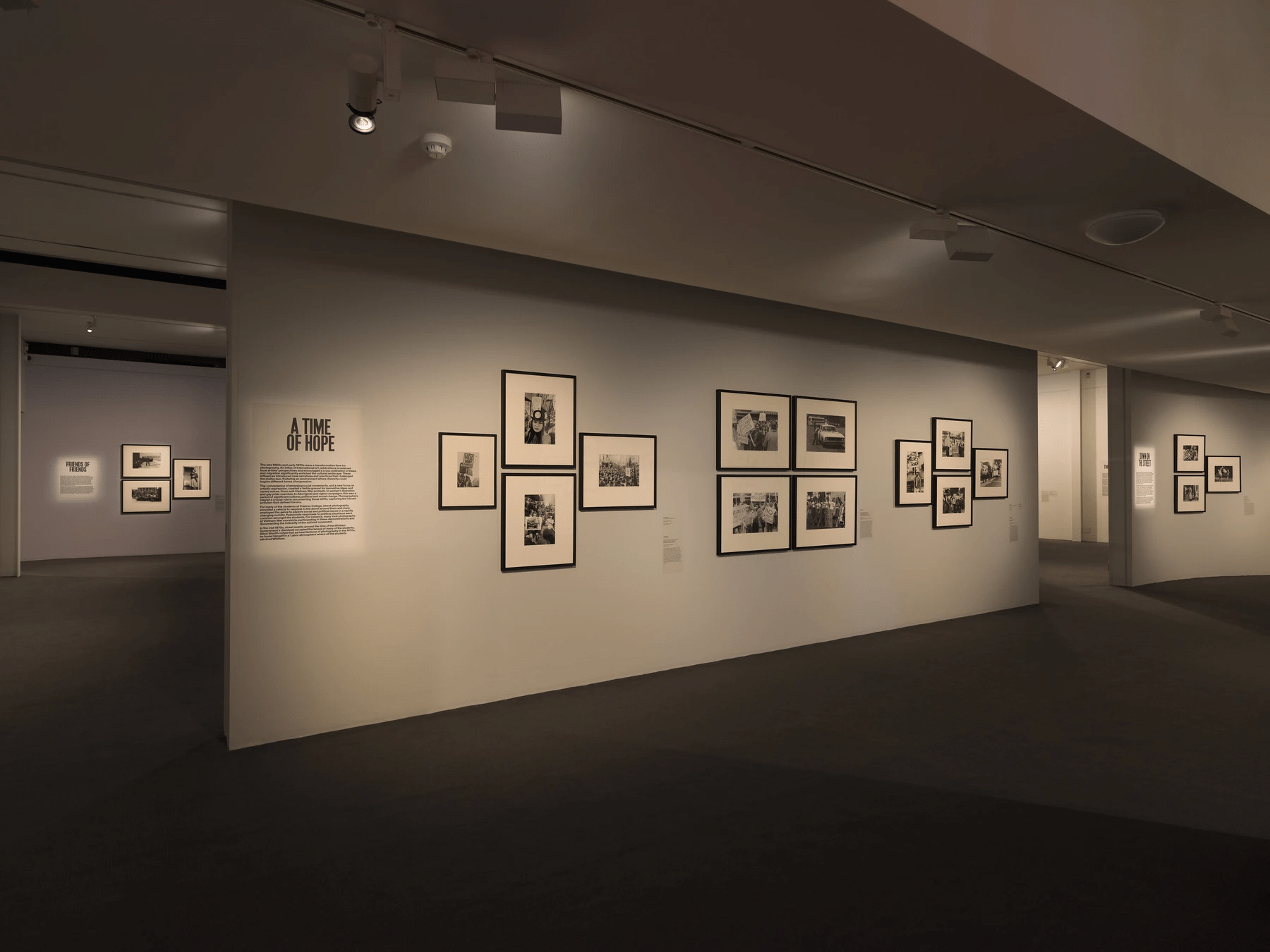
Hopper is in agreement with Helen Ennis‘ borrowed analogy of ‘compost’ in framing the exhibition’s embrace of “sprawl, ambition, and unevenness” as its defining strength, arguing that Connor and Loftus-Hills reject tidy chronological narratives in favour of a “horizontal, egalitarian mapping” of photographic practice. Hopper observes that the exhibition’s density and “the simultaneity of the hang displaces a singular view of this era, where students are not only on the street capturing social upheaval, but also find subjects in isolation, the everyday, and ennui.”
This curatorial approach, she notes, mirrors the ethos of Prahran College itself—a space where experimentation often outpaced institutional rigour. The inclusion of ephemera like contact sheets, annotated prints, and student publications (e.g., Thigh magazine) underscores the curators’ commitment to presenting photography as a process rather than a perfected output.
A central theme in Hopper’s review is the curators’ deliberate destabilisation of canonical hierarchies, with works by Bill Henson and Carol Jerrems, both household names in Australian photography being interspersed among those of lesser-known peers like Lyn Cheong and Viki Petherbridge. She notices that Jerrems’ Vale Street (1975) is displayed alongside her contact sheets and a mock-up for an unrealised exhibition, situating the iconic image within a networks of process and collaboration. Hopper links this curatorial decision to the pedagogical culture of Prahran College, where egalitarian relationships between students and teachers fostered a collective ethos. A 1978 student assignment depicting classmates posing with real guns—unthinkable in today’s risk-averse academic environments—exemplifies the “unruly experimentation” that defined the program. The exhibition’s “Teachers” section further blurs these boundaries, showcasing portraits of educators alongside their own work and images of students, a curatorial choice Hopper praises for highlighting the “permeability” of artistic mentorship.
Hopper’s review emphasises the exhibition’s material sensitivity is not merely a nostalgia, and how the curators have gone to great lengths to source vintage prints, eschewing the now-common practice of displaying modern reprints [such as were seen in the Heide Museum’s Lee miller show]:
“The indifferent surface of the inkjet prints clashes with the tactile richness of the vintage silver gelatin prints—their fibre-based paper, emulsion, and patina marking them as artefacts of another, more materially sensitive era. It is a reminder that how we encounter a photograph today is shaped as much by its physicality as by its image.”
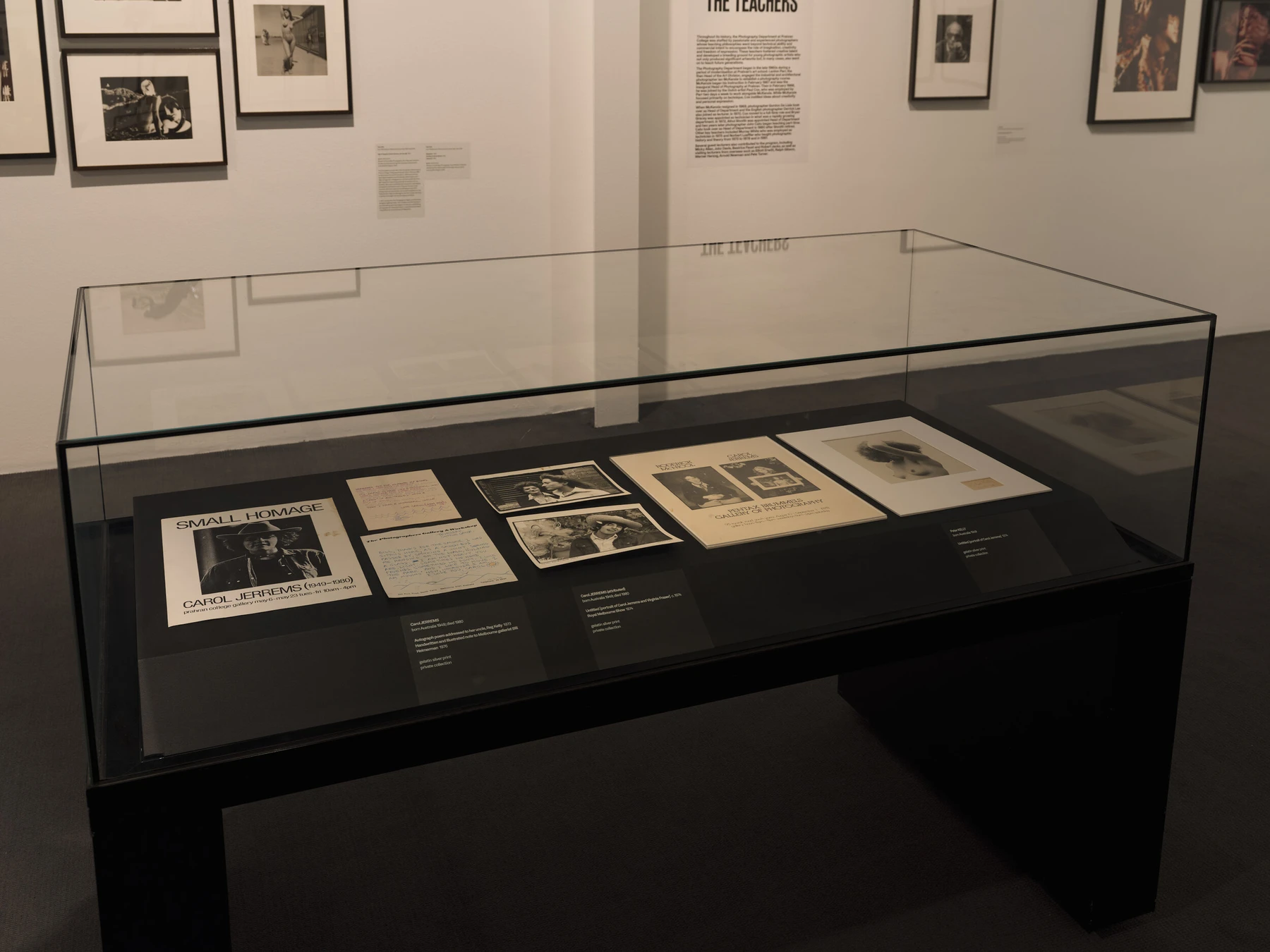
This focus extends to archival fragments: Carol Jerrems’ “use of pencil and pen to mark up her prints—details that were overmounted in her most recent survey at the National Portrait Gallery in Canberra;” the framing of Viki Petherbridge’s prints to reveal rusty pinholes left when she displayed her work, and worn and water-damaged copies of Thigh magazine. For Hopper, these details preserve the “patina” of the works’ creation.
In a brief mention, Hopper regards the catalogue’s 250 illustrations and oral histories as offering a narrative backbone to the visual sprawl for the exhibition’s “exhaustive” material.
Commending the curators for avoiding reductive narratives of the 1970s as a decade defined solely by political activism, Hopper writes that while photographs of Vietnam Moratorium marches and pro-Whitlam rallies are present, they share space with Johann Krix’s tender image of an elderly couple sharing tea in a park and Geoff Strong’s whimsical Bald man enjoying the sun, St Kilda. Likewise Helen Ennis’s MAPh lecture expanded on this theme, critiquing her own 1987 exhibition Living in the 70s for overemphasising “youth culture and social activism” at the expense of quieter, introspective works with a “sense of ennui and isolation expressed through dark tones and spaces,” a thematic thread Hopper identifies as a corrective to earlier historiographic biases.
For Hopper, The Basement is not merely an historical survey but a provocation to current photographic education and today’s standardised, risk-averse art schools, a prompt for viewers to consider what has been lost in the transition to university departments from autonomous art colleges that privileged experimentation over compliance
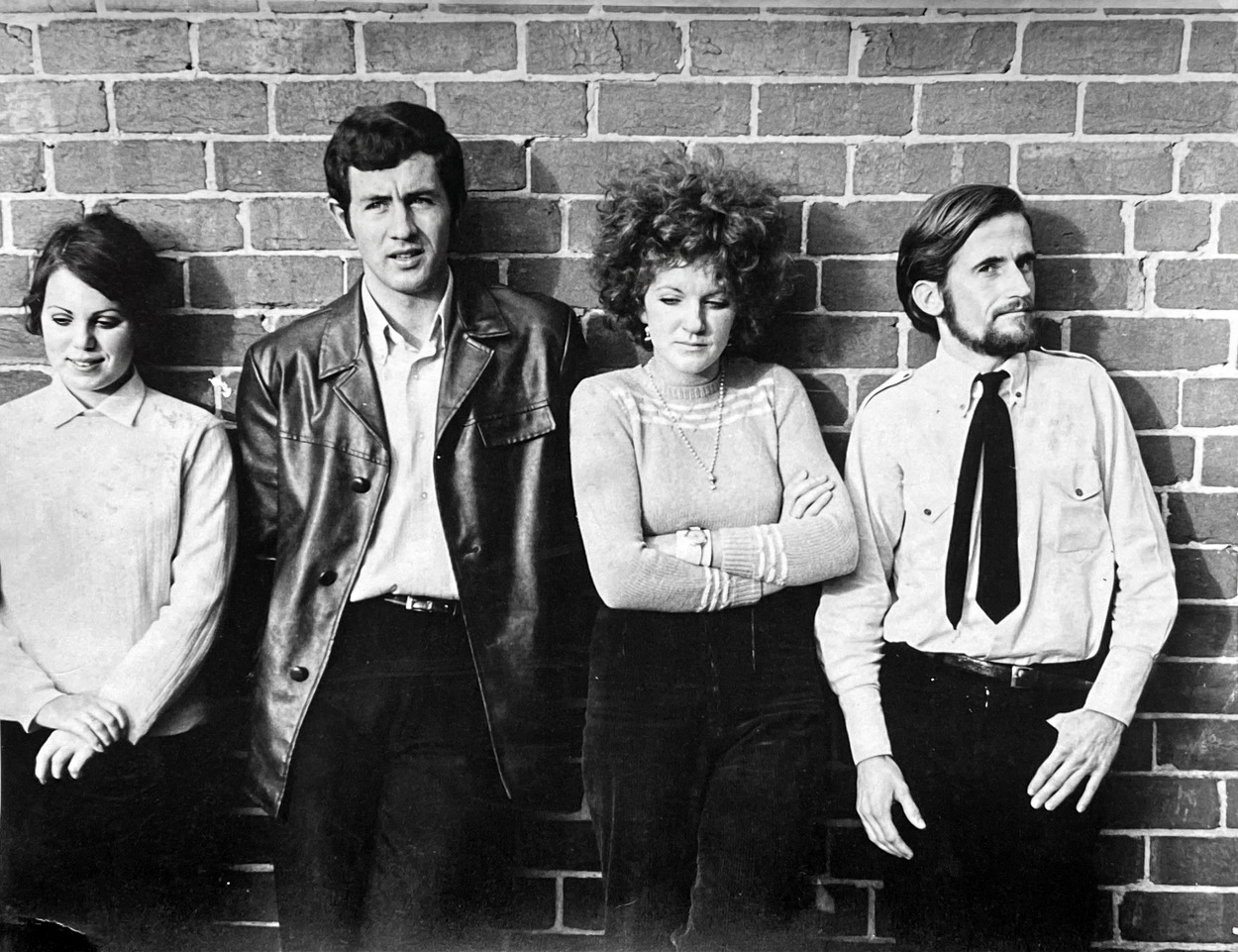
In conclusion Hopper recalls:
“seeing the graduating class of 1970—just four people [five including Ashton]—in Robert Ashton’s photograph near the end of the exhibition, showing Carol Davies, Peter Crowe, Carol Jerrems, and Richard Muggleton sheepishly lined up in front of a brick wall. In a show so dense with ambition and energy, such modest beginnings feel easy to overlook—all the more important to remember.”
Other Prahran alumni whom Hopper mentions in her review are Bill Henson, Carol Jerrems, Rod McNicol, Polly Borland, Lyn Cheong, Graham Howe, Peter Kelly, Andrew Chapman, Richard Muggleton, Geoff Strong, Johann Krix, Con Aslanis, Viki Petherbridge, and Stella Sallman, along with lecturers Athol Shmith and Paul Cox, but oddly, not John Cato.
Other reviews of photography by Hopper (Melbourne Now and Diane Arbus: American Portraits) are characterised by a similar attention to curatorial context, institutional critique, and the interplay between canonical and marginal voices, thus her review of The Basement is part of a broader critical practice that privileges complexity over simplification. Hopper’s insights while weaving in perspectives from the companion book and lectures underscore The Basement’s significance as both a historical document and a catalyst for reimagining photography’s future.

