“I see photos everywhere and I want to capture them”:1 Julie Millowick, 2024

Since 1989 Julie Millowick has lived in a charming, rustic miners’ cottage in the small rural community of Fryerstown, in central Victoria, surrounded by a landscape deeply scarred and contaminated by gold mining in the 1850s. The paddock around her house alone contains 15 mineshafts.
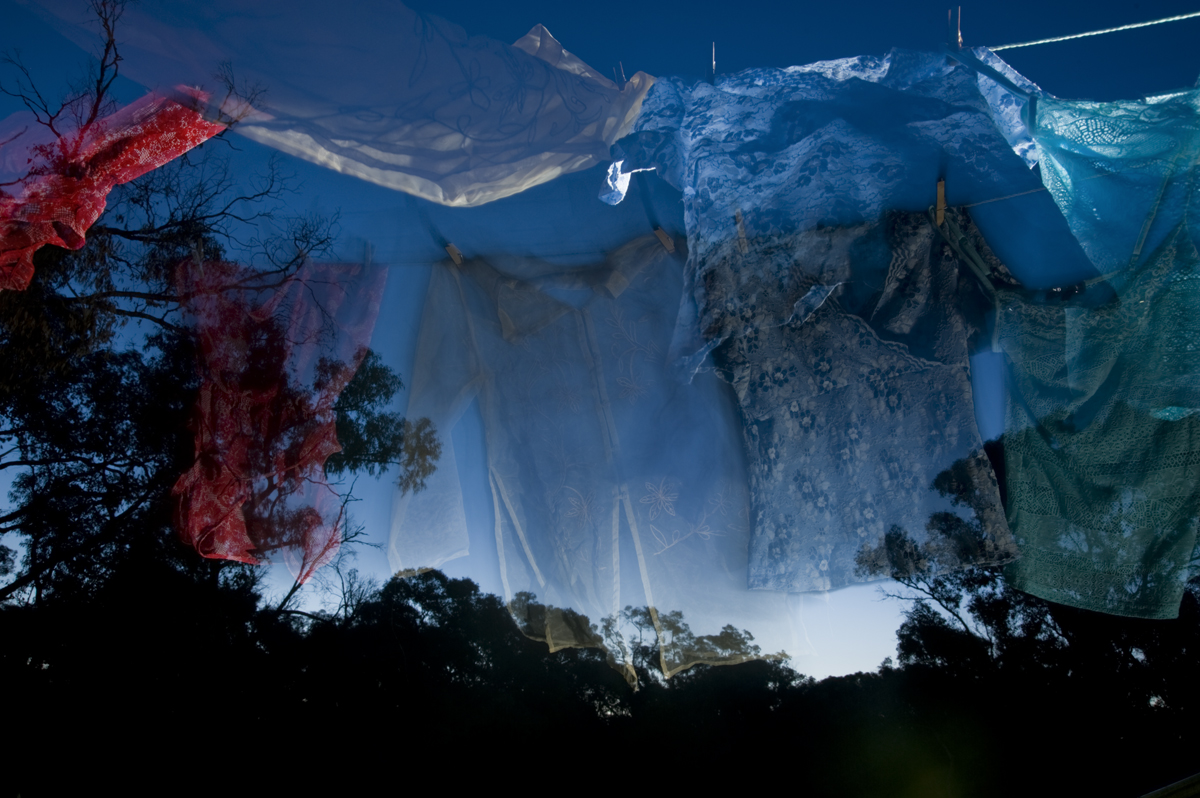
Julie’s non-commercial work has always reflected her personal life and her environment, so it is not surprising that her current exhibition, Surrounding, at Castlemaine Art Museum depicts the destruction by sluicing, excavating, deep lead mining, cyanide poisoning, invasive species, and floods. In this process, no trees were left. However, over the years she has seen and documented the subtle regeneration of that landscape, some of it through the actions of government bodies such as DELWP (Department of Environment, Land, Water and Planning) and Parks Victoria. Julie has marvelled at and recorded the first tiny signs of remnant plant life, many of which are recorded with Lumen Prints. She has documented an area of 2kms radius from her home, walking out there “in rain and shine, day and night”. The first of this ongoing documentation, in 1989, was a photograph of her son, Christian, on top of Ferron’s mullock heap. The last photograph in her exhibition is of Christian, again on top of the mullock heap on New Year’s Eve 2023.
Surrounding Curator Jenny Long writes:
The photographs she has produced over the last three decades are poetic, moving and filled with love for this strange, unsettling landscape… Surrounding shows Julie Millowick’s great skill as a photographer but almost as importantly it shows her talent as a story teller.
Jenny Long, Curator of ‘Surrounding’, Castlemaine Museum of Art. Catalogue essay, 2024.
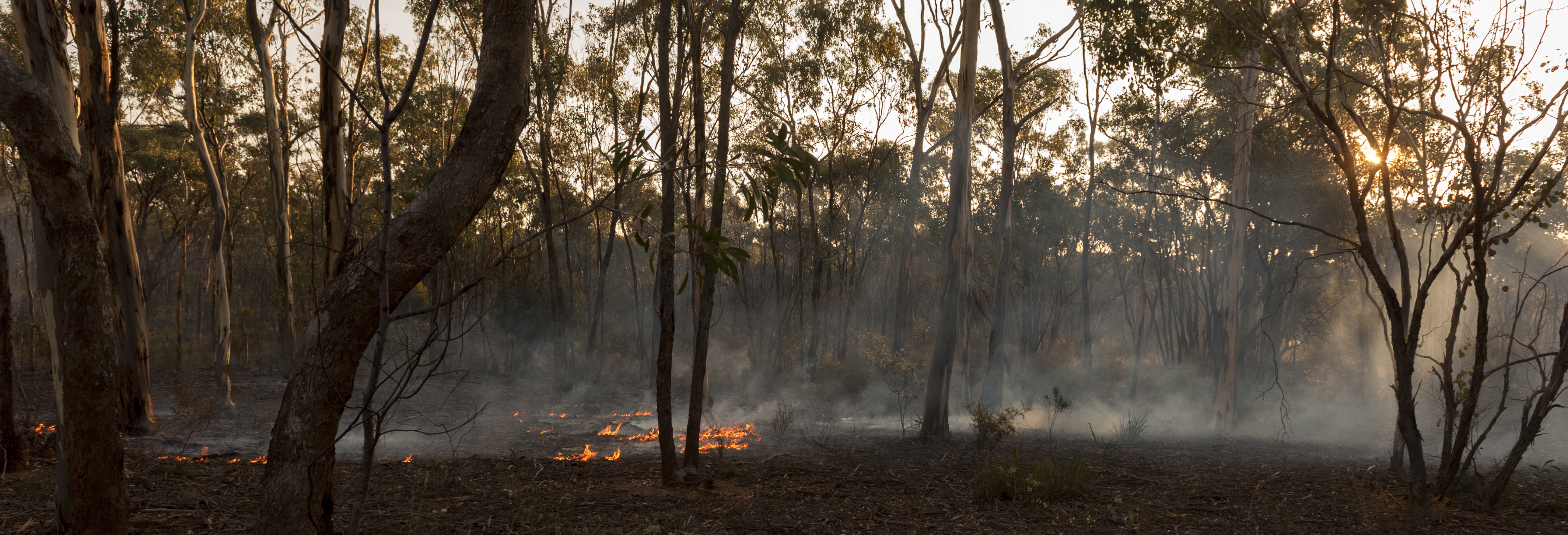
In her commercial practice, she feels lucky that much of the work has reflected her own interests, as when, in 2017, DELWP employed her to record the historic first all-indigenous cool burn near Maryborough, and since 2017, art installations and performances for Castlemaine State Festival. Mount Alexander Shire also occasionally employs her. One of their projects was the documentation of invasive species, and this work led to the 2004/5 Traces of Memory series. In this body of work she notes the connection between the now-unwanted plants and the struggles of the 10,000 or so early settlers in this area who desperately wished for connection to their original homelands. They planted to alleviate their homesickness.
Recently she wrote, “Photography is my life, it’s the very core of my being. I am so lucky to have it in my life”2 and in conversations, the word “passion” often occurs. Passion and intense focus are evident, from her first photographic explorations and student days to her long career in photography.
In the beginning…
As a child she lived with her parents on horse acreage north of Adelaide. Returning home in 1973 after living overseas, she worked as a secretary, but hoped photography would be her future. She attended a rudimentary photography class at the local high school and once a week her mother’s laundry became a darkroom. But her aim was to attend Prahran College of Advanced Education. “I was lucky enough to be accepted”, she said. “It changed my life”.3
However, her passion, drive, and focus were obviously more at play than luck. Horses were an important part of her life and an absent owner asked her to check on his pregnant mare paddocked at some distance. At 6am she found that the mare had birthed twins, one of which was stillborn and the surviving foal was very unwell. With her ever present 35mm camera she quickly took a photo, then raced for help at a nearby property. As everything was done to save the foal she continually photographed. She says, “I was driven to make these photos, but at no time did I endanger the life of the foal.” It was these photographs that she submitted for entry to Prahran College of Advanced Education. Lecturer, Athol Shmith told her, “This is a photo essay” – a term she was then not familiar with.4
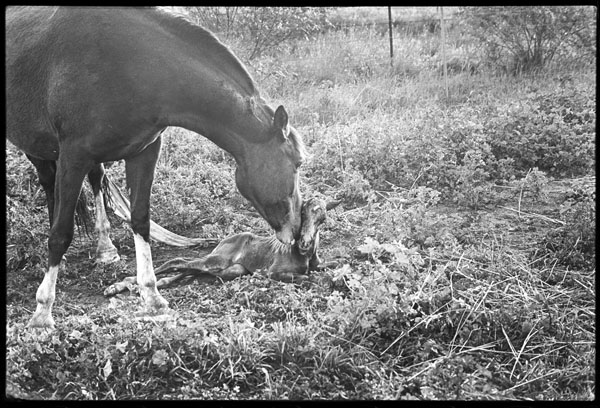
Julie Millowick: Foal is Born, 1973. From her folio seeking entry to Prahran College of Advanced Education.
Student Days
Prahran changed her life. It was John Cato’s first year of teaching there and he was a charismatic man and she took many photographs of him. She really loved his lectures. “Oh god, I loved them so much: so full of passion”. She has aimed to do that in her own teaching.5
Julie also liked and admired tutor, Paul Cox and made the stills for some of his films. Paul drew in friends, students and anyone who was interested, to participate in his films. Her inspiration at this time came mainly from John Cato and Paul Cox.
Another big influence was Brian Gracey a part-time tutor was aware “I was breaking my neck to get into commercial photography, and he was so encouraging.” Brian’s contacts occasionally led to small paid assignments for the students. He now owns the CPL Colour Lab, and she still keeps in touch with him.
“Derek Lee was a quiet but important presence within the dynamic of the Prahran teaching staff. He was always helpful, always there to explain ‘tech stuff’ and offer advice. Michael Langford’s huge tech book was a core of his teaching and we all had a copy of it”.6
Julie also received invaluable help from the technician Andy Lyell. Particularly during the initial weeks of first semester, year one. She would visit him as he worked in his own personal darkroom (on the opposite side of the corridor to the teaching darkrooms). Andy was a highly skilled printer and the ‘1 on 1’ support Julie received from him at that crucial early time is something that has stood her in good stead over the years. It secured Julie’s first job in photography (late 1974) then in 1986 printing 40x50cm and 50x60cm archival fibre based photos of The Beatles and The Rolling Stones from the original negatives of Dezo Hoffman. The latter assignment lasted over 20 years and was secured by the skills Andy had taught Julie decades previously.7
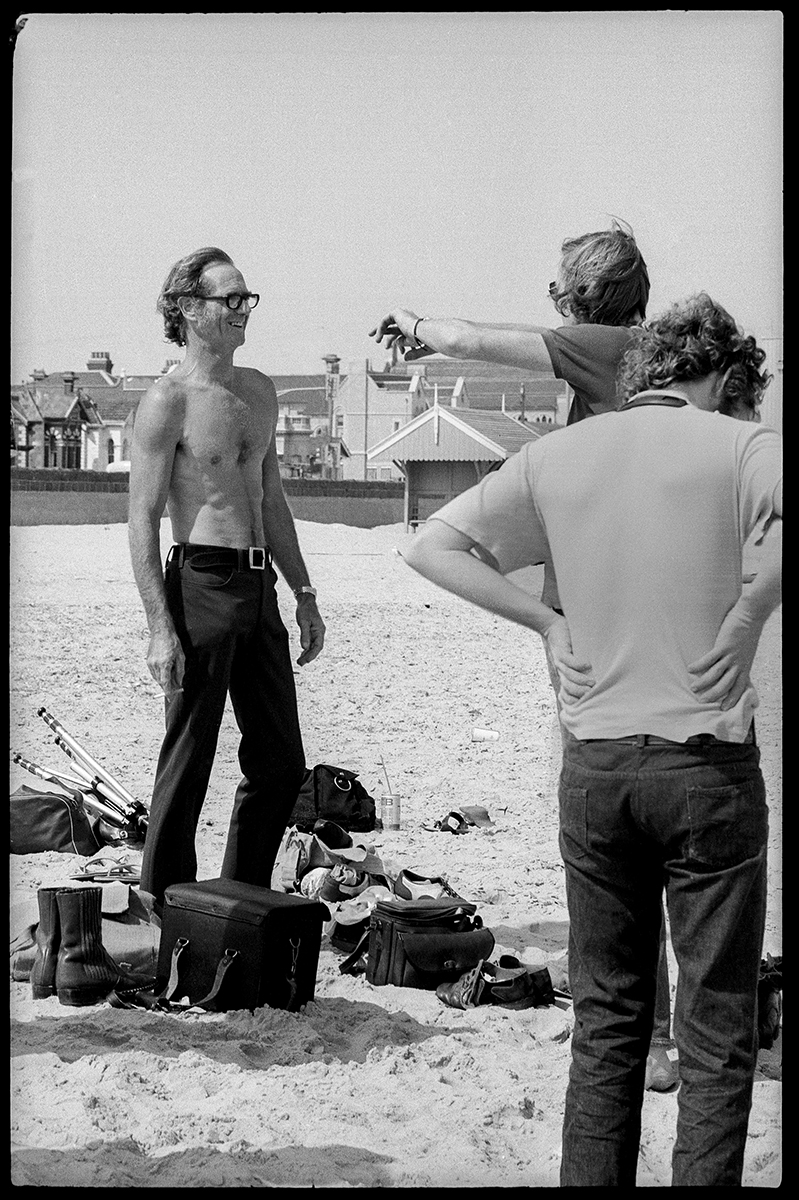
Each lecturer brought different elements to their teaching. There was no pressure to participate, but excursions were exciting for both tutors and students. At General Motors Holden at Fishermans Bend they were given no limits other than being told to be at a major hot metal pour at a particular time. Another excursion took the students to Port Melbourne where they did shutter speed exercises, using each other as models. The lean and strong John Cato took his shirt off and Julie photographed him. She laughs, “today he would have been fired!”
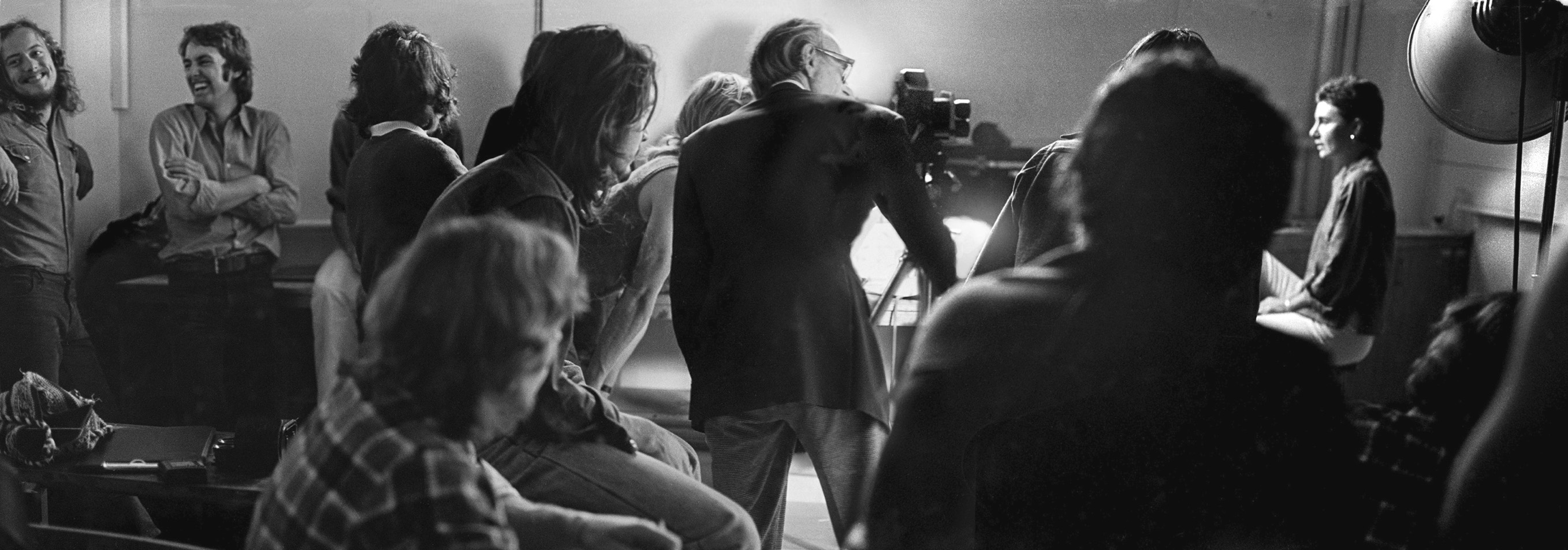
Athol Shmith was also important, and his teaching of lighting skills was excellent. A photograph shows Julie sitting in a chair surrounded by students, including Bill Henson, while Athol demonstrates lighting on her face. For Julie lighting remains a key element. She takes lights with her even when documenting the bush in daylight.8
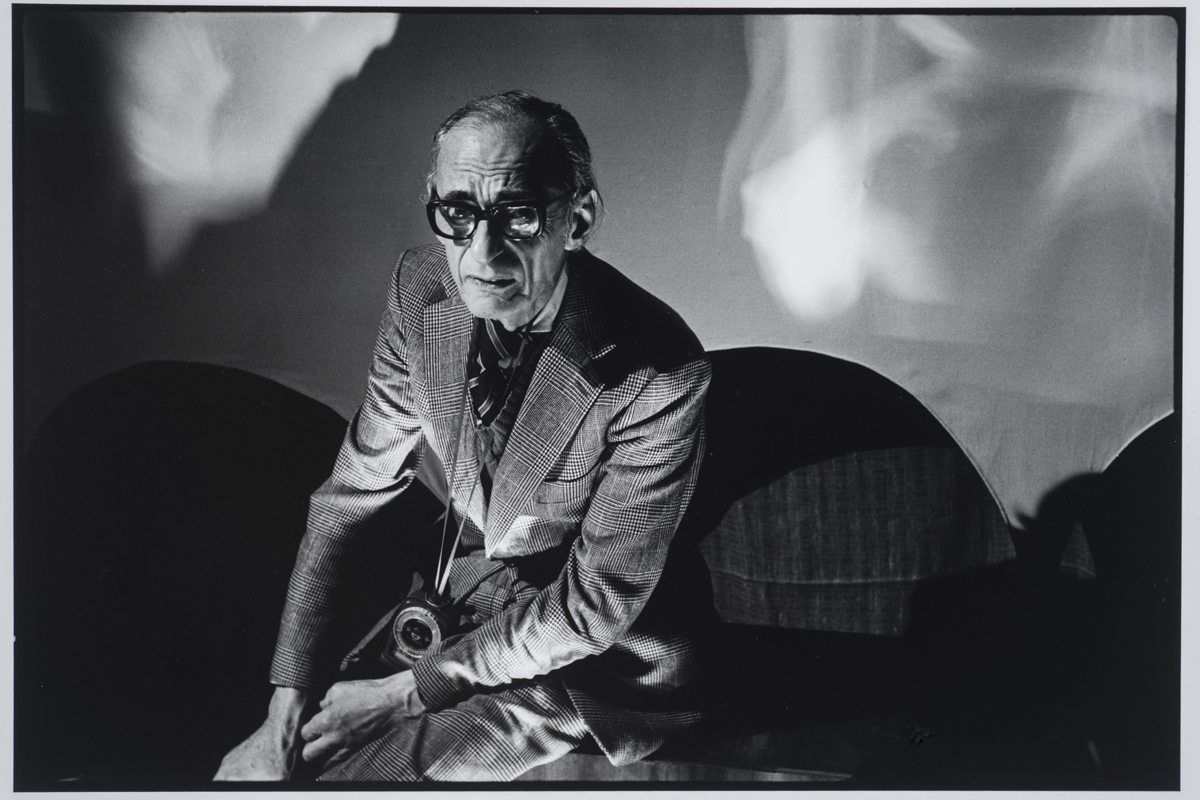
Towards the end of her first year, because of her printing skills, she was offered a job by Athol Shmith. “It was a great break”. From 1974 to 1976 she assisted two days a week in the Collins Street studio of Athol Shmith, John Cato and Peter Barr. On her first morning of a two-week trial, she was told she had to print 250 prints by 11am (on fibre-based paper) of soon to be Leader of the Opposition, Malcolm Fraser by 11am. Two women entered the darkroom every 10 minutes to remove the wet prints to a large drum glazer. By noon the prints were ready. Sometimes she would have to drop everything to assist with a commercial shoot. She learned the importance of efficiency and speed. She also learnt how to archive photographs at this time, numbering the negatives and storing in numbered boxes. She continues this practice in her work today. When Athol Shmith’s personal photographic collection was posthumously accepted into the collection of the National Gallery of Victoria Julie’s 1976 photograph of Athol was amongst them.
Stan Ostoja-Kotkowski at Prahran CAE
Angela Connor, now Senior Curator, Museum of Australian Photography (MAPh), wrote of the above work:
In her portrait of Athol Shmith … Julie Millowick … frames the sartorial elegance of a man who made a significant contribution to Australian art and culture. The photograph was taken when Millowick was 28, at the start of her photographic career. … His highly emotive gaze, enclosed by his thick, black-rimmed glasses, conveys the trust between subject and photographer, creating an image that resonates with warmth, humanity and sensitivity.
Angela Connor, Dec., 2020. https://castlemaineartmuseum.org
When Athol Shmith retired in 1979, John Cato took over as Head of Photography and he appointed Julie to teach a 3-hour photo-journalism class at Prahran. Inspired by John’s teaching, her classes were prepared and supported by a large collection of slides illustrating her points. She wanted her students “to be fired up, to see the potential … I wanted to grab their attention.”9
Industrial photography
Julie Millowick completed her course in 1976 and received a Diploma of Art and Design from Prahran College of Advanced Education in 1977. She remained in Melbourne working initially as a press and public relations photographer, then 15 years as a corporate industrial and documentary photographer. Julie was invited to freelance out of Peter Barr & Associates and is grateful for the years of support she received from Peter Barr.
Like most other emerging commercial photographers Julie did not have any contacts. She sat at the phone with the yellow pages and phoned potential clients asking if she could show them her folio. The answer was usually ‘Sorry, we already have plenty of photographers on our books’. Or when she did make it to the Marketing manager’s office and did the ‘pitch’ very often the response would be ‘I like your work but I am not going to give you a job. I have 500 blokes on site and no women’s toilet’. Or similar. 10
In May 2021 documentary photographer Angela Lynkushka wrote to Julie, “Your industry work is pivotal for women. You pioneered this male dominated area.”11
Julie speaks of being the only female in the 1970s/80s in the Melbourne CBD working on industrial sites, and the physical and mental challenges of that. “It was fantastic. I just loved it”. There was a fair degree of misogynistic expectation, however, “I found people who believed in me and would give me a go… Mayne Nickless and the Victorian Art Centre were great clients, to name a couple.”12
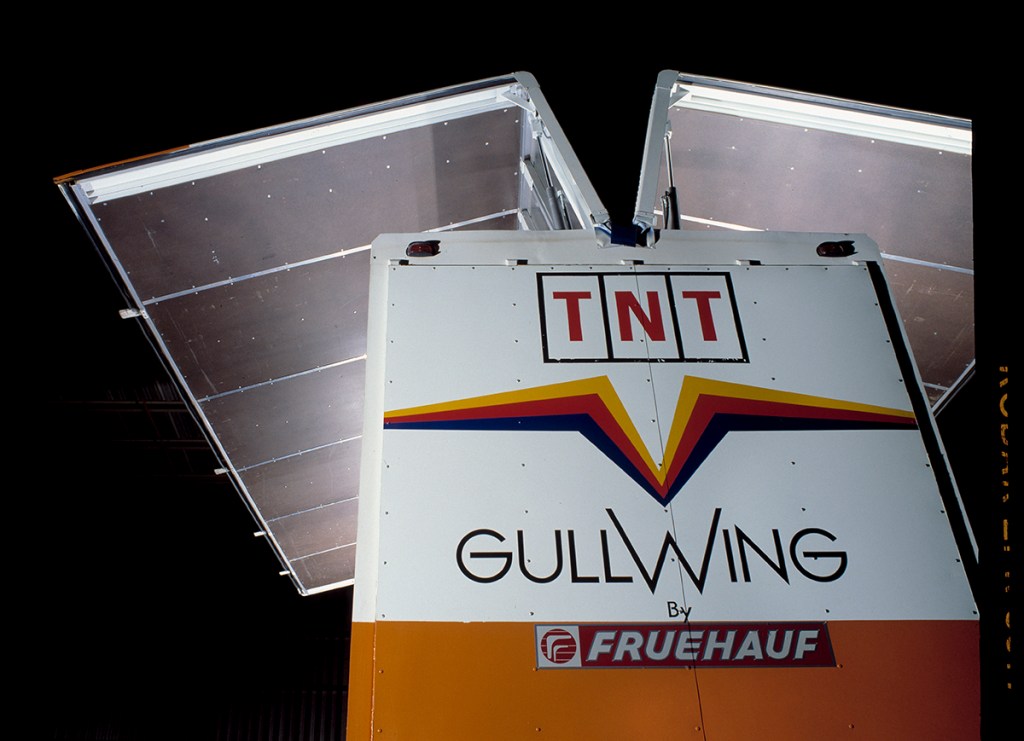
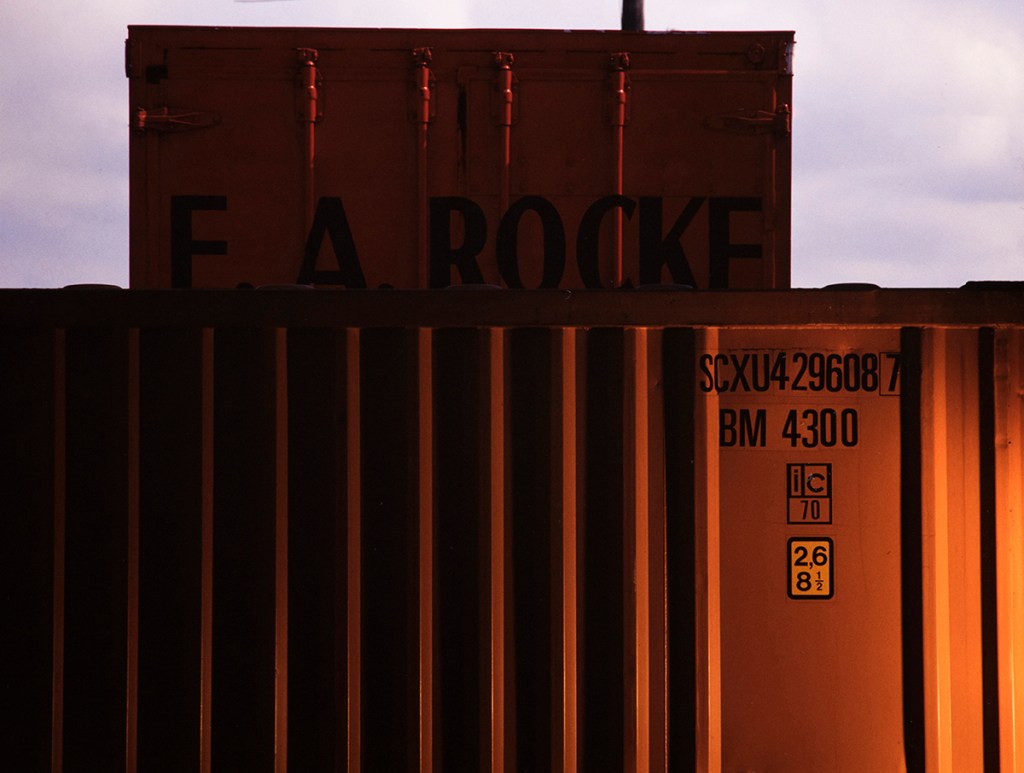
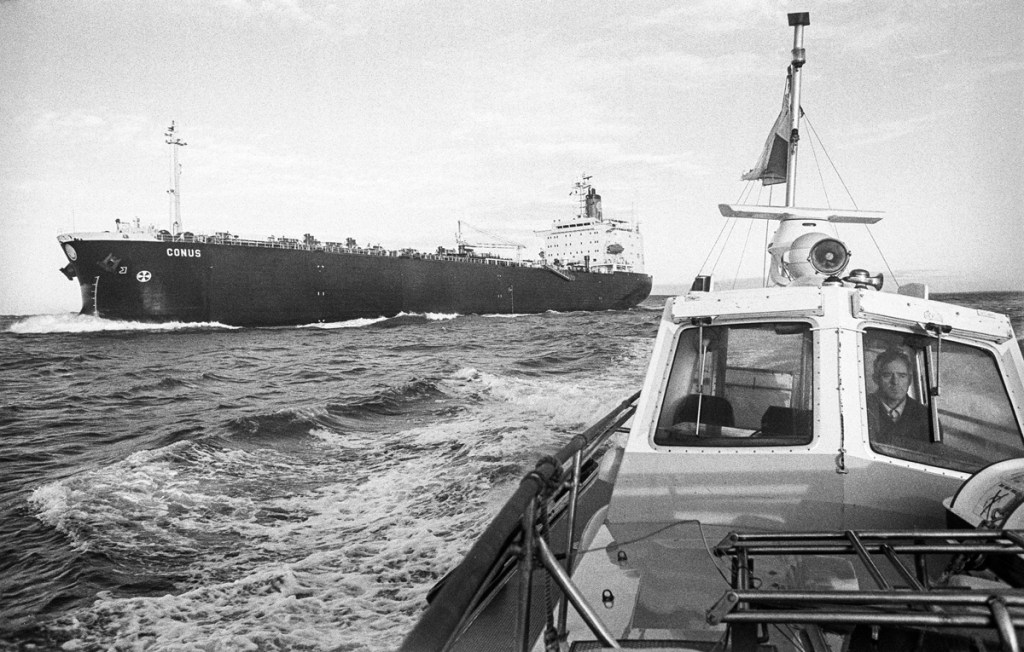
For the Victorian Arts Centre she went up with the riggers the day the first spire was added, recording the development of the site. For Mayne Nickless she photographed oil tankers and trucks, and sometimes accompanied the armed guards on their nightly rounds. She loved using added light for dramatic effect. Lighting, and especially added lighting, both in the studio and on location, became the basis around which her imagery revolved. “I am addicted to added light …it is what set my photography apart from other industrial photographers at the time.
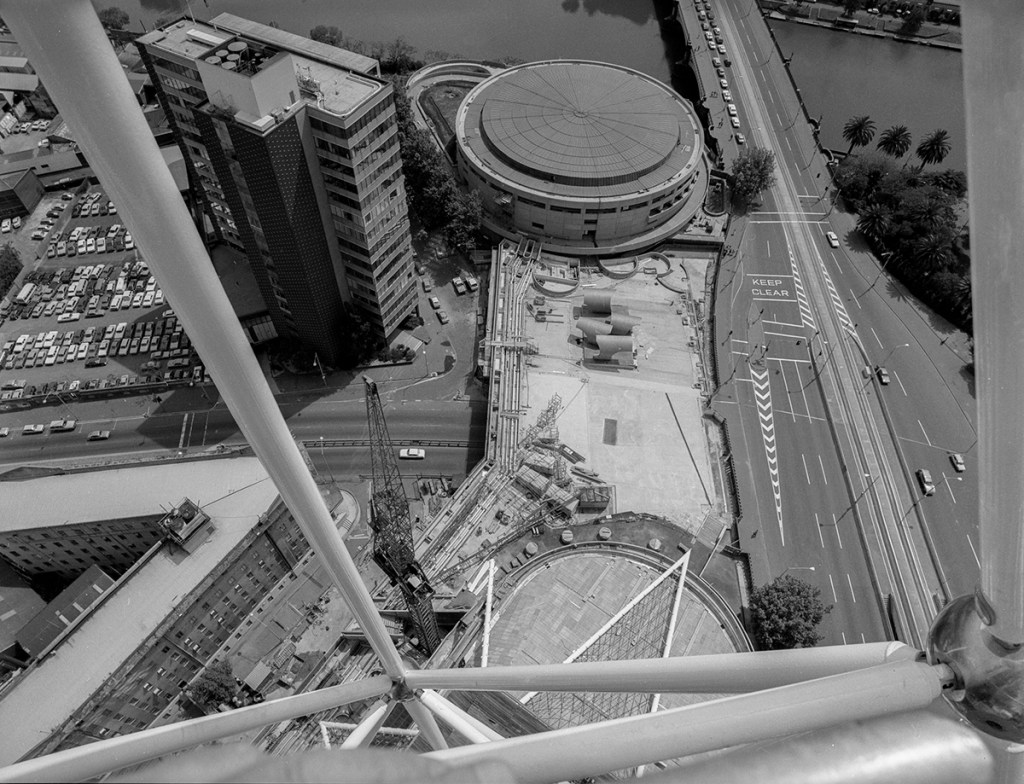

6-45 Colour Transparency, Assistant Steven Wilkinson. Added Light.

Photographic Themes and Exhibitions
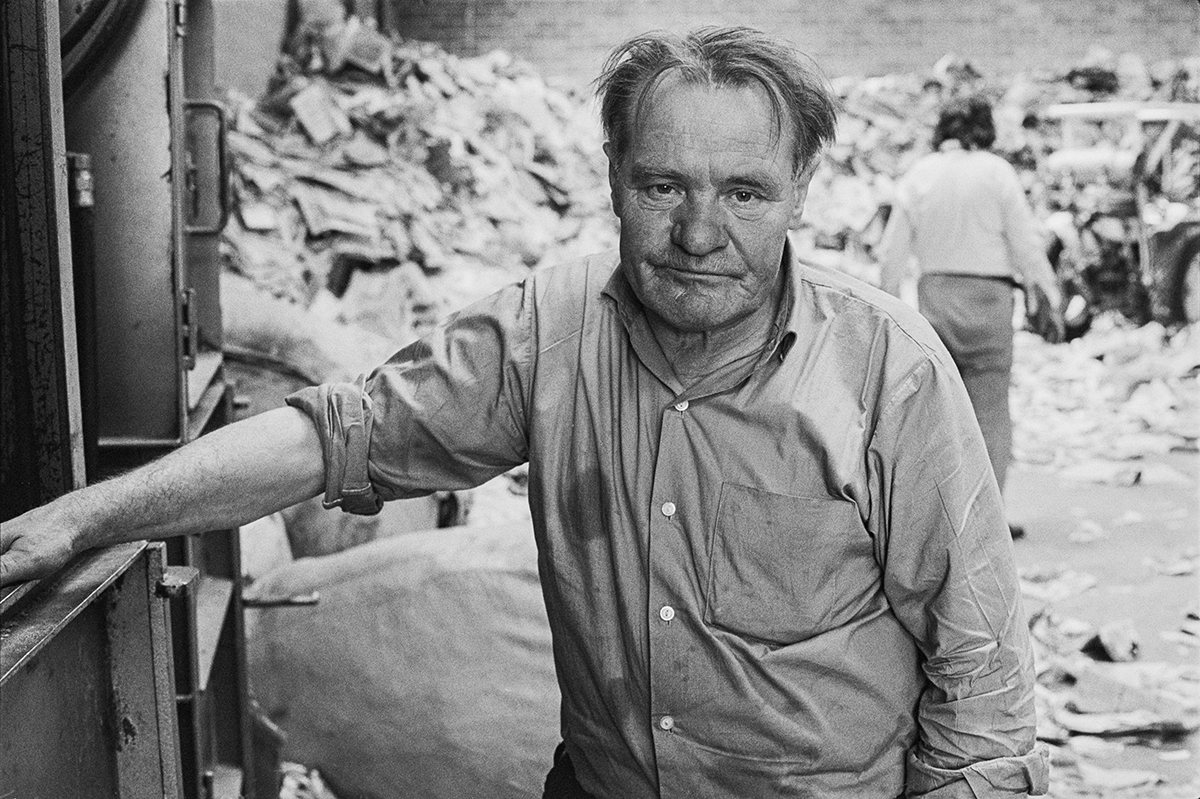
Julie Millowick has worked in a pro bono capacity for organisations such as Brotherhood of St Lawrence, capturing images such as this tired worker in a recycling factory.
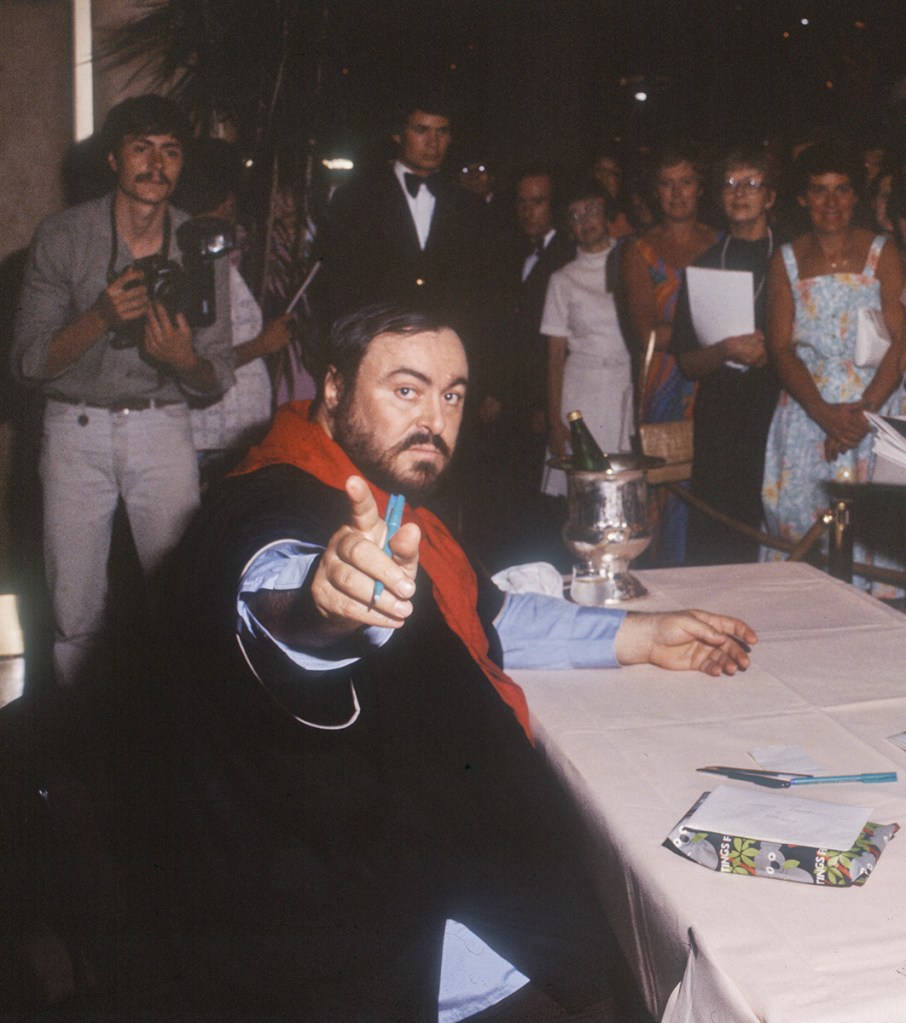
On 5 Feb 1983 Pavarotti performed in the Concert Hall. Julie photographed the performance, Pavarotti with VIPS, then with some of his 2000+fans. Whilst Pavarotti sat at a table signing programs she captured an image from quite some distance behind, with him as a very small part of the photo, completely surrounded by hundreds of people waiting for his autograph. As Julie returned to the position near the table Pavarotti swung around and very loudly accused her of taking photos to make him look overweight. Everything came to a stop while Pavarotti continued his tirade.
“Whilst I endured this very public ‘telling off’ I had lowered the camera from my face, to about chest height, similar to the way The Age photographer [in background] Sebastian Constanzo holds his camera and flash. Whilst my camera was held in that way, I had an automatic uncontrollable, instinctive reaction to make a photo. Click. Naturally the flash fired straight at Pavarotti making him even angrier. He then called for security and demanded I be evicted from the building. As I had visited the venue at least 5 times a week I was well known to Security, and one of them escorted her through the crowd. Once through the doors to back of house they both burst out laughing. Considering I didn’t focus, or even look through the camera, just had an automatic reaction of pressing the shutter, the photo isn’t too bad. Bronica 6-45, colour transparency, hand held Metz flash off camera.” 13
In another 2003/4 series her focus was the workers at Castlemaine’s Bacon Factory, affectionately called locally ‘The Baco’ by residents, as so many have been employed there over the years. Portrait of a Century honoured the workers and the centenary of the family-owned business. Produced at her own cost, Julie spent 2 weeks in the various areas, including the abattoirs. The images were made into huge banners & displayed in Castlemaine.
Julie achieved early recognition for her photojournalism when she was included in the exhibition Australian New Work, curated by Jennie Boddington at the National Gallery of Victoria and Australian Centre for Photography in 1977. She has exhibited and published regularly since then. In 1993 her entire exhibition Familiar Stories was included in the exhibition Intimate Lives with Sally Mann, Nan Goldin and Jaques Henri Lartigue at the International Fotofeis in Edinburgh, Scotland.
For PHOTO 2021, International Festival of Photography, 46 years of womanhood as seen through the lens of July Millowick and Jody Haines were shown in Eye to Eye at Footscray Community Arts Centre. This included classic black and white images from the 1970s and 80s, such as The Tea Lady, below.
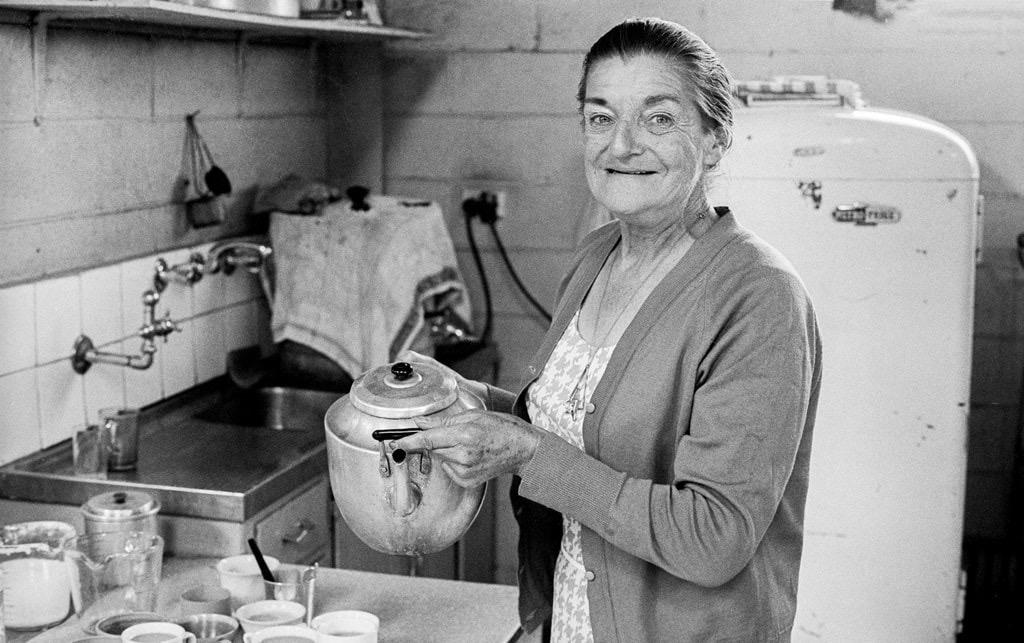
Julie Millowick, ‘Tea Lady, Factory, Preston’ 1977.
Julie’s work often follows themes, which she considers and develops over time. They are assiduously planned, even to the point of making storyboards. Memory is a recurring theme.
From 1988 to the present Julie has created images of the people of Fryerstown for an ongoing project, In their own words. The subjects have handwritten their words directly onto the prints; it is not photoshopped. Other later series also use this process.
In 1990 Familiar Stories was first shown at the Victorian Centre for Photography. Then in 1992 this work was shown at the prestigious Watershed Gallery in Bristol, UK. The whole show was included in Intimate Lives at the International Fotofeis in Edinburgh, Scotland.14 Its theme was photographers photographing their families. Familiar Stories was then toured by Watershed through UK. Even today this ground-breaking work, which combines image and handwritten text, would probably be considered challenging, with its themes of rape, domestic violence, and death. For some at the time, the real-life stories told in this series were too personal. Greg Neville for The Age wrote:
“The images are dark and moody and the text, handwritten directly onto the photographs, is exceedingly personal… The work … announces all too loudly what should remain private… For all its worthy intentions, it resembles nothing more than 1970s group therapy sessions.”15
However, photography critic Charles Radnay said,
“…these very private responses have become both disturbing and yet somehow intriguing.”16
while Mary Lou Jelbart said that the multilayered images were:
frank and with humour … the images are complimented by the writing in a very interesting way… she’s very bravely laying her deepest feelings open for us to see and I really admire that.
Mary Lou Jelbart talking with Clive Stark, ABC 3LO, 28 October 1990.

Adversity
In 1995 Julie’s career almost came to a halt. She had lots of projects and was enjoying life in Fryerstown and lecturing at La Trobe University, Bendigo. Then one day, lifting a heavy object, she severely damaged her back and was confined to bed in extreme pain. She could not lift a camera. As she gradually improved, she found she could make photograms, a process of placing objects onto light sensitive paper and exposing them to light. “I had all the time in the world to explore the textural possibilities of my art.”17
This resulted in the series and exhibition, Paraphernalia. Dianne Dempsey wrote:
Millowick had found a way out of her nightmare. Millowick has based her current exhibition on 29 of these photograms. Starting with beautiful images of a camisole and lilies, she has created a narrative sequence, using both words and pictures.
Dianne Dempsey, The Age, 7 April, 2000

Paraphernalia was shown in 2000 at Melbourne’s Span Gallery, the Photography Gallery of Western Australia, and Warrnambool Regional Gallery. Critic Robert Nelson called the images “mysteriously seductive”.18
This was followed by Loveletters of a Chinese Lady, a moving set of photograms and cyantoypes of fans, flowers, and textiles accompanying nine letters of a 19th century Chinese woman to her absent, diplomat husband. This work was first shown at Golden Dragon Museum, Bendigo in 2001.
In the same year A Year in Our Lives was shown at Bendigo Regional Gallery, and later in Melbourne.
Millowick’s exhibition is a tour de force in the medium, recalling in a sustained and poignant way the early photograms of Anna Atkins…Millowick’s images not only work historically, but exploit the archaic and mysterious character of the technology in order to retrieve something primitive in a given motif. …These are not mere studies of nature; nor do they simply recall old archives but involve a personal expression of signs that have a haunting meaning for the artist.
Robert Nelson. A Year in Our Lives, The Age, April 2003
Traces of Memory was first shown at Monash Gallery of Art (now Museum of Australian Photography – MAPh) in 2006. Other venues included Castlemaine State Festival, La Trobe Exhibition Centre, and VIVID: The National Photography Festival, Canberra.
Traces of Memory emphasizes the recursiveness of life and history. We live in the present which contains traces and elements of the past as well as opportunities for the future. It is not a linear progression through past, present and future but rather is a recursive process.
Professor Lorraine M.Ling, La Trobe University, 1 April, 2007
Julie, through Traces of Memory, has empowered us and also has empowered those pioneer women who so inspired her, to see life, nature, art, and humanity through multiple lenses. In doing this she has provided us with a rich and moving experience which evokes new insights and meanings for us.
Another particularly moving body of work was A Garden for Hazel, a tribute to another strong woman, Hazel Hawke. In 2003 for a documentary, Hazel Hawke talked openly and honestly about her diagnoses of Alzheimer’s Disease as well as her love of gardening. Julie was moved to make for Hazel a ‘garden’ of photograms, cyanotypes and pinhole camera images. The project was supported by the Alzheimer’s Foundation and the Hawke Family. 19This work was shown at Span Gallery, Melbourne in 2005.
In this body of work Julie uses the mid-19th century technique of cyanotype that produces a cyan-blue print. Julie was influenced by the work of botanical artist and collector, Anna Atkins who, in 1843, was the first to illustrate a book with photographic images, using this technique.20
Close to Home was featured in the 2009 Ballarat International Foto Biennale, and the following year was shown at Art Lab, Adelaide Fringe.
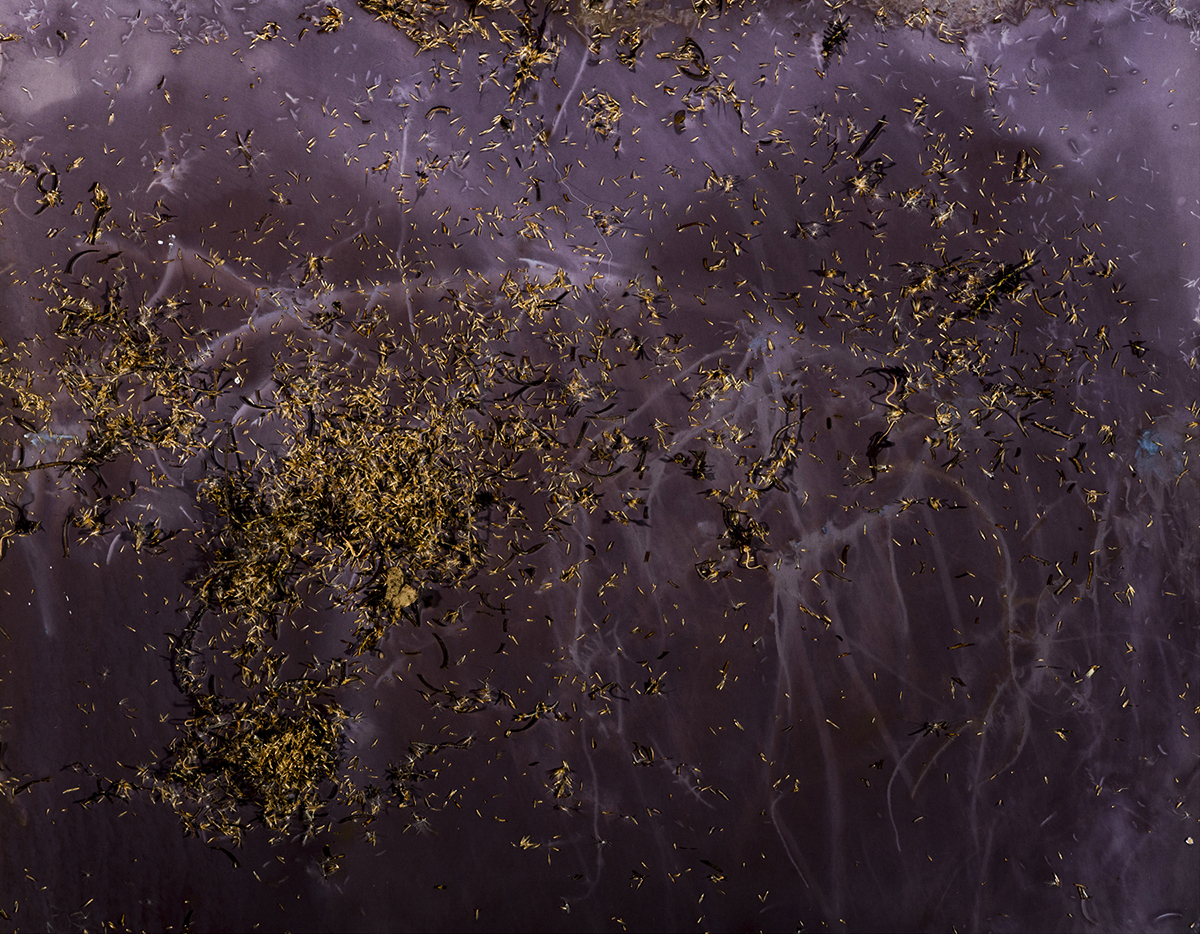
Julie continues to work on many projects. “I am always working … I have always got an idea”. 21 Her current focus is on Lumen printing – works produced without a camera, on the verandah of her house, recording the invasive and other plants of her surrounds. She also continues to work as a volunteer photographer for the ‘Chewton Chat’. The ‘Studio Visits with ‘Jacky and Julie’ column are a regular feature.
Publications and group projects
Her work is found in numerous important publications including the 2010 Look: Australian Contemporary Photography since 1980, Author Anne Marsh, Macmillan Art Publishing. One of the most extensive research projects on contemporary Australian photography undertaken, together with critical essays.
She has also been included in many major group photographic projects, such as MAP’s Beyond Reasonable Drought which toured for several years from 2008, including Vivid National Photographic Festival. She was a finalist in 2009 and 2010 in Monash Gallery of Art (now MAPh) Bowness Award.
Remembrance: 100 Years, 100 Memorials, 100 Australian Stories was initiated and managed by Julie Millowick with text by Geoff Hocking. She contributed 155 of the 324 contemporary photographs. “I started looking at the numerous WW1 memorials in every town. The phrase Their Name Liveth for Evermore appeared again and again.” 22
The book celebrates 100 years since the outbreak of World War One by featuring stories behind 100 memorials to the fallen from across Australia.
In 2000 she received a Master of Arts from RMIT and in 2015 was made an Honorary Associate, La Trobe University. Now retired from her Board commitments, Julie has served on the following:
Regional Arts Victoria
Ballarat International Foto Biennale, including 2 years as Chair
Bendigo Art Gallery, including 4 years as Deputy Chair
Castlemaine State Festival, including 4 years as Chair.
In 2011 Julie was nominated by National Library of Australia, one of six Australians, for Prix Pictet, the global award in Photography and Sustainability. Later she was asked to become one of Australia’s nominators, and still is one today.
In 2020 she was awarded a Medal of the Order of Australia (OAM). The Citation was for Service to the Visual Arts, particularly Photography.
Collections
Julie Millowick’s work is represented in many public collections, including National Gallery of Australia, National Gallery of Victoria, National Library of Australia, State Library of Victoria, Castlemaine Art Museum, Horsham Regional Art Gallery, Bendigo Art Gallery, Warrnambool Art Gallery, Museum of Australian Photography and Deakin University.
Acknowledgement
Merle Hathaway, who has written this biography adds; “I would like to thank Julie Millowick for her assistance in providing me with so much information, articles and images, and for generously spending hours on the phone and in Zoom meetings, to clarify points. I only hope that I have done this extraordinary woman justice in attempting to capture a glimpse of her work and life.”
- Julie Millowick, phone conversation with Merle Hathaway 21 Jan, 2024 ↩︎
- Julie Millowick. Text to Merle Hathaway, 11/1/2024 ↩︎
- Julie Millowick. Zoom interview recorded with Merle Hathaway and Philip Quirk, 16 Jan 2024 ↩︎
- Julie Millowick email to Merle Hathaway, 27 Jan. 2024 ↩︎
- Julie Millowick. Zoom interview recorded with Merle Hathaway and Philip Quirk, 16 Jan 2024. ↩︎
- Julie Millowick. Additional material to Merle Hathaway 30 April 2024 ↩︎
- Julie Millowick. Additional material to Merle Hathaway 30 April 2024 ↩︎
- Julie Millowick, phone conversation with Merle Hathaway 21 Jan, 2024. ↩︎
- Julie Millowick. Zoom interview recorded with Merle Hathaway and Philip Quirk, 16 Jan 2024. ↩︎
- Julie Millowick. Additional material to Merle Hathaway 30 April 202 ↩︎
- Julie Millowick. Additional material to Merle Hathaway 30 April 20 ↩︎
- Julie Millowick. Zoom interview with Merle Hathaway. 21 Jan 2024 ↩︎
- Julie Millowick. Additional material to Merle Hathaway 30 April 2024 ↩︎
- https://castlemaineartmuseum.org.au/exhibitions/julie-millowick-surrounding ↩︎
- Greg Neville. 26 October 1990. The Age ↩︎
- Charles Radnay. Geelong Advertiser, 1 Nov., 1990 ↩︎
- Julie Millowick. Zoom interview with Merle Hathaway. 21 Jan 2024 ↩︎
- Robert Nelson, The Age, 3 April 2000 ↩︎
- https://juliemillowick.com/portfolio-items/a-garden-for-hazel/ ↩︎
- Anna Atkins, Photographs of British Algae: Cyanotype Impressions, 1843. Collection National History Museum, London. https://www.nhm.ac.uk/discover/anna-atkins-cyanotypes-the-first-book-of-photographs.html ↩︎
- Julie Millowick. Zoom interview with Merle Hathaway. 21 Jan 2024 ↩︎
- [1] Julie Millowick website ↩︎
 Prahran Photography
NB This article is still unfinished – some more images are to be added.
LikeLike
I’ve now added more of Julie’s commercial photographs. Quite extraordinary.
LikeLike
Thanks Merle for all the work on this bio.
LikeLike