While in many cases the 1980s alumni regard Prahran as significant in their photographic careers, fewer look back to it to feel the same emotional, gravitational pull. Certainly, nostalgia grows with age, but it is also the case that the charismatic lecturers of the 1970s, Paul Cox and Athol Shmith—and/or Gordon De’Lisle for those students of 1970-71—had departed by 1979, leaving Bryan Gracey and Derrick Lee under Head of Department John Cato.
To replace his former colleagues, Cato brought in part-timers Yuri Sokol, Julie Millowick and Wayne Levy; then from 1985, Julie Millowick. continued, and Louise Hubbard, John Ruane, and Les Rabinowicz were brought in; and to replace staff on study leave were Peter Turner, Brian Brandt, John Gollings, Merryle Johnson, Ian Lobb, and cinematographers/videographers Russell Hurley, Ole Mynster, and Tony Saad.
Cato instated an exciting, rolling series of guest lectures, some unpaid for a one-off session, while others, like Merryl Johnson and William Kelly appeared on a regular basis as casual staff.
Students of the 80s period were mostly younger, often with less prior experience in photography—and gone was the free education provided under Gough Whitlam that had given the ’70s cohort a ‘second chance’ at higher education. Consequently some may not have realised how privileged they were to encounter such photo celebrities as the Americans who visited, including Elliott Erwitt, Arnold Newman, Ralph Gibson, Harry Callahan; or the English editor of Creative Camera Pete Turner; Glenn Busch from New Zealand; or Werner Herzog (West Germany). They also sat before Australian professionals David Moore, Les Walkling, Bruce Postle, Robert Imhoff and Mark Strizic; and alumni Bill Henson; Chris Köller; Carolyn Lewens; Paul Torcello, Julie Millowick and Phil Quirk.
In addition Cato invited in designers David Lancashire and Les Gray, artists from other disciplines Micky Allen, Graham Marchant, John Davis, Robert Jacks, accountant Ian Howell, critic Beatrice Faust, art historians Gael Newton and Chris Long, the anthropologists Ulli Beier and photographer Dacre Stubbs, naturalist Graham Pizzey, scriptwriter Bob Ellis, retoucher/conservator Annette Hall, and holograpaher Paula Dawson.
I filled in occasionally and much later taught also at Deakin where my colleagues included alumni Jim McFarlane, Kim Corbel, a contemporary in my Prahran student years, and also Rozalind Drummond, whose Wikipedia entry I started in 2021, and from which I draw here. Drummond attended Prahran over 1982–84, starting aged about twenty-seven, so was like the 70s crew, with much life experience (of which there’s no record that can I find) and she was named in 1999 by Australian Centre for Photography director Deborah Ely as the only 80s student among “some of the country’s most acclaimed practitioners” coming out of the Prahran course beside “Bill Henson, Carol Jerrems, Steve Lojewski, Janina Green and Christopher Koller“. Drummond, who has work in the Australian National Gallery, National Gallery of Victoria, Art Gallery of South Australia, National Portrait Gallery, and other public collections, built a status equal to, or rivalling, those of Janina Green, Leah King-Smith or Polly Borland, and like them, was unresponsive to our requests to join in our exhibitions and publications.
Straight after Prahran, Drummond completed a Post Graduate Diploma (1985–86) in Fine Art at the Victorian College of the Arts where Bill Henson—as noted by Max Dupain in a glowing review of her “extremely beautiful colour pictures”—was her supervisor. That fact is worth contemplating as an incidence of the influence of a 1970s Prahran alumnus on a 1980s graduate, and given how Gary Catalano described her first solo show, in May 1985, at George Paton Gallery, remarking on her fixation with classical antiquity in her colour photographs of a single draped figure posed against black like a sculpture that he wrote “belong to what A. D. Coleman has called the directorial mode. Nothing has been left to chance in her carefully arranged images” and he notes a quotation accompanying them, from Goethe on the “‘profoundly blue’ music of antiquity…[a] melancholy which Drummond’s text identif[ies] in her allusive images.” Henson’s ‘New Romantics’ poetic melancholy and allusiveness may have coloured her work…but not for long!
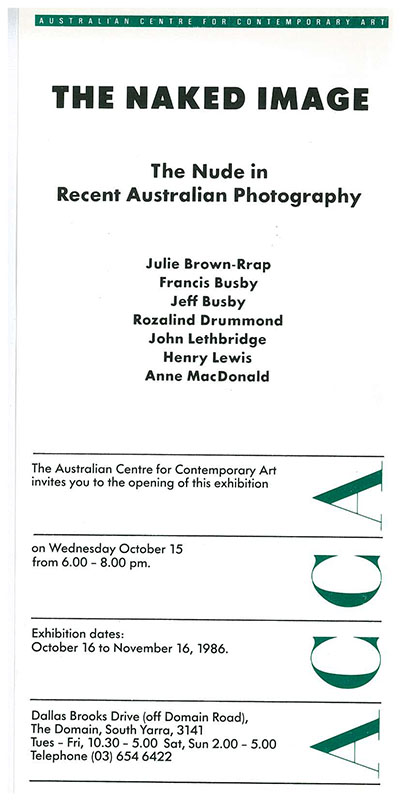
Catriona Moore in her essay for the ACCA show The Naked Image: The Nude in Recent Australian Photography (16 October–19 November 1986) in which Drummond participated with Julie Brown-Rrap, Francis Busby, Jeff Busby, John Lethbridge, Henry Lewis, and Anne MacDonald, writes that “coming of age and getting of wisdom” is a concern in Rozalind Drummond’s work.
Moore goes on to note that, while the nude in art has been primarily of the female figure, Griselda Pollock and Rosziko Parker point to an irony: women—”while present as the object of painting, as an image with specific connotations and meanings”—as artists, they had been prevented from studying and painting the nude model.
The three women artists represented in the exhibition, Moore explains “work with on eye to this history” in which “our knowledge of the female nude is gleaned from a cumulative image-bank of catalogues, exhibitions and reproductions in history books. Photographic reproductions settle within a comforting story of progression and development. The female nude is flattened under ‘Subject’ or ‘Author’ catalogues in art history. Rozalind Drummond’s photographs are erected within this archive. Her ‘studies’ in female form and beauty emerge not from any intrinsic property of her female models, nor from the artist’s subjective vision of dream of womanhood. ‘Imagination’ is rather that of the museum itself. Within this imaginary space pleasure is in study, erudition and attention to documents.”
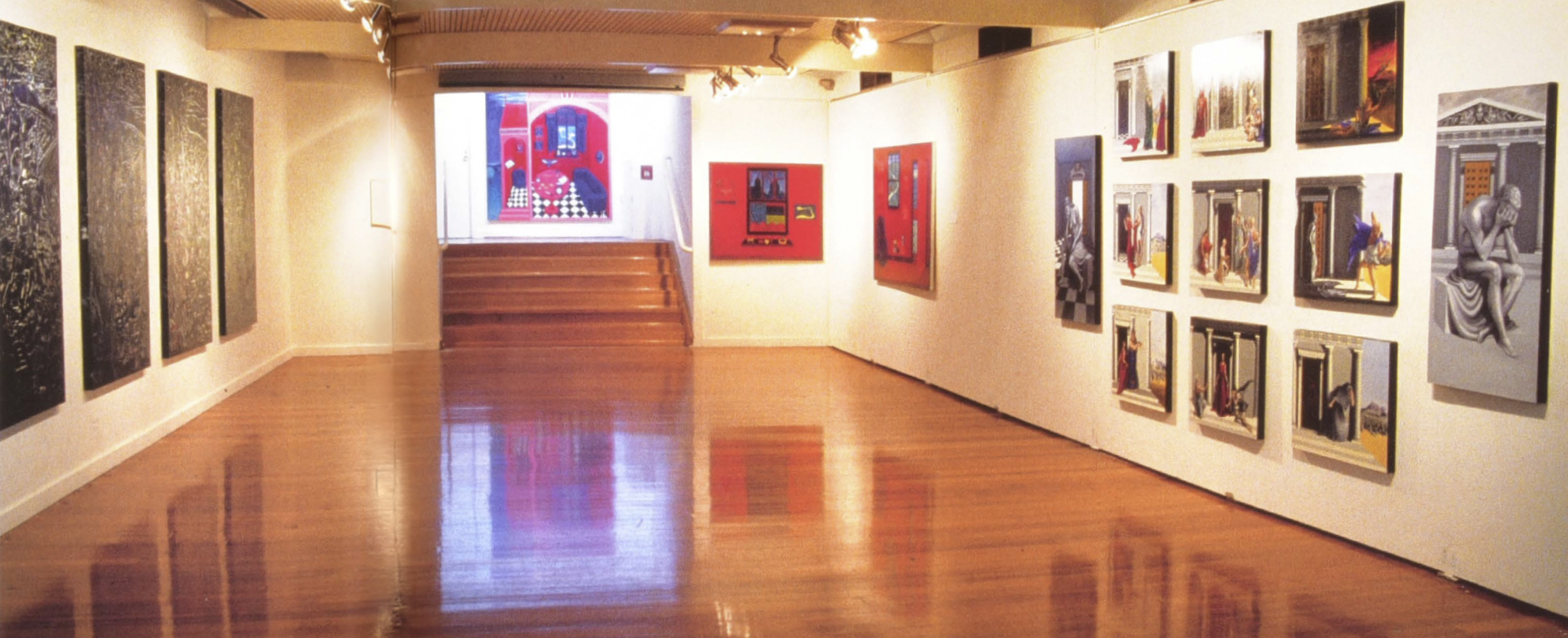
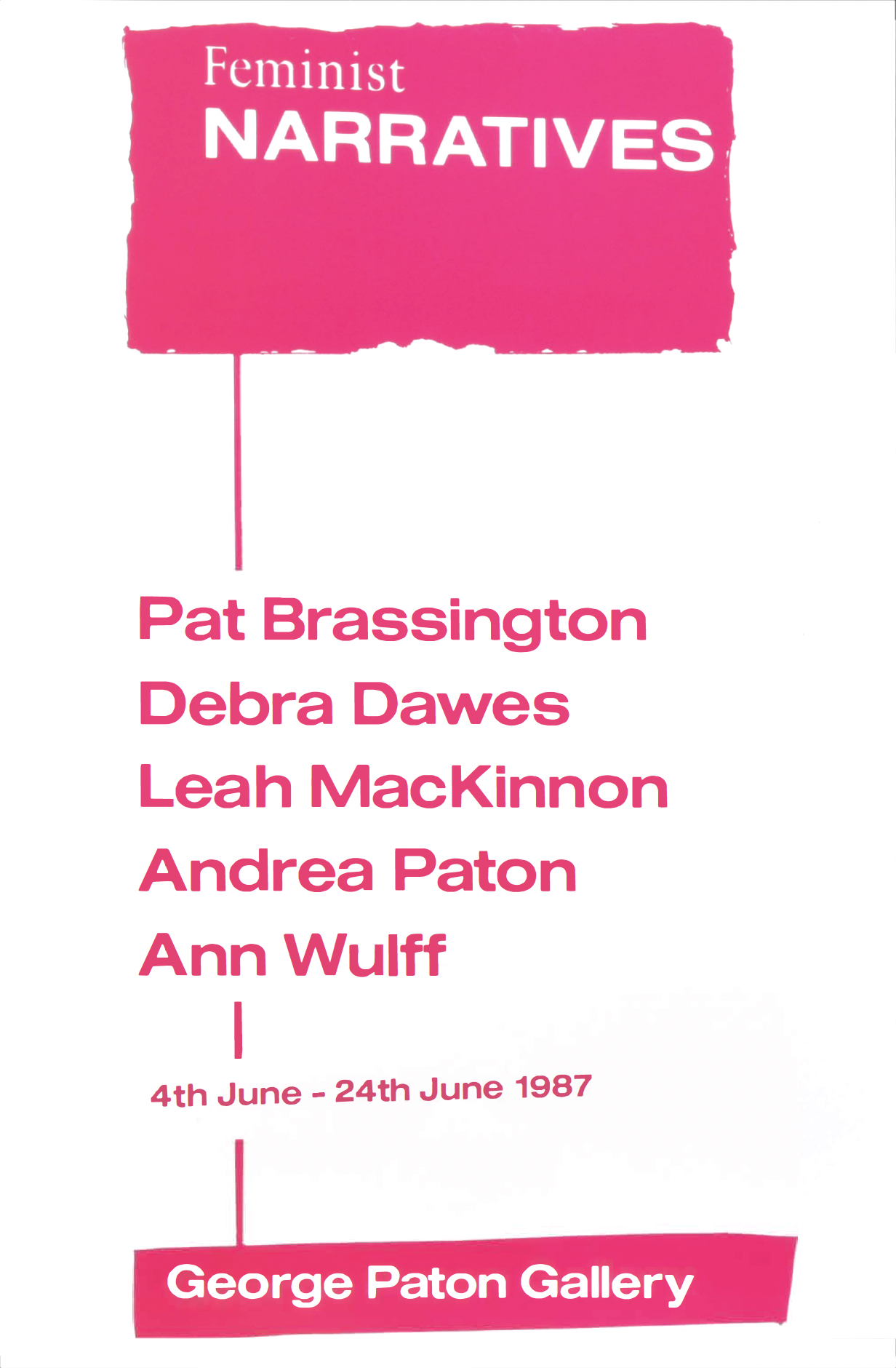
In the meantime Drummond became Assistant Director at George Paton Gallery (1986-88) when Juliana Engberg, a frequent commentator on her work, directed the program, and where for the mid-1987 show Feminist Narratives (Pat Brassington, Debra Dawes, Andrea Paton, Leah MacKlnnon, Ann E. Wulff) Rozalind contributed a catalogue essay alongside those of Brenda Marshall. Jo Holder, Anne Ferran, and Elizabeth Gertzsakis. Ferran had recently produced her landmark, ambiguously realist yet neoclassicist Scenes on the Death of Nature (1986) are a cool antithesis to the bloodied adolescents in Henson’s Untitled 1983/84 (Pinacotheca). Drummond left George Paton (where she showed in Four Melbourne artists, an IMA/George Paton Gallery exchange exhibition, and Ou est la femme? with Louise Forthun and others) to teach, first taking over at VCA from Henson as Lecturer in Photography (1987-89) then at Monash University, Caulfield Campus (1990-91)
Drummond’s embrace of postmodernist traits perplexed Beatrice Faust who of her contributions to the National Gallery of Victoria’s 1988 Excursions into the Postmodern: Five Melbourne Photographers; New Acquisitions, wrote that her “sketchy and trivial” work was incoherent in comparison with John Gollings’ “powerful melding of architectural, pornographic and optical images.”
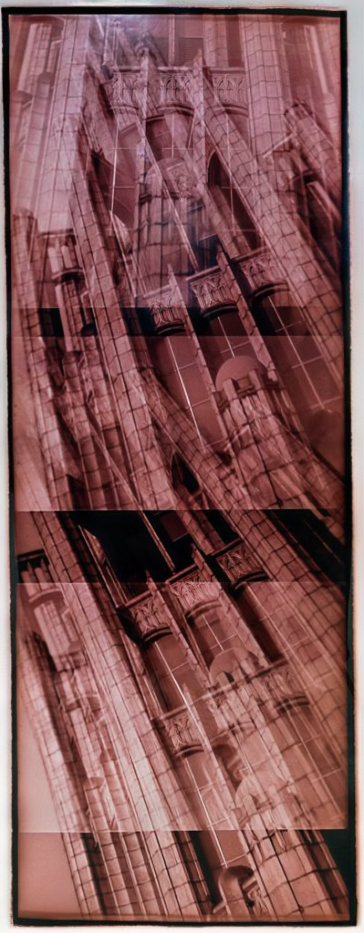
Juliana Engberg reviewing in Art + Australia, Drummond’s early 1989 Illusion of Plans at City Gallery identifies in her arrangement of apparently disconnected colour photographs “of urban progress — the skyscraper, the bridge, the machinery of production; as well [as] the total view of the city from across the water…identifying the narcissistic impulse of the city to grow and resemble that which it has become.” Declaring the intention of the work as to “isolate the viewer’s attention by emphasising the product, then to gradually insinuate a further dimension…the group of [urban] planners” and their utopian plans, Engberg notes references to photographers of the Russian revolutionary period and the work of Australian women Olive Cotton and Pat Holmes in the urban domain:
So ‘Illusion of Plans’ becomes a series of dramas — the drama of urban progress as reflected through a modernist plan. The narrative of the planners themselves is locked into the illusion that utopias are still possible and into the narrative of the artist who chooses to participate in the history of her media and its feminine possibilities.
It is Fergus Armstrong who draws the comparison with Drummond’s erstwhile mentor when he wrote in 1991 that: “Rozalind Drummond’s photographic mediation of architectural objects seems to work as if by a principle of wilful indifference. The photographs show a moment of aversion or of ‘having-turned-away’ which at once sees and erases the rules for living built into the urban environment,” concluding that against Bill Henson’s “darkly erotic visions of a fallen and benighted world,” Drummond’s are “a sort of elliptically scientific play-work—a kind of minor theorising with the camera,” fleeting and “unconvinced” about the “order of things” but humanely “empathetic”.
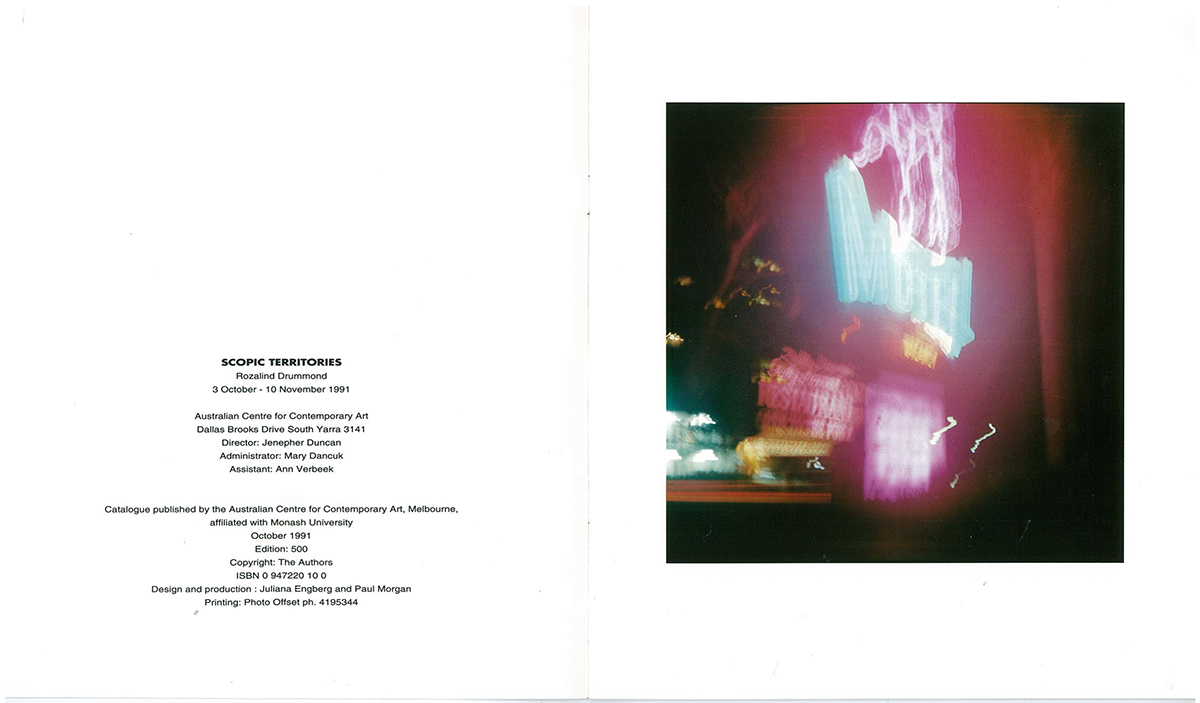
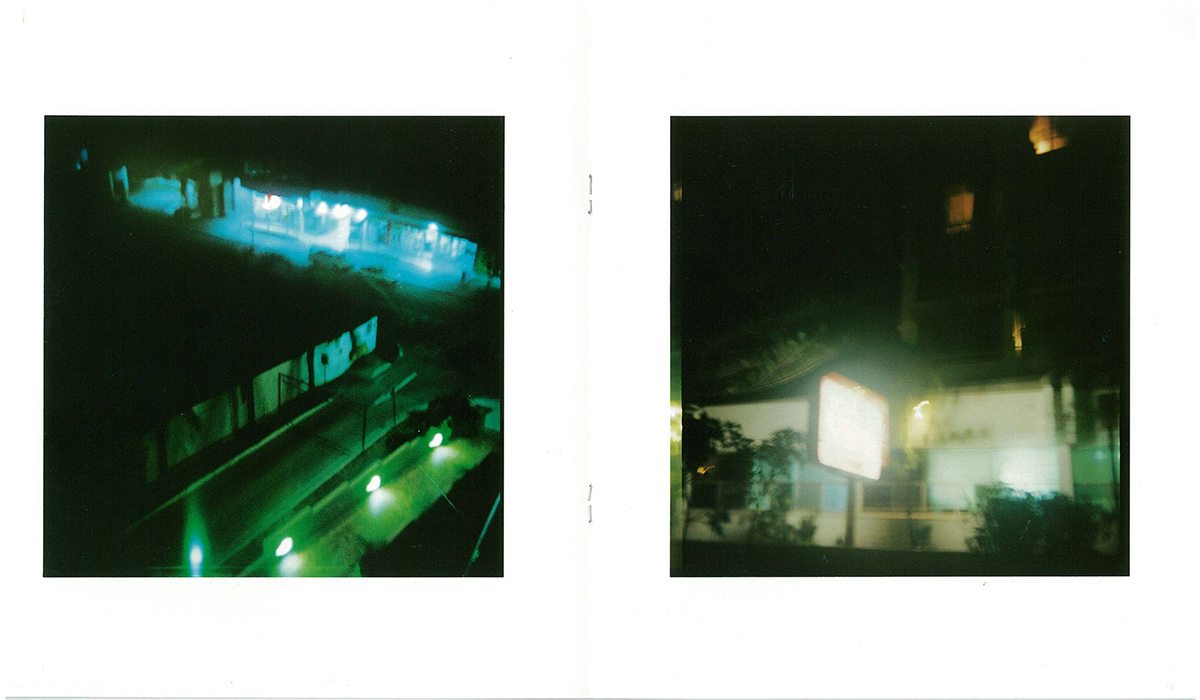
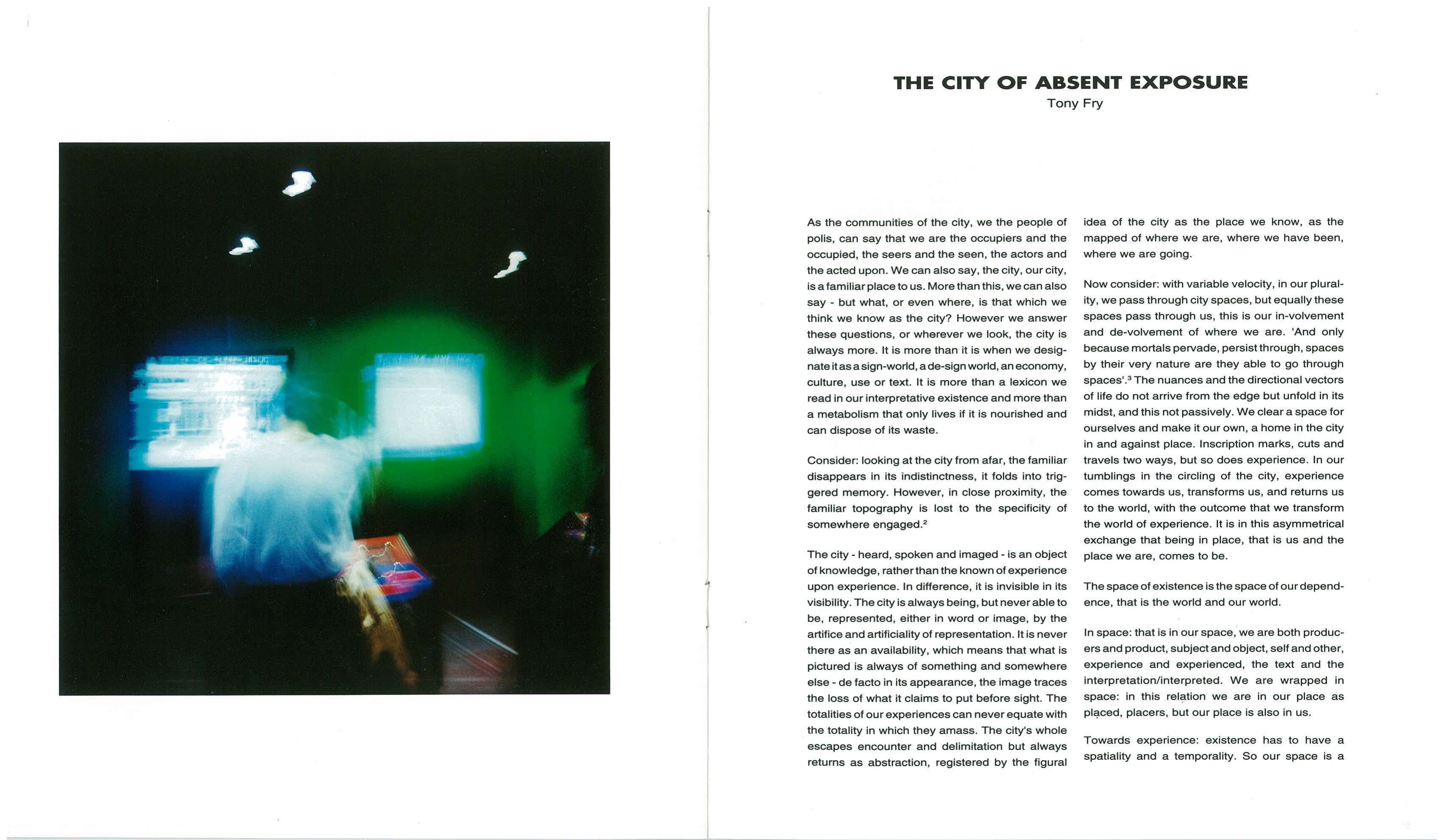
Canberra Times critic Helen Musa also understood, in 1992, that Drummond “uses photography to exploit the distance between the real and the fictional,” while Stuart Koop hedges his bets in comparing separate 1991 exhibitions Drummond’s Scopic Territories at Australian Centre for Contemporary Art (where he was curator), and Wolfgang Sievers‘ industrial photographs at the National Gallery of Victoria to identify her…
..apparently total abdication of authorial responsibility in [ . . . ] a dependence on everything extrinsic to the photograph which has come to characterise the critical import of postmodern photography as some kind of institutional critique; this in contrast to the intrinsic formalism of modern photography,” noting “[Sievers’] (perhaps naive) confrontation of power, capital, social control, or whatever, in the construction of aesthetic forms, [while Drummond], in retreat, hopes rather to spy a random trace of their omnipresence, poking the camera into a city’s spaces for a glimpse of puissance. The difference is a capitulation of sorts before the unrelenting advance of “capital” manifest in theories such as Debord’s.”
Given that the 1970s Prahran students experienced a new recognition of Australian photography as art, alumni of that period were suspicious of the fabrications and hybridisation of 90s practitioners; “artists who use photography”. Greg Neville in The Age dismissed Scopic Territories as “a cold and overstated exercise…a good example of the current, Post-Modern Academy style,” its catalogue “impenetrable” and the accompanying video “interminable”; then a couple of years later he dismissed a reshowing of those images in Reflex at the Centre for Contemporary Photography, curated by Koop, as “blurry night shots of the city, such as one expects (but does not encourage) in undergraduate students.”
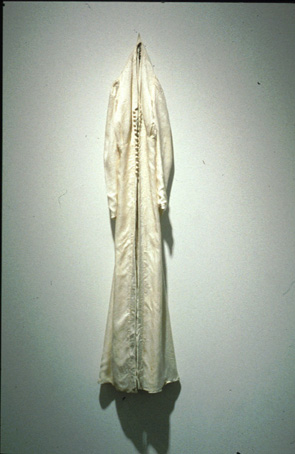
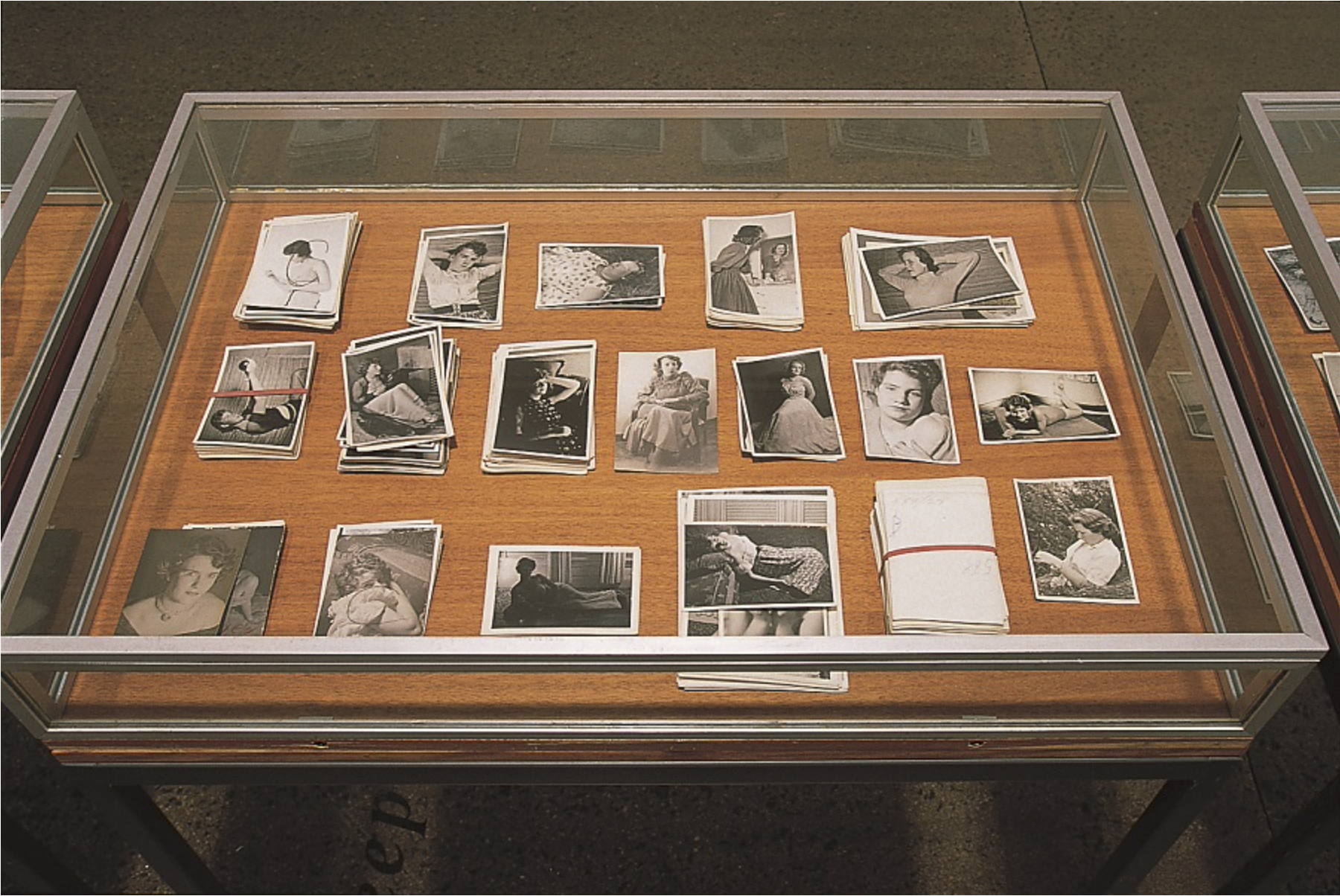
Mixed reviews certainly did not discourage Drummond; she was working in an era in which critical attention had expanded and sharpened. In 1995 she moved into installation with Peeping Tom (named from Michael Powell‘s film) at Monash University Gallery over November 1995 to February 1996, in which she displayed found photographs, described by Natalie King as of large format and toned “haphazardly pinned to the gallery walls like an archive,” beside others in vitrines. Freda Freiberg remarked on its licensing a “surreptitious peep, if not a studied gaze, at the bodies and business of others…” turning “our gaze back on the professional peepers, to play their game. We are asked to play the sleuth.”<
Three video screens served to mediate the experience; one showing Powell’s 1960 movie; another voyeuristically tracking a woman as she weaves through museum displays; and a third being a live feed of the exhibition space in which the viewer could see themselves, so that as artist and writer Perry Fowler noted “one must become other in order to understand the process by which the gaze silences the woman, reducing her to inarticulate object.” The sum of these parts, Fowler implies, places the audience in the role of victim and aggressor simultaneously;
“Drummond has created an ‘artificial’, cryptically narrated, masculinist subjectivity. Like a psychoanalyst ‘reading’ a patient or a detective investigating a mystery, the viewer deciphers the story through ‘clues’ provided at random. The story reveals an arguably pathological perception of the feminine. Drummond’s women are shallow, monochrome beauties, naively modeling for long-forgotten amateurs. Manipulated and enlarged, they become images of a reconstituted femininity; a postmodern perception of a post-war sexuality.”
Photography is held at arm’s length, scrutinised through irony.
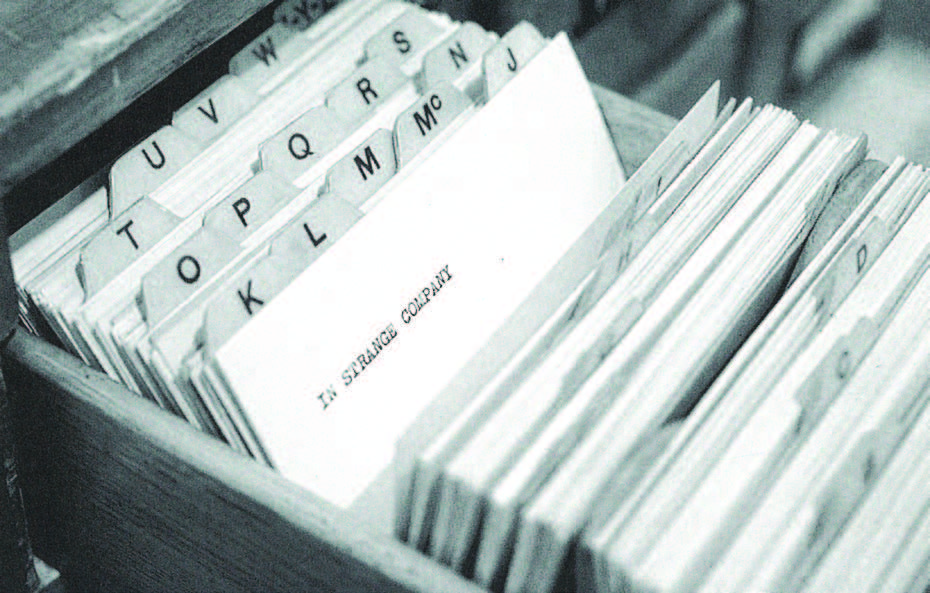
Peeping Tom led in 1997 to Drummond’s being awarded a Samstag Scholarship of A$30,000 (2025 value: $62,240.00), plus airfares and fees, for a year in an MA in Fine Art at Goldsmiths College, London, and while studying, was invited, with Scholarship co-recipients painter Zhong Chen, Lyndal Jefferies, Steven Holland, and Julie Gough. to exhibit at Birmingham’s Ikon Gallery. The curator, Claire Doherty considered that a conventional exhibition there of the Australians’ work would risk it “appear[ing] without contextualisation, interpretation or dialogue in an alien territory”. Her solution was to have the five artists complete projects both “inside and outside the gallery…over extended periods of time” with local groups and individuals. Drummond responded to this “Art into Action” programme by conducting her project off-site over six months in a local school, filming the idea of ‘lost childhood’.
The video was shown in the May 1998 group exhibition Mnemosyne or Do Humans Dream in Negative Strips at the Centre for Contemporary Photography, and was reviewed by Larry Schwartz who identified the school as “in a rough neighborhood in Birmingham” and the children as “at a stage of innocence . . . It’s a dangerous place to live. So its like a moment of lost innocence. Captured on film and, while smiling forever, there might be some deeper aspect that memories will bring out.” In England, in 1999, Hide and Seek had two showings, at Birmingham Cinema, and at Ikon Gallery.
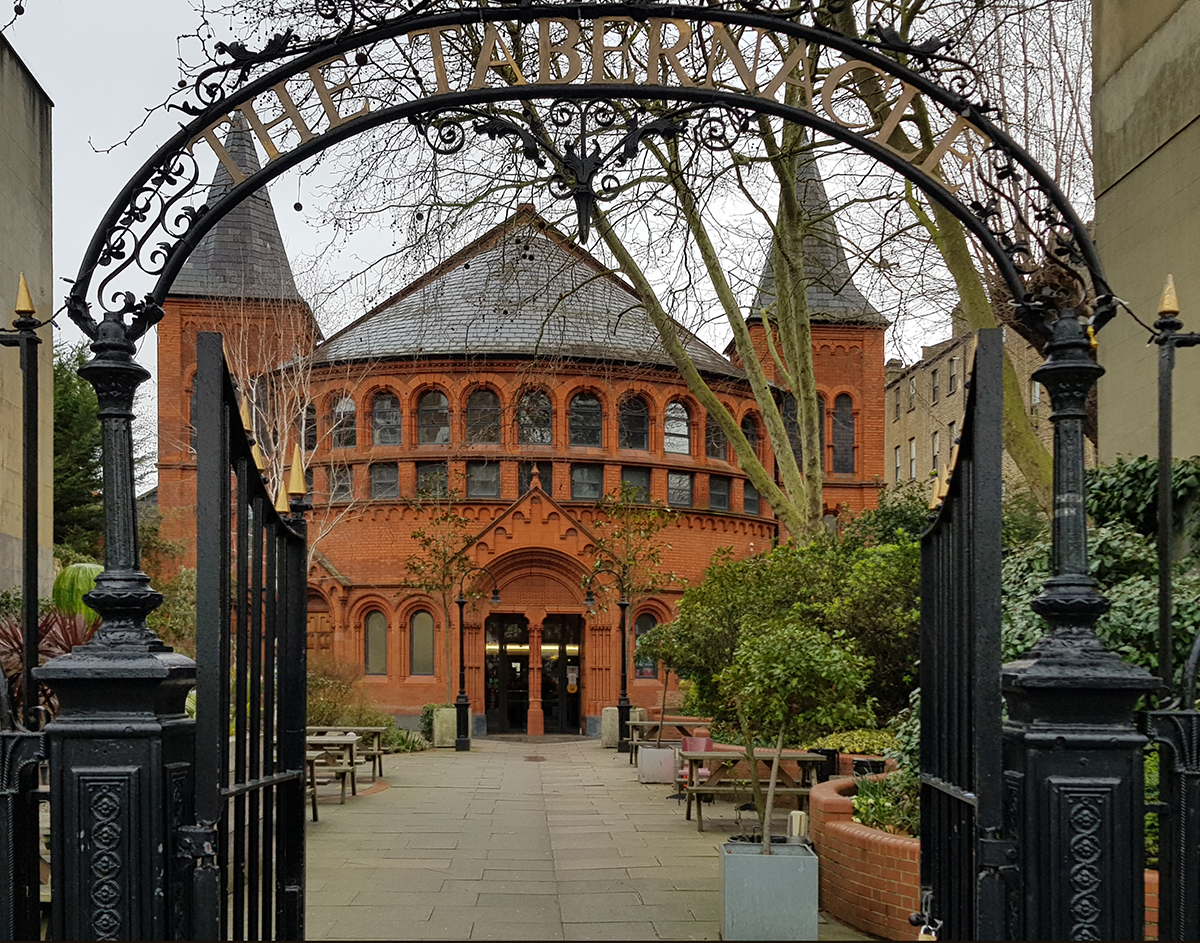
Clearly Drummond looks back on Goldsmiths, more than Prahran, as her formative ‘alma mater’; in 2000 she organised and curated a reunion of Goldsmiths’ ’98 alumni for the show significantly titled Ways of Living, with herself, DJ Simpson, Oliver Zwink, Edward Harper, Graham Little and Michael Raedecker at the Tablet Gallery at the Tabernacle, Powis Square, London.
With other Deakin visual arts researchers Drummond participated over 2012-2014 in the project “Flows and Catchments” conducted at Lake Bolac while she was a lecturer at Deakin University. In Drummond, R., Keane, J., & West, P. (2012). Zones of Practice: Embodiment and Creative Arts Research. M/C Journal, 15(4) Drummond concludes that the photograph “offers a momentary pause,” an “outline of an image” and acts as a ‘signpost’:
Photography inevitably entails a certain characterization of reality. From being “out there” the world comes to be “inside” photographs, … [instead] … I am interested rather in looking, through the viewfinder, to spaces that work the other way, which suggest the potential to locate a “non-space”— where the inside suggests an outside or empty space […] The viewer may well peer in and look for everything that appears to have been left out. Thus, the photograph becomes a recollection of what Roland Barthes calls “a disruption in the topography” — we imagine a “beyond” that evokes a sense of melancholy or of irrevocably sliding toward it.
In other words, she wishes to construe photographs that so restrict aesthetics and information as to become signs or ciphers requiring and engaging its viewers’ extrapolating, through a desire to see more, its surrounds beyond the frame and their potential affect.
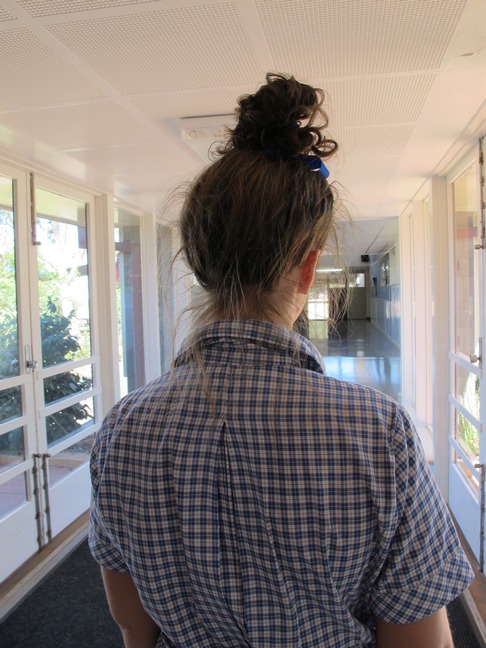
An example, which Drummond reads for us, is a picture taken at Lake Bolac in a locale identical to any Victorian government school corridor:
What is the viewer to look for in this photograph? Upon closer inspection a young woman stands to the right within the frame—she wears a school uniform; the pattern of the garment can be seen and read distinctly. In the detail it is finely striped, with a dark hue of blue, on a paler background, and the wearer’s body is imprinted upon the clothing, which receives the body’s details and impressions. The dress has a fold or pleat at the back; the distinct lines and patterns are reminiscent of a map, or an incidental grid. Here, the leitmotif of worn clothing is a poetic one. The young woman wears her hair piled, vertiginous, in a loosely constructed yet considered fashion; she stands assured, looking away and looking forward, within the compositional frame.
The camera offers a momentary pause. This is our view. Our eye is directed to look further away past the figure, and the map of her clothing, to a long hallway in the school, before drifting to the left and right of the frame, where the outside world of Lake Bolac is clear and visible through the interior space of the hallway—the natural environment of daylight, luminescent and vivid. The time frame is late summer, the light reflecting and reverberating through glass doors, and gleaming painted surfaces, in a continuous rectangular pattern of grid lines. In the near distance, the viewer can see an open door, a pictorial breathing space, beyond the spatial line and coolness of the photograph, beyond the frame of the photograph and our knowing. The photograph becomes a signpost. What is outside, beyond the school corridors, recalled through the medium of photography, are other scenes, yet to be constructed from the spaces, streets and roads of Lake Bolac.
Here we find an echo, down a school corridor, of the much-discussed rückenfigur, the figure viewed from behind, as subject of the Romantic painter Caspar David Friedrich or , arguably, its pastiche, as in Andrew Wyeth’s kitschig (sentimental), Christina’s World. In speaking of a poetic leitmotif, and in much of the description above, it is clear that, however prosaic and mundane her image, an emotional affect, whether “melancholy” or of an involuntary “sliding” toward nostalgia or yearning is intended.
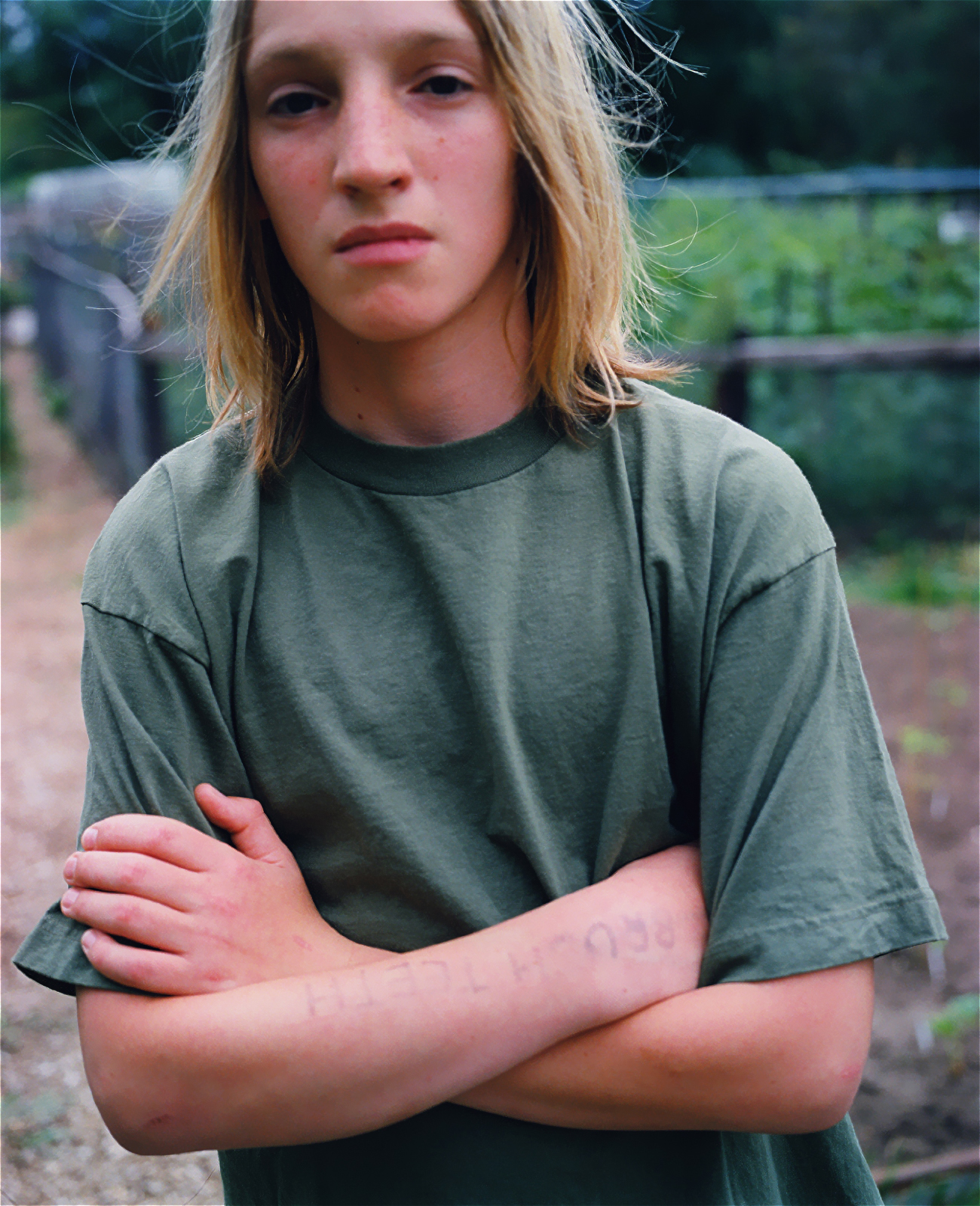
That aside, at Bolac Drummond would have had to deal with the restrictions, and the tabus, entailed in photographing schoolchildren, but not so in the case of her entry in the National Photographic Portrait Prize 2009 in which she was a finalist. For that she photographs Daniel Lazarow face-on for Daniel at Thirteen in which the same detachment can be read. The unsmiling subject tilts as if about to turn away, but is arrested by the severe cropping at his brow, and fenced by the vegetable garden behind, as we are held by the fading all-caps stamp (creepily like the blue inspection mark on a pig carcass) on his arm “BRUSH TEETH”, while noting his bitten nails under the sharpest plane of focus.
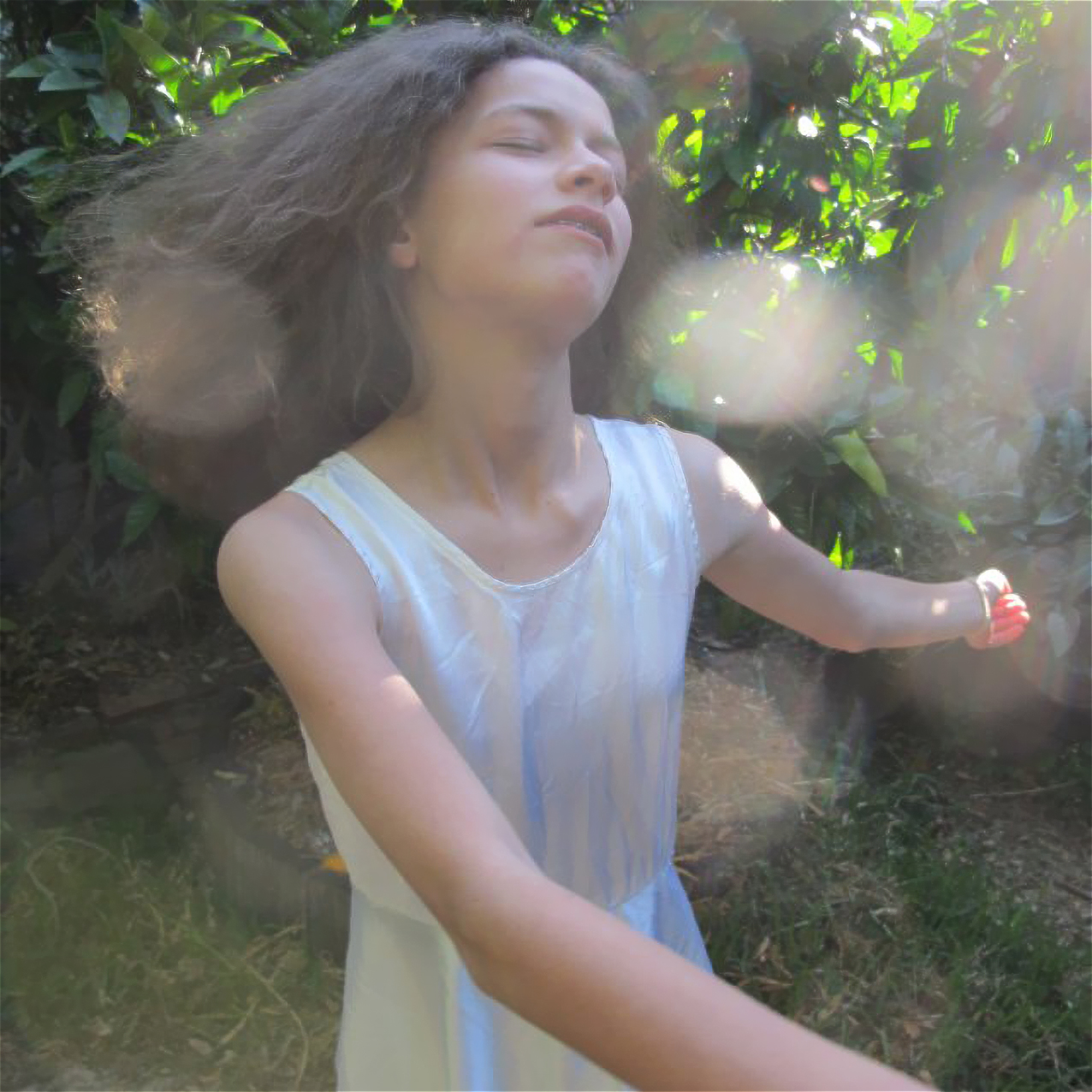
Drummond’s continuing imagery of young adulthood appeared in mid-2016 with that of Robert Mapplethorpe, Larry Clark, Nan Goldin, Collier Schorr, Chris Burden, and Warwick Baker in Tough & Tender also at the National Portrait Gallery, though the subject of her 2010 entry was an adult literary celebrity Nam Le (b. 1978), author of The Boat whose face, dead centre, is placed beneath the sweeping ribbons of Melbourne freeway ramps, symbolic of “transit and an evocation of speed and change”, as Christopher Chapman puts it.
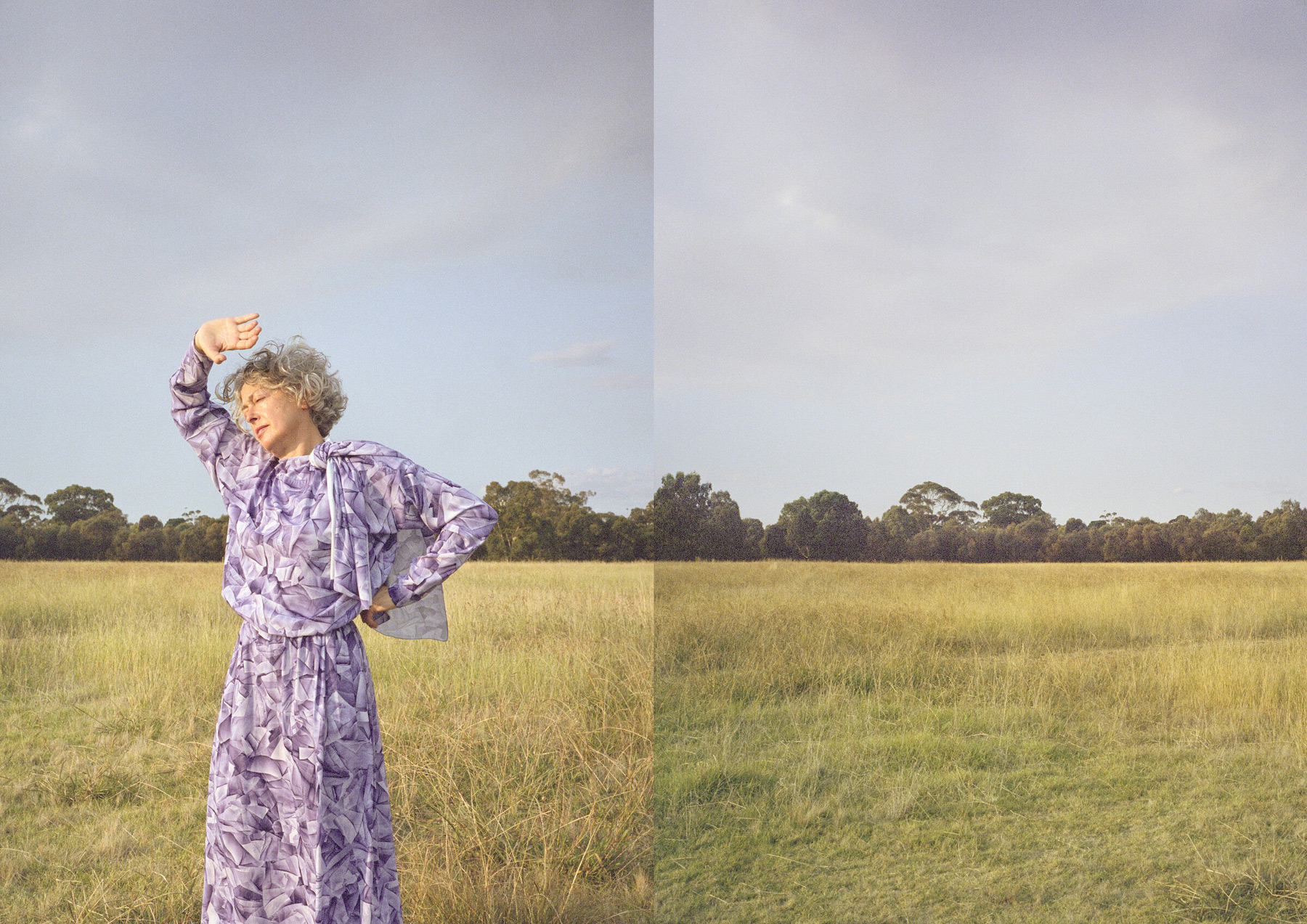
Drummond was Portrait Prize finalist again in 2022 with an image from a series, advanced in 2016 with her Summerhill and Constellation groups shown in Tough & Tender, that extends the portrait pose and gesture—seen in the folded arms of Daniel—into the territory of performance and dance. Adult subjects collaborated with Drummond in 2021 at intervals in the COVID lockdowns. Shelley, daughter of Bill Lasica (vital supporter of the Centre for Contemporary Photography), appears in the Portrait Prize 2022 entry. A dancer and choreographer, she was also working with David Rosetzky in similarly performative works in his Composite Acts, shown as live performance, streamed video and photography at Sutton Gallery in early 2021.
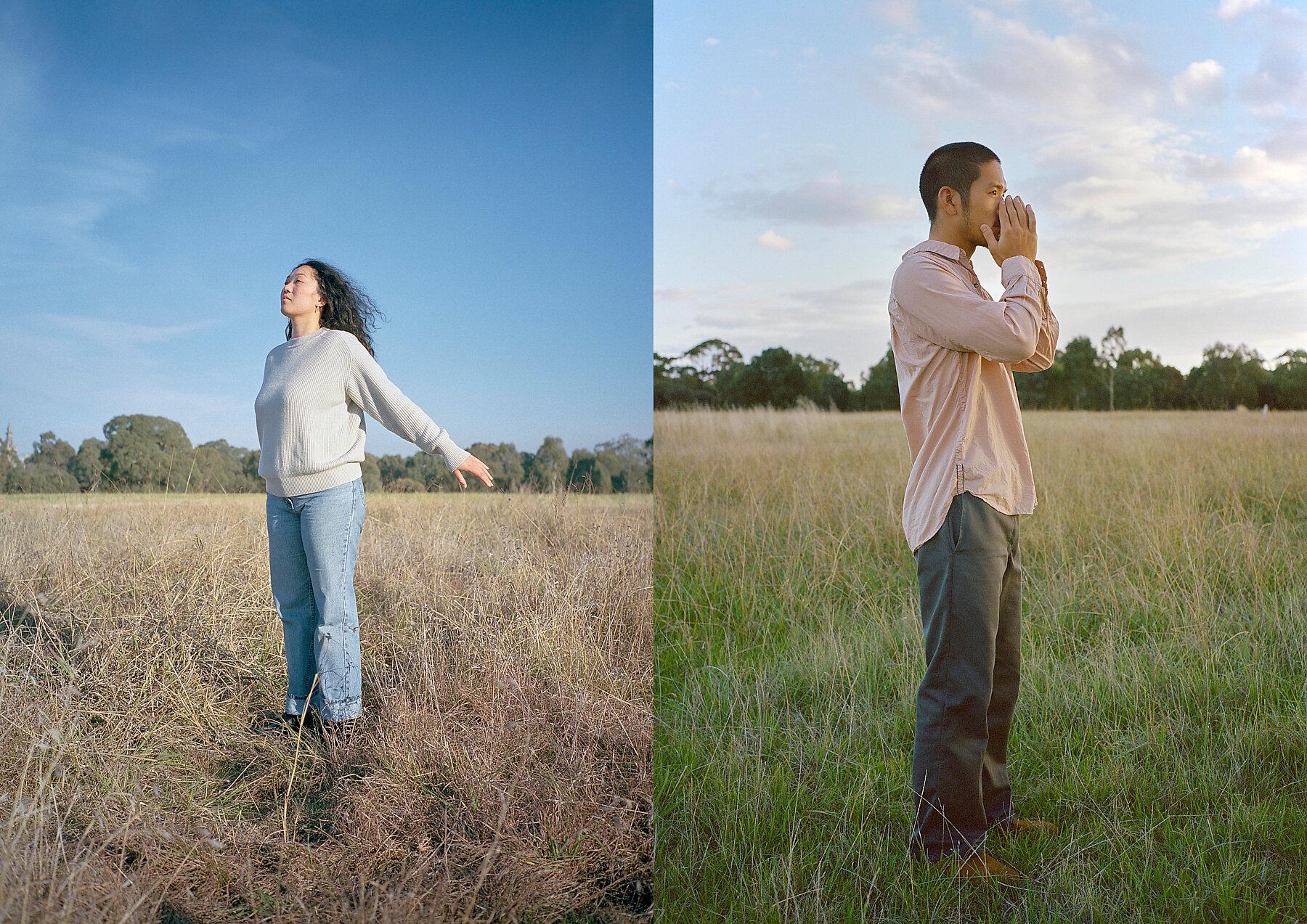
Photography, performative actions and video are practices in Drummond’s ongoing development of the representation of the human in spatial and natural environments. Where in her How Fine the Air (2009), Drummond had brought together images of people and environments, the COVID-defying Shifting Space series develops those relationships in an orchestrated manner, with the collaboration of a renowned Australian choreographer. The ‘shifting’ of space Drummond embeds in the image using a device she had established, the abutment of the figurative image with another of the landscape background alone which had been made at a different moment. As in the case of We Were There Shifting Space, Shelley, where the foreground has shifted, but the treelined is exactly matched, this introduces a ‘slicing’ of both time and space across which the eye flicks as it compares the two, and emphasises the presence and absence of the figure. Thinking back to the time of COVID when a sense of mortality was so close—and which we so easily now forget—that is especially poignant.
In 2021 Drummond undertook an artist residency with Wollongong University, NS.W, then others in 2022 with the Bundanon Trust, N.S.W and Point Nepean National Park, Victoria, as well as being guest curator at CAVES Gallery, Room 5 Level 8 of the Nicholas Building, 37 Swanston St, Melbourne for Communal Atmosphere or The Space The air (Falls) behind you as you move 4 February – 26 February, for which she collaborated with Clara Adolphs, Stuart Bailey, Baracco + Wright Architects, Laetitia Benat (FR), Stephen Bram, Vincent Bredif – Julien Fajardo(FR), Maggie Brink, Ruth Cummins, Elein Fleiss (FR), Yanni Florence, Honeyfingers, Shelley Lasica, Kerrie Poliness, and Ida Thonsgaard (DK). A viewing of the performance was held on 16 February as a part of Melbourne Art Fair’s Gallery Night.
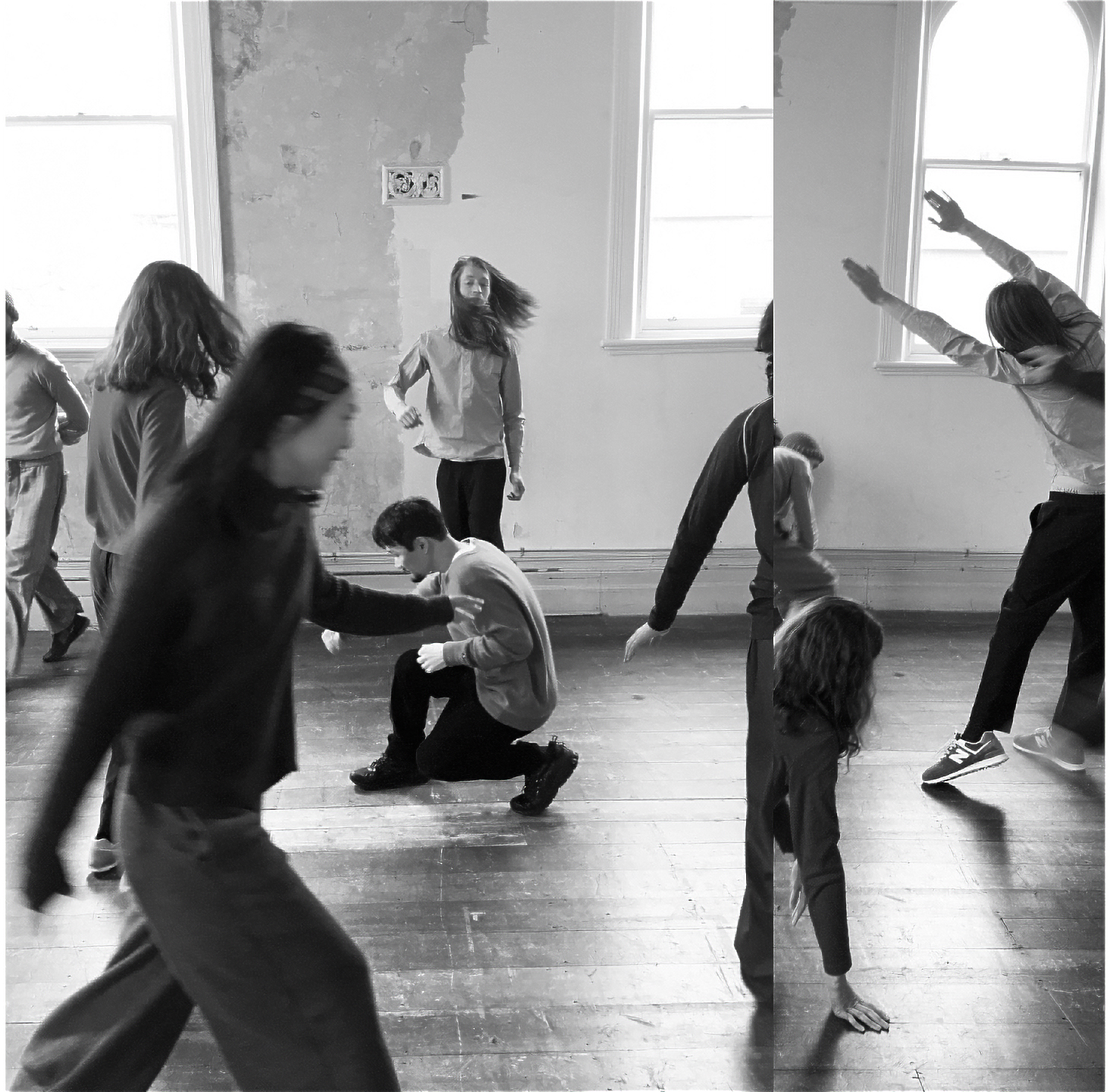
More recently, in 2023, Drummond co-curated a series of performances with Storm Gold at CAVES Gallery where over 1–24 March 2024 she also exhibited Scenarios, other forms of being as part of the PHOTO24 Festival, Melbourne, in which the ensemble of figures perform elements of dance, spatial practice and music from a number of sources. Collective presence develops forms of becoming, of “something ‘other’,” as Drummond puts it, “themes and motifs [which] suggest alternative systems of belief…[from] readings about modernist counter culture, architecture, environmentalism and cinema.” Again the “splicing” shuffles time frames “past into a possible future, future into the past.”
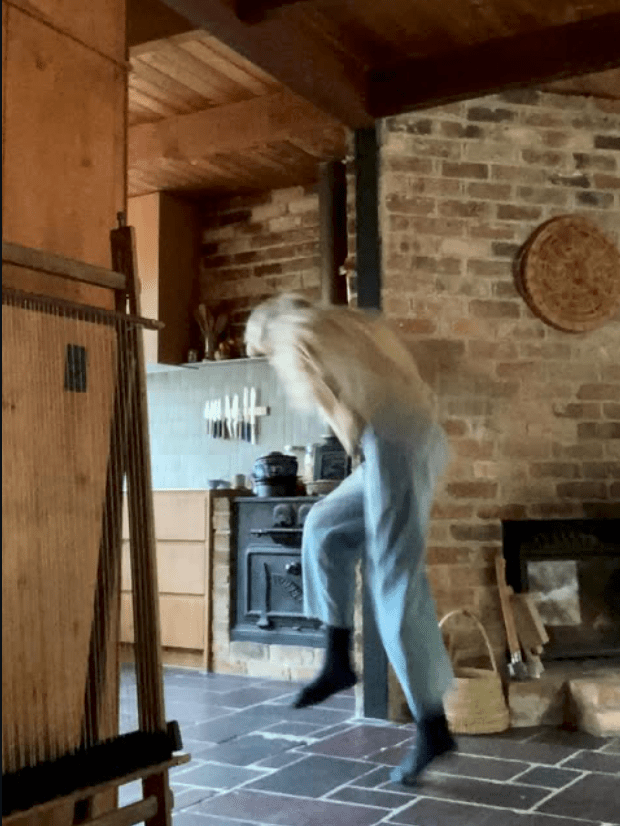
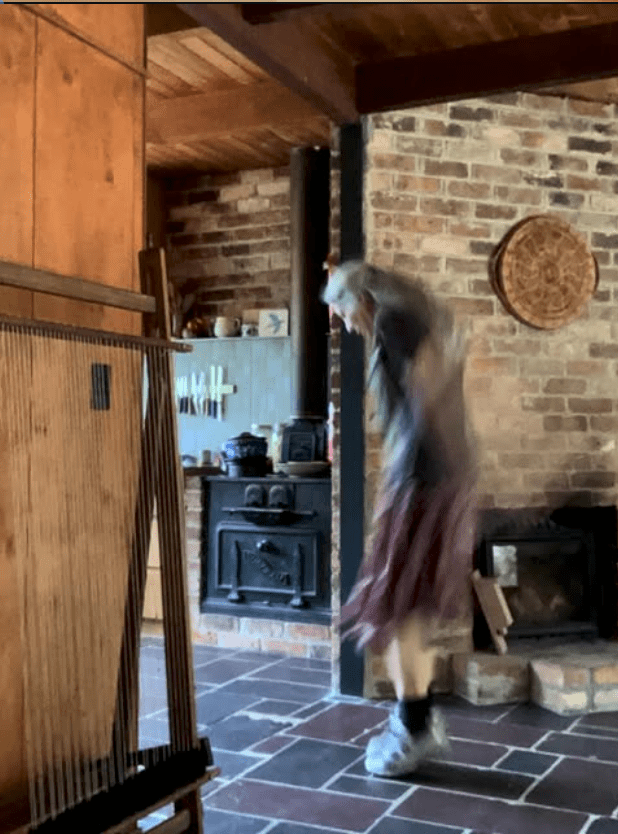
There’s plenty of evidence that she is still working hard in 2026. Earth Building was a project Drummond conducted over 11-12 April 2026 at Garambi Baanj/Laughing Waters in Eltham, with Beth Arnold, Stuart Bailey, Emma Borland, Maggie Brink, Aaron d. Carter, Prudence Flint, Storm Gold, Melinda Harper, Siri Hayes, Dylan Marelic, Lilly Skipper, Christopher Theofanous, Ida Thonsgaard, and Lou Wills.
Drummond participated in the exhibition Picturing Democracy 23 Feb – 15 May 2026 curated by Ross Coulter at Carlisle Street Art Space in St Kilda Town Hall, and drawing on photographs from the City of Port Phillip Art and Heritage Collections to bring historic and contemporary images into conversation about community and democracy outside parliament. Featured artists including Drummond were from the CoPP Art Collection among whom were Prahran alumni Linda Jullyan, Ian McKenzie, Roderick McNicol, and Martin Munz

